
Last updated November 16, 2026
 Wrought iron
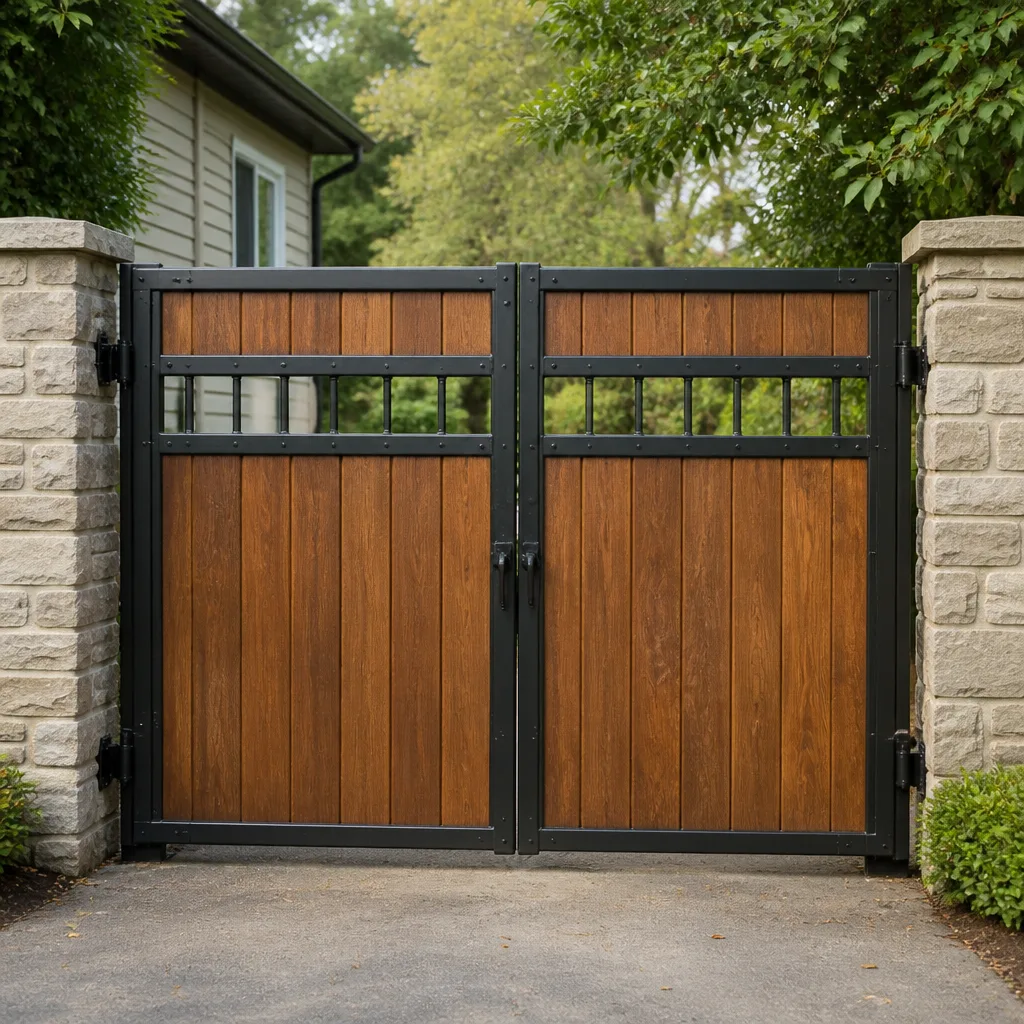 Wood & steel frame
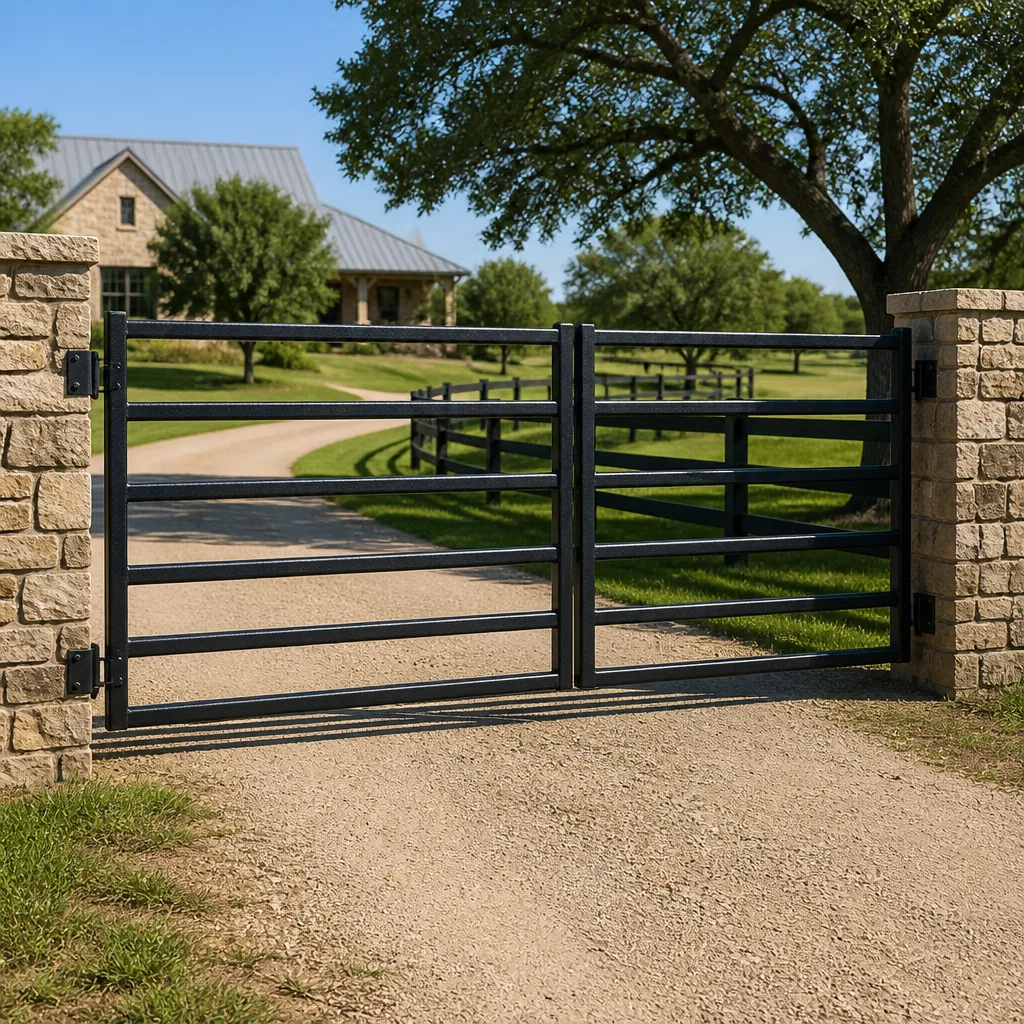 Farm & ranch
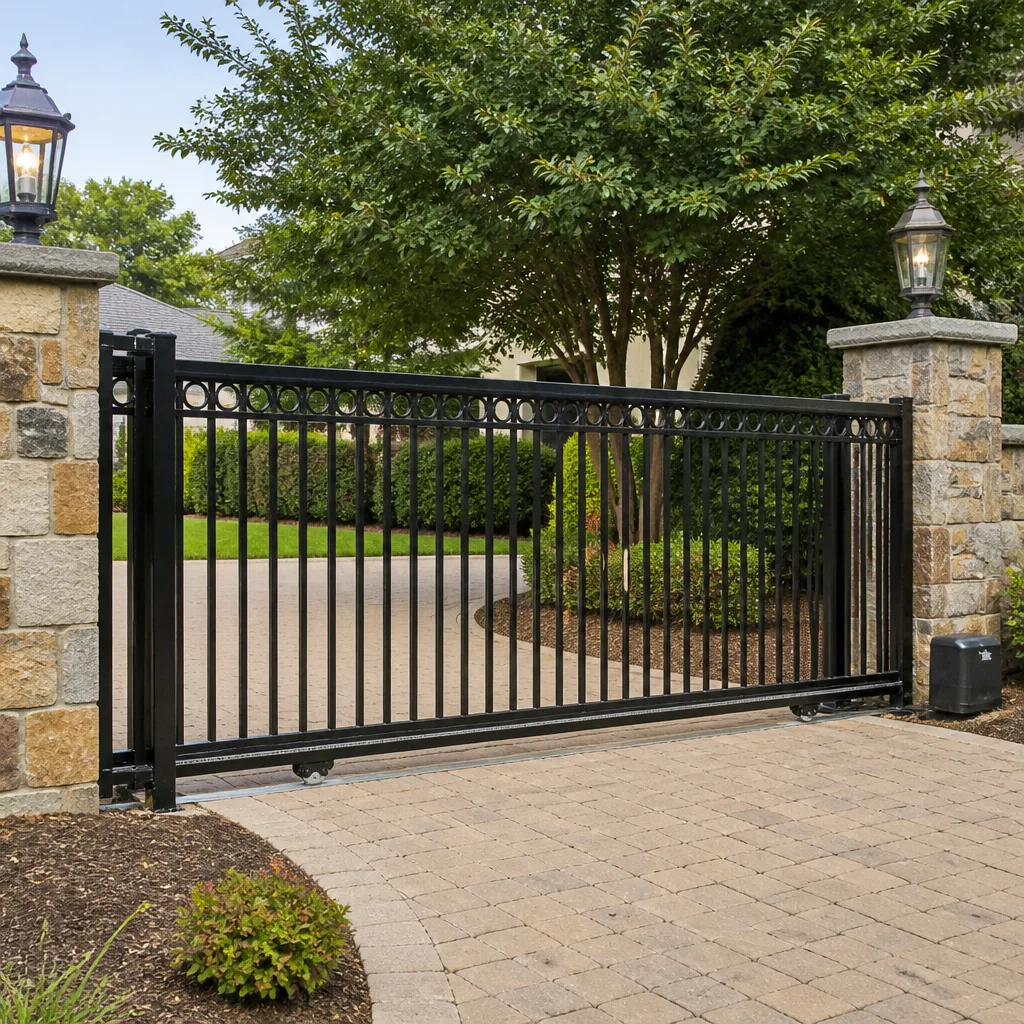 Sliding driveway gates
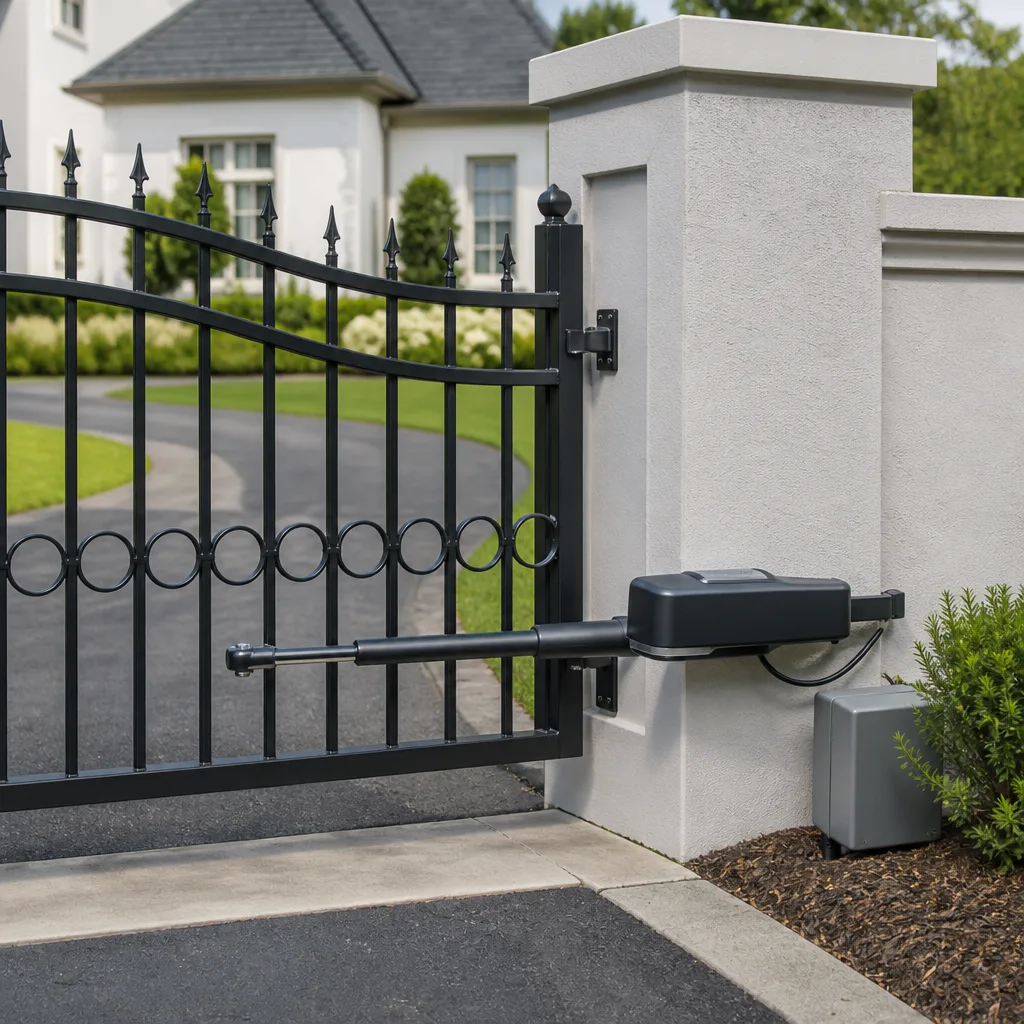 LiftMaster operators
Free on-site gate assessment - hinges, posts, and your LiftMaster or Nice gate operator checked before anything is quoted
The assessment is free and the quote is the invoice.
Get your free estimateDIY vs Professional Gate Repair: The Virginia Beach Homeowner’s Decision Guide
Replacing a gate hinge sounds like a hardware store job until you get the old one off and find the post has rotated two degrees out of plumb. That two degrees is invisible until the gate starts to bind, then the operator strains against the sag, and a repair that should have been a $40 part turns into a control board replacement you didn’t plan for. The real DIY-versus-professional question in Virginia Beach isn’t about your confidence or your toolbox. It’s about which specific tasks carry hidden electrical, structural, and warranty risk, and which are genuinely harmless to do yourself. This guide draws that line task by task so you can pick your battles correctly.
Quick Answer
In Virginia Beach, gate repair is DIY-safe for lubricating hinges, clearing debris from the track, pairing a remote, and replacing remote batteries. Anything involving the operator’s control board, wiring, gate footing, weld integrity, or a post that has moved is professional-only work, because those tasks carry shock, crush, or warranty risk that a basic toolkit can’t manage. The dividing line is the task type, not your skill level. When in doubt, get a free estimate before you touch it.
Styles & brands we work with
- Wrought iron
- Wood & steel frame
- Farm & ranch
- Sliding driveway gates
- LiftMaster operators
Table of Contents
- Why the DIY Line Is About Task Type, Not Skill
- Tasks That Are Genuinely DIY-Safe
- Tasks That Look Simple but Are Professional-Only
- How Virginia Beach Conditions Change the Difficulty
- What DIY Repair Does to Your Operator Warranty
- How to Describe a Problem to a Technician
- Common Mistakes to Avoid
- When to Call a Professional
Why the DIY Line Is About Task Type, Not Skill
The instinct is to sort gate repairs by how confident you feel. That’s the wrong metric. The right metric is what the task can physically do to you, to the gate, or to your warranty if it goes wrong. A hobbyist who has rebuilt a motorcycle engine can safely pair a remote on a LiftMaster receiver, but that same person should never probe a live control board without cutting power at the breaker and knowing exactly where the capacitors sit. Confidence and capability aren’t the same thing.
So we sort tasks into three buckets, and the bucket decides the answer:
- Green tasks are mechanical, low-energy, and reversible. Lubrication, remote pairing, battery swaps, visual inspections. The worst outcome is that the gate still doesn’t work and you call us anyway.
- Yellow tasks look mechanical but touch the operator or the structure. Limit switch adjustments, hinge replacement on a post that might be out of plumb, tightening hardware that has worked loose. These are where DIY goes wrong.
- Red tasks are electrical, structural, or code-related: control boards, wiring runs, footing assessment, weld repair, safety sensor alignment on commercial equipment. Hands off.
Here’s the thing that trips people up on Vancouver-style coastal humidity, except we’re talking about Virginia Beach and the salt-laden air that settles into gate hardware from the ocean through the residential neighborhoods. That humidity and salt load can seize fasteners so a “simple” hinge swap turns into a snapped bolt extraction, which is a yellow task pretending to be green. We’ll cover that specifically below. The point for now: draw your line by task type, and be honest when a mechanical job drifts into structural territory. That’s usually the moment to stop and call.
Tasks That Are Genuinely DIY-Safe
These are the jobs we’d tell a neighbor to try first. They use basic tools, they don’t touch line voltage, and if you get stuck, you call and no harm is done. Every one of them extends the working life of a residential driveway gate in Virginia Beach.
- Lubricate hinges and pivot points. A light coat of a suitable lubricant on the hinge barrels and the gate’s pivot hardware keeps the swing smooth and reduces the load on the operator. Do it as part of a simple seasonal routine and you’ll notice the operator running quieter.
- Clear the track and the travel path. On slide gates, debris, sand, and small toys jam rollers and confuse the limit switch. Sweep the track clean and the gate often solves its own “sticking” complaint.
- Pair a new remote or receiver. On common residential brands like Linear and LiftMaster, most homeowners can pair a replacement remote by following the manual’s button sequence. If the receiver itself is failing, that’s a different story, but pairing a fresh remote is fair game.
- Replace remote and keypad batteries. Dead batteries are the single most common false alarm on a working gate. Swap them and retest before assuming anything bigger is wrong.
- Adjust photo-eye alignment if the eyebeams are visible and free-standing. On some systems you can gently nudge a misaligned photo-eye back into place as long as the mounting bracket isn’t damaged. On commercial-grade safety edges and monitored sensors, call instead.
- Visual inspection. Walk the perimeter once a season. Look for rust blooms, wobbling posts, cracking concrete around the hinge, or a gate that shut flush last month and doesn’t today. Catching a small issue protects the operator.
Notice what all six share: none require disconnecting a wire, none require trusting a post to be straight, and none require interpreting a fault code. Those are exactly the three triggers that flip a job into the professional bucket. If your DIY task is starting to require a multimeter or a level, put the tools down and read the next section.
Tasks That Look Simple but Are Professional-Only
This is where the expensive mistakes live. Each of these reads like a simple mechanical fix on paper. All of them carry real risk.
Anything touching the operator’s control board. The control board carries line voltage and energy-storing capacitors that hold a charge after power-off. Diagnosing a fault code, swapping a board, or tracing a wiring fault requires a trained hand. We service FAAC and BFT operators on commercial properties where a misstep on the control board can leave gates locked open or worse. Bring a technician.
Footing assessment. When a hinge comes loose or a post wobbles, the cause is almost always below the surface. A post that has rotated or settled in the ground needs to be evaluated against proper footing depth, not just have its bolts tightened. Re-bolting a hinge into a moving post is exactly the failure we opened this guide with: the gate binds, the operator wears, and you’ve spent money to make it worse. Footing depth, concrete condition, and drainage all get assessed in one visit.
Weld integrity. Cracks at a weld on a gate frame or hinge knuckle can fail catastrophically under load. Powder coating and rust can hide a hairline crack, so a visual once-over tells you nothing reliable. A gate specialist inspects weld joints properly before recommending repair versus replacement.
Electrical runs, keypads, loop detectors, and intercom wiring. The low-voltage side of a gate system still runs through conduit to a high-voltage source. Running a new power feed or repairing a damaged loop detector is not a weekend job.
| Task | DIY? | Why |
|---|---|---|
| Lubricate hinges and pivot points | Yes | Low-energy, reversible, basic tools |
| Pair a new remote or receiver | Yes, on common brands | Manual-guided, no line voltage |
| Replace remote or keypad batteries | Yes | Foolproof, no risk |
| Adjust a limit switch | Usually no | Wrong adjustment strains the operator |
| Replace a hinge on a moving post | No | Footing issue, will worsen the gate |
| Control board diagnosis or swap | No | Line voltage and stored capacitor charge |
| Weld repair | No | Hidden cracks, structural failure risk |
| New power run or loop detector | No | High-voltage source, code considerations |
One more: the operator’s safety edges. On residential gates these sense an obstruction and reverse the gate. On commercial-grade systems they’re monitored and coded, and they fail-safe rather than fail-open. If a safety edge is damaged, the gate must not operate until it’s repaired properly. That’s not a DIY scenario. It’s a same-day call, and it’s how we treat those jobs across Virginia Beach. For a full picture of what a technician handles on an electric gate, our electric gate repair page walks through the electrical side in detail.
How Virginia Beach Conditions Change the Difficulty
Salt air and everyday humidity do something to gate hardware that homeowners inland never see: fasteners seize. A bolt that would turn easily in a dry climate locks up on a Virginia Beach gate after a few seasons of humid air and salt exposure. That changes the risk profile of “simple” DIY.
Three specific problems show up on Virginia Beach gates:
- Seized fasteners. A bolt that should come off with a socket wrench won’t budge, and applying more force either rounds the head or snaps the bolt shank. Now you’re extracting a broken bolt, which is a bigger job than the hinge you were replacing.
- Hinges that snap rather than adjust. Corrosion weakens hinge knuckles over time. A hinge you expect to loosen and realign can crack instead under a wrench. The gate now hangs on two hinges with a third snapped, which strains the operator immediately.
- Rust that hides cracks in welds. The same corrosion that weakens fasteners masks hairline cracks in the gate frame and hinge welds. A quick look tells you nothing.
The practical takeaway: a Virginia Beach homeowner should assume any fastener on a gate older than a few seasons will fight back. Apply a penetrating lubricant, wait, and try once. If it doesn’t move, stop. A seized bolt is the clearest signal that the job has moved from green to yellow and possibly to red, and every hour you fight it is an hour the gate sits half-disassembled with a hinge hanging loose. Our gate repair team sees this pattern constantly on older driveways and swing gates throughout the city, and it’s almost always faster and cheaper to hand off the extraction than to break a bolt and call us in a worse position.
Lubrication is the best defense. A simple seasonal routine keeps hinges working freely and slows the corrosion cycle. It doesn’t stop Virginia Beach humidity, but it makes the difference between a hinge that adjusts and one that snaps. If your gate hasn’t been touched in a year, doing the green-task lubrication now prevents a yellow-task hinge replacement later.
What DIY Repair Does to Your Operator Warranty
Operator manufacturers sell their warranties around a central expectation: the equipment is installed and serviced by a trained technician. The exact terms differ by brand, model, and purchase date, so always read your specific paperwork. But a widespread pattern across the residential market is that unauthorized work, or a repair that fails because a contributing structural fault wasn’t fixed, can affect a warranty claim. That’s the hidden cost of DIY.
The warranty risk isn’t only about voiding a piece of paper. It’s about the chain of causality. Consider a gate that binds because the post rotated slightly. You replace a hinge, the gate still binds, and the operator keeps straining. Weeks later the control board fails. Was the board failure covered? The manufacturer may reasonably ask whether the operator was running within spec, and a state of strain from a misaligned gate complicates that question. A gate specialist diagnoses the binding source first, corrects the structural cause, and only then replaces operator parts, which keeps the equipment running within the terms it was sold under.
Here’s the practical rule for a Virginia Beach homeowner weighing DIY against calling a brand technician:
- If the gate works fine and you’re doing routine upkeep, lubrication and battery swaps are safe. Warranty unaffected.
- If the gate misbehaves after a repair you did, stop guessing at operator parts. The gate, not the board, is your problem.
- If a control board or operator part fails, have a technician document the diagnosis. A real cause is easier to assert and defend if the manufacturer questions it.
Brands like LiftMaster and FAAC build their residential and commercial warranties to be enforced through authorized channels. A DIY repair on the low-voltage side usually doesn’t trigger an issue, but a failed board that follows an unauthorized repair becomes harder to defend. When you need a warranty-friendly repair in Virginia Beach, our team works on the brand you have and diagnoses the actual cause on-site, without upselling you a swap to a different system. “We work on the gate you have, not the one we prefer to sell” isn’t a slogan here. It’s the reason a brand-neutral diagnosis preserves your warranty options.
How to Describe a Problem to a Technician
The difference between a one-visit repair and a two-visit repair is usually how well the problem gets described on the phone. A good technician walks in knowing the brand, the symptom, and the safety context. You can make that happen with a few minutes of prep. This is a genuine DIY-skill worth developing: talking about your gate like a diagnostician.
Have these ready before you call:
- The operator brand and model. Look on the operator housing or the manual. It might be LiftMaster, FAAC, BFT, Linear, or another of the brands we service. The exact model helps more than the brand alone.
- A clear description of the symptom. Does the gate not move at all? Move partway and reverse? Move but not fully close? Open but not close? Each symptom points to a different subsystem.
- What changed recently. A new remote paired, a storm, a landscaping change, a power outage, a battering by a car. Recent history is diagnostic gold.
- Any fault codes displayed. Snap a photo. The code tells a technician exactly which subsystem to probe first.
- Observations about the gate itself. Does it wobble? Bind? Sit out of plumb? Drag on the track? Any rust, broken weld, or loose hinge?
- Photos from multiple angles. Whole gate, operator close-up, photo-eye location, track or hinge detail. A few good photos save a diagnostic trip.
A short video of the gate in motion is often more helpful than a paragraph of description. If you can get fifteen seconds of the gate doing exactly what it’s failing to do, that’s the single most useful thing you can send. If the gate isn’t operating safely, don’t run it repeatedly to film it. Describe the failure instead.
Finally, don’t guess at the cause. A homeowner who calls and says “the control board is bad, it needs replacing” is less useful than one who says “the gate reverses halfway and the keypad works fine.” The technician can figure out the cause from the symptom. They can’t figure out the symptom from a guess. That pattern holds whether you’re in a residential neighborhood or a commercial property in Virginia Beach. Our team at Ashton Gate Repair uses that information to dispatch the right diagnostic approach.
Common Mistakes to Avoid
These are the recurring DIY missteps we see across Virginia Beach. Each one turns a small repair into a bigger one.
- Bolting a new hinge onto a post that has moved. If the post is out of plumb, the new hinge will simply re-create the binding you were trying to fix, and the operator wears out faster. Check the post with a level before anything else.
- Forcing a seized bolt until it snaps. In a salty climate the bolt will always feel like it’s almost turning right up until it shears. Penetrating lubricant, one attempt, then stop. A snapped bolt is a bigger extraction job than the original repair.
- Probing a control board with the gate live. The board’s capacitors hold a charge after the breaker is flipped, and tinkering “just to see” is how a $200 board replacement becomes a $600 one. Electrical work on the operator goes to a technician.
- Adjusting limit switches to “make the gate close.” An incorrect limit switch adjustment strains the operator and can leave the gate stopping in the wrong place at the wrong speed. Symptom, not cause.
- Ignoring a misaligned photo-eye. A gate that keeps reversing on its own often has a dirty lens or a shifted photo-eye. Wipe the lens and check alignment before assuming anything electrical.
- Turning a green task into a yellow one by adding force. If a repair suddenly requires a bigger tool, more leverage, or a longer wrench than you expected, that’s the point where you stop and call.
- Not checking the manual before pairing a new remote. Remotes differ by brand and model. Pairing a LiftMaster or Linear remote is often easy, but a wrong sequence locks the receiver for a while and looks like a fault.
Each of these turns on the same principle: the DIY line is drawn by task type. When the task is mechanical and low-energy, go ahead. When it touches structure or electrical, or when the hardware starts fighting back, call a specialist.
When to Call a Professional
Call us when a task crosses into any of these:
- Anything electrical: a fault code, a dead board, a wiring run, a keypad, a loop detector, or a safety edge on a commercial system.
- Anything structural: a wobbly post, a hinge that won’t sit flush, a crack in a weld, or a gate that binds after a repair.
- A fastener that snaps or a hinge that cracks when you attempt a repair. That’s a same-day call before the gate is left half-disassembled.
- Any doubt about whether the gate is operating within the warranty terms it was sold under.
Aston Gate Repair offers free estimates in Virginia Beach, and a diagnostic visit is designed to resolve the cause in one trip, not to upsell you a new operator. Our technicians have up to 14 years of experience across the brands we service, and we work on the gate you have. When in doubt, get a written estimate before any work begins. That’s how the final price stays the price you were quoted. If you’re wondering whether a repair or a new install makes more sense, our team can walk through both. And if you’re in the middle of deciding right now, the phone is the shortest path: Call (844) 834-3028. We answer 24/7. Fast dispatch from 7am to 7pm, Sunday through Friday.
See the difference
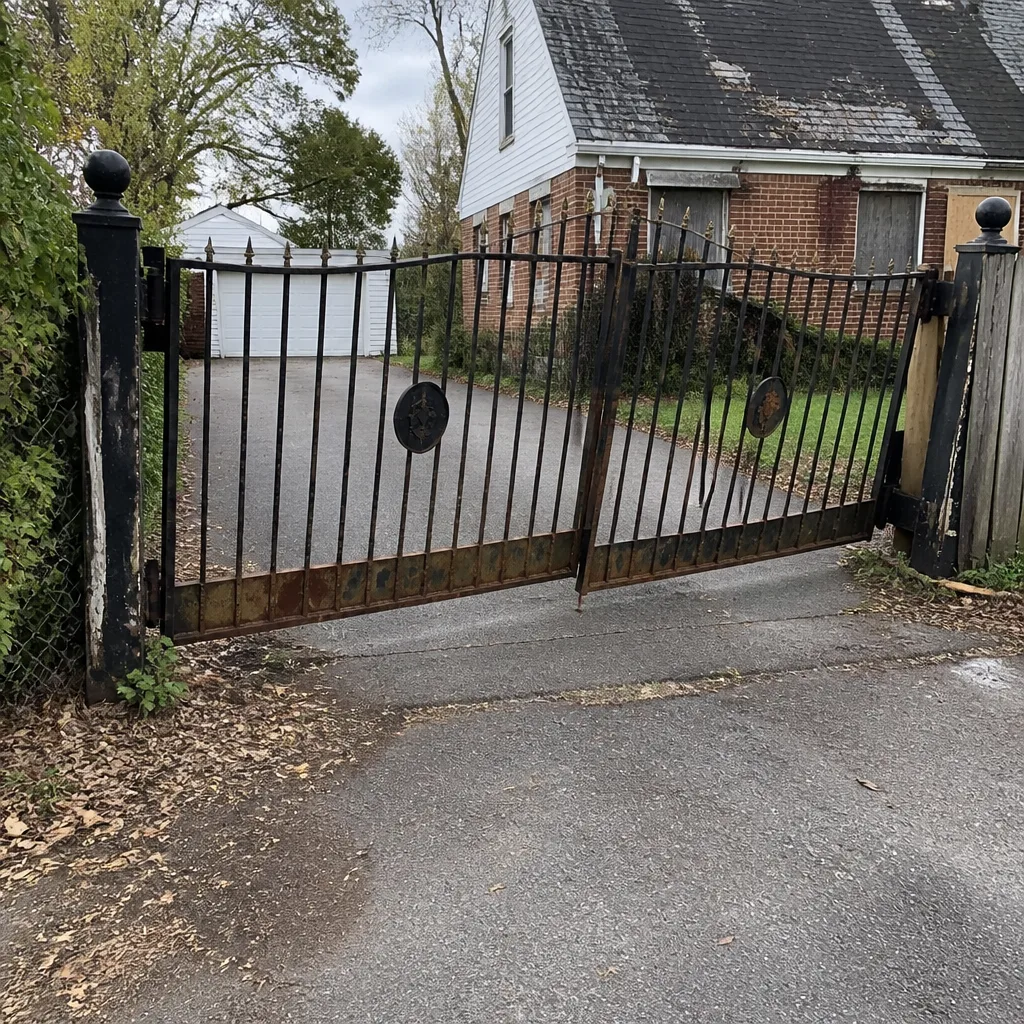 Before
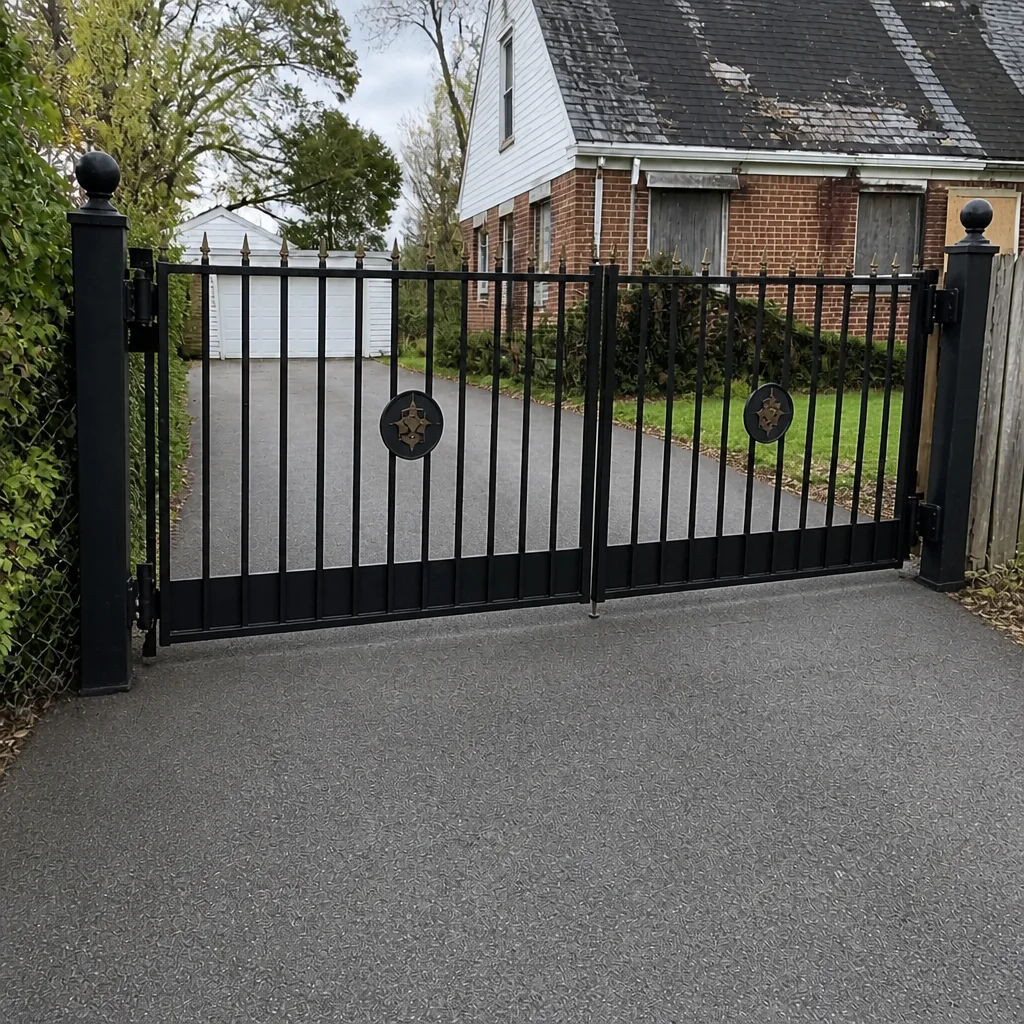 After
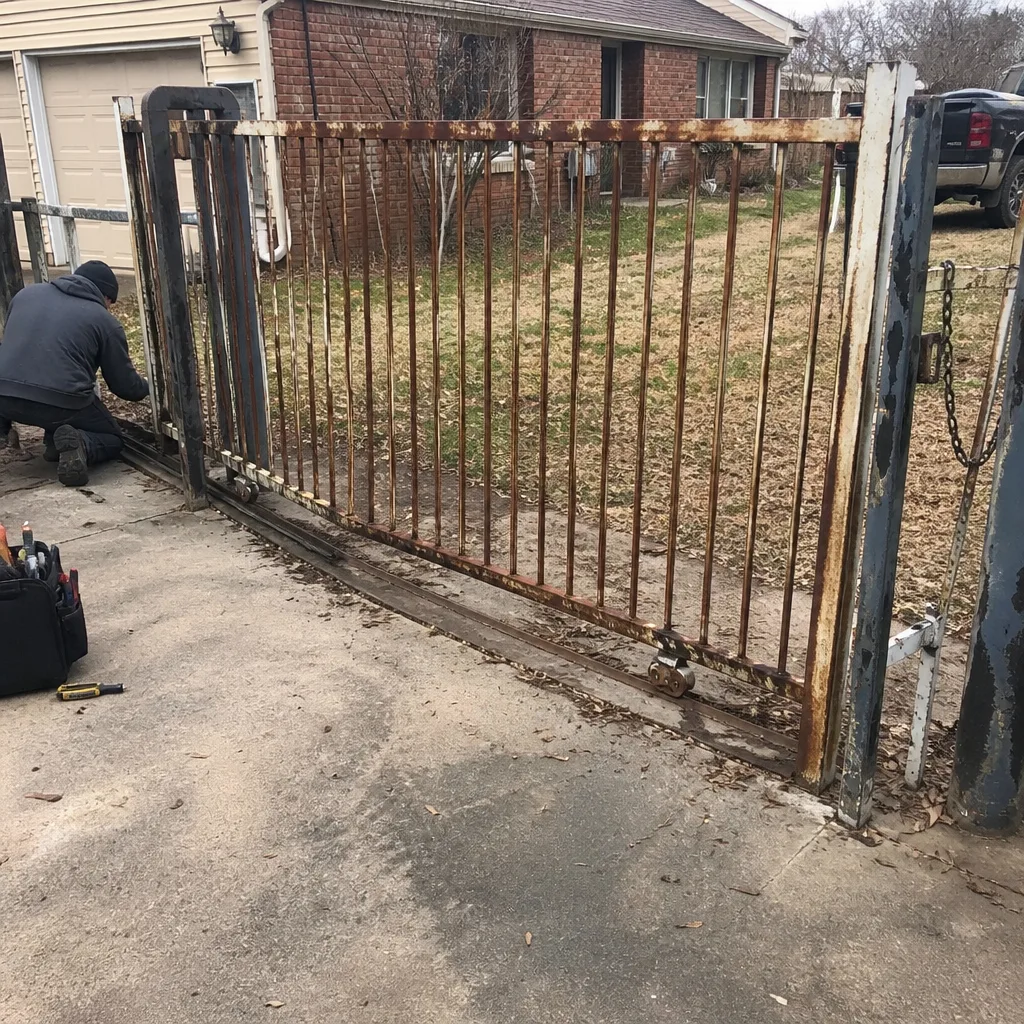 Before
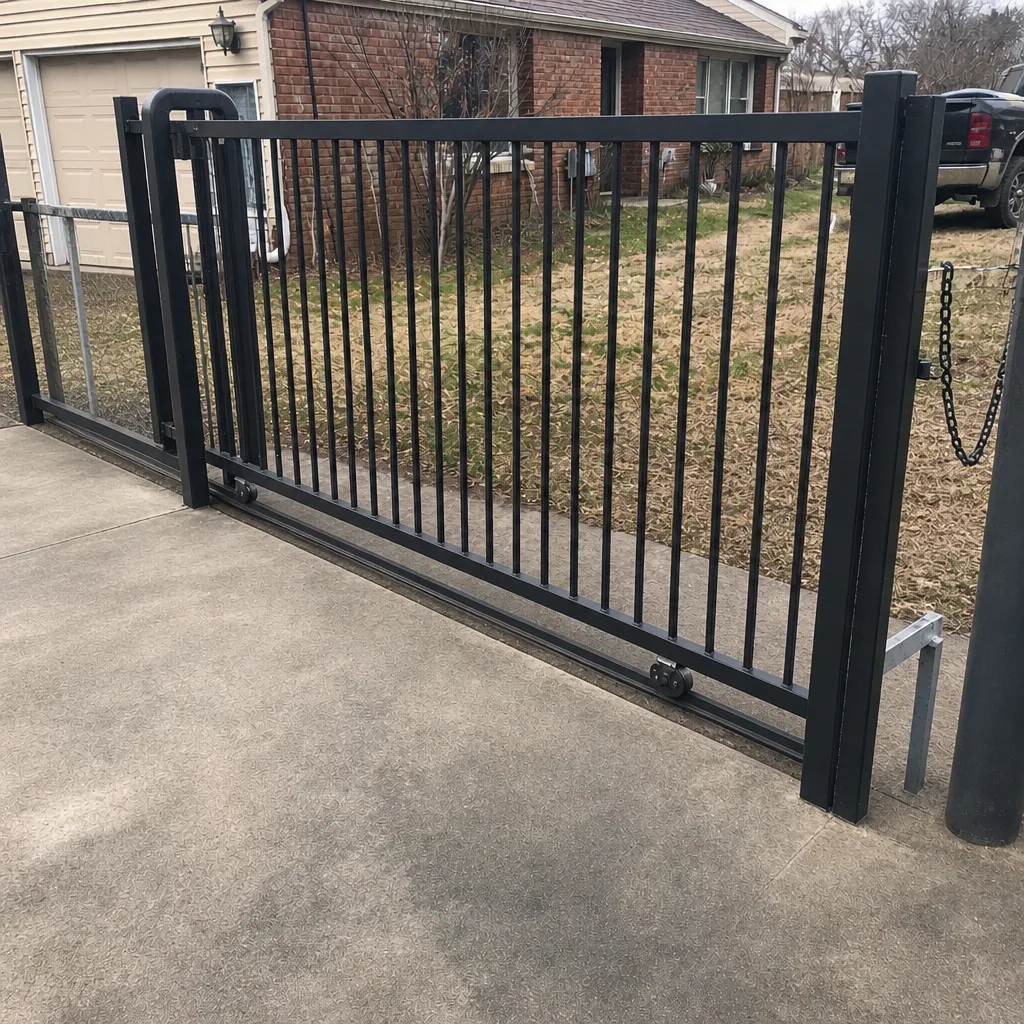 After
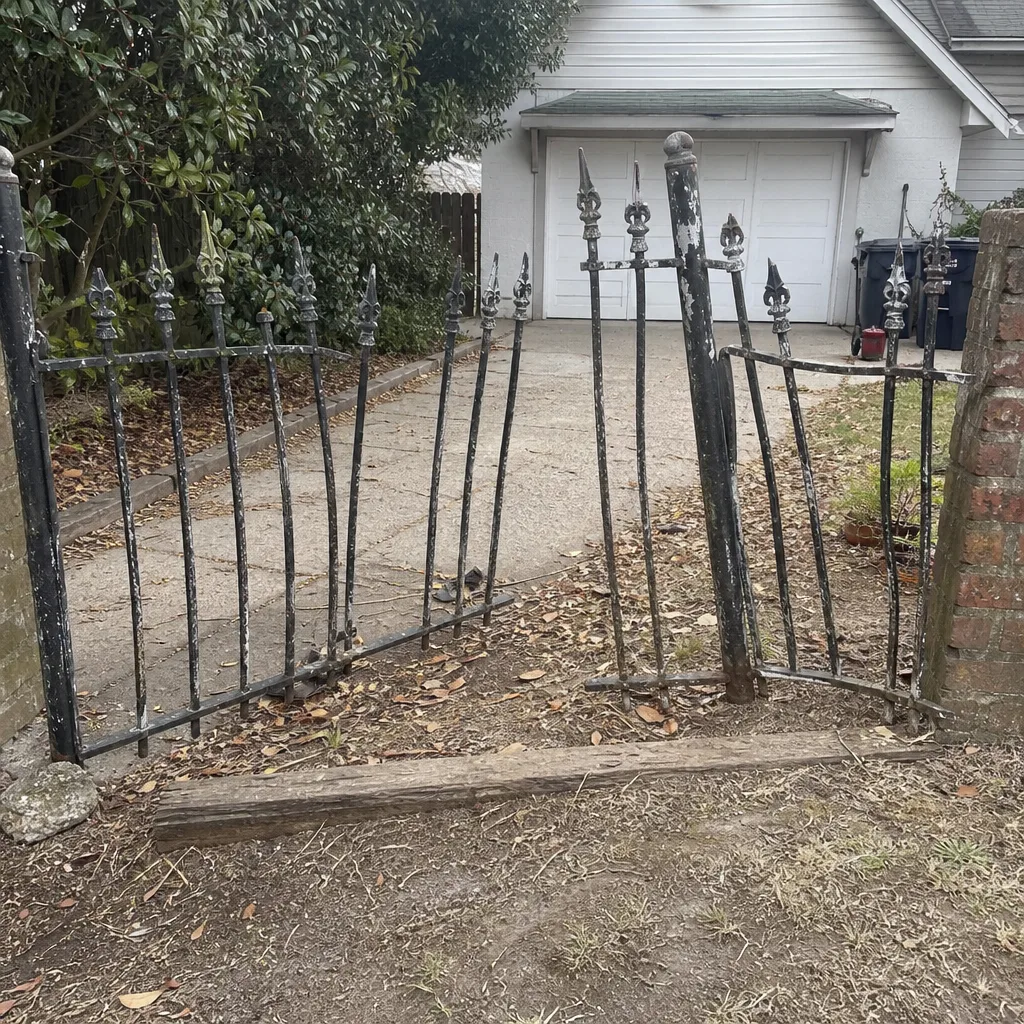 Before
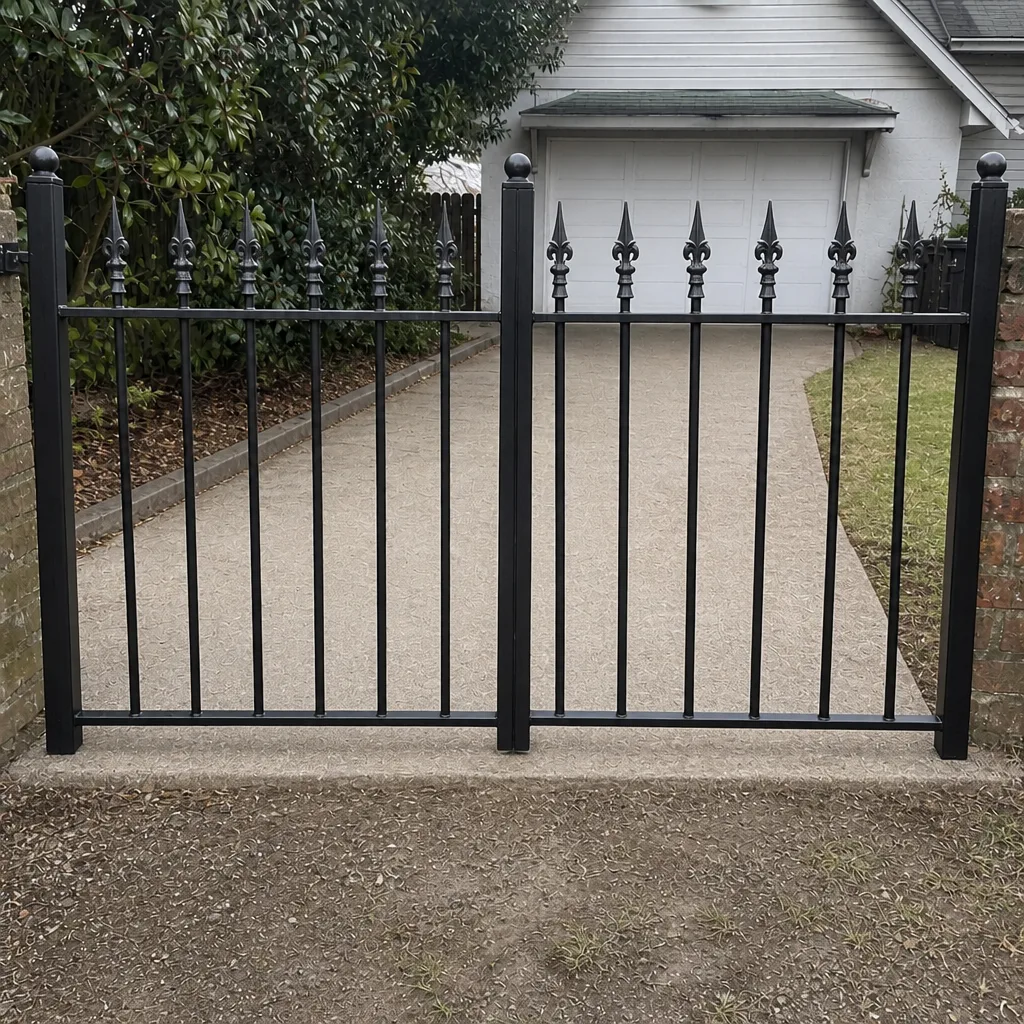 After
Frequently Asked Questions
Yes, for mechanical, low-energy tasks: lubricating hinges, clearing debris from the track, pairing a new remote, replacing remote batteries, and a seasonal visual inspection. Anything involving the operator’s control board, wiring, gate footing, weld integrity, or a safety edge on a commercial system should go to a trained technician, because those tasks carry electrical, structural, or warranty risk. Call (844) 834-3028 for an estimate if you’re unsure which side of the line a task falls on. Estimates are free.
On Virginia Beach gates, salt exposure and humidity seize fasteners over time, and a seized bolt under force will round or snap rather than turn. That’s not a sign you did something wrong; it’s the nature of the climate. Apply a penetrating lubricant, wait, and try once. If it doesn’t move, stop and hand off the extraction. Call (844) 834-3028 to book a diagnostic visit before the gate is left half-disassembled.
It depends on the brand, the model, and the specific repair. Pairing a remote or swapping batteries almost never affects a warranty, but an unauthorized repair on the operator or a repair that fails because a structural fault was missed can complicate a claim. Read your specific warranty paperwork and, when a repair touches the operator or the structure, have a technician diagnose it. That keeps the chain of cause and effect clean. Call (844) 834-3028 for a written estimate.
Residential operators on brands like Linear or Ghost Controls are generally simpler, and homeowners can safely handle a remote pairing or a battery swap. Commercial-grade operators like FAAC, BFT, and DoorKing add monitored safety edges, loop detectors, and access-control integration, and those systems fail-safe rather than fail-open, so a misstep can leave a property accessible or locked. Commercial work should always go to a gate specialist. Call (844) 834-3028 for a free estimate.
A gate that reverses without an obstruction usually points to a misaligned or dirty photo-eye, a limit switch drift, or a control board fault on the safety circuit. Wipe the photo-eye lens and confirm the beam isn’t blocked by landscaping. If the gate still reverses, the fix is a technician’s: which subsystem is responsible can only be determined on-site. Call (844) 834-3028 to book a diagnostic. We answer 24/7.
For most residential gate failures, yes, same-day repair is common. We answer 24/7 and run fast dispatch from 7am to 7pm, Sunday through Friday. A call outside dispatch hours is booked into the next opening. Any work is quoted in writing before it starts. Call (844) 834-3028 for a free estimate. Note: a brand-new install or a major electrical rework is measured and scheduled rather than same-day, because it’s ordered and planned rather than repaired.
The Bottom Line
The DIY-versus-professional question on a gate isn’t about your skill. It’s about whether the task touches structure, electricity, or the operator warranty. Genuinely DIY-safe tasks are limited: lubricate hinges, clear the track, pair a remote, replace batteries, and inspect visually. Everything else, from footing checks to control boards to weld repair, is professional-only work. In Virginia Beach, the salt-laden air makes fasteners seize and hinges snap, so a “simple” mechanical fix can drift into danger fast. Use that as your line. When you’re near it, stop and get a free estimate. If the gate is stuck now, don’t fight it. Call (844) 834-3028 for a free estimate. We answer 24/7 with fast dispatch from 7am to 7pm, Sunday through Friday.
Related Reading
- electric gate repair for the electrical side of gate ownership
- gate repair for same-day residential and commercial fixes
- Virginia Beach service area overview
Written by the team at Ashton Gate Repair.