
Last updated November 16, 2026
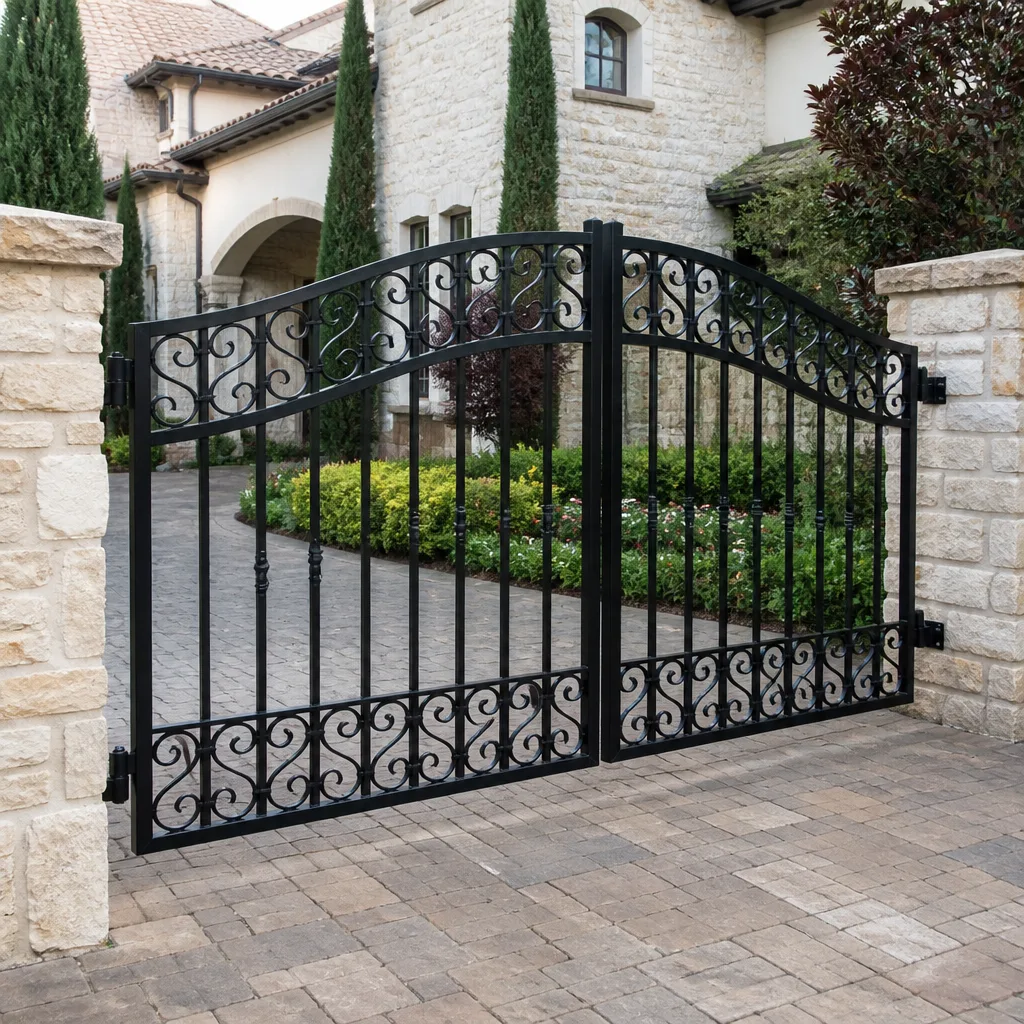 Wrought iron
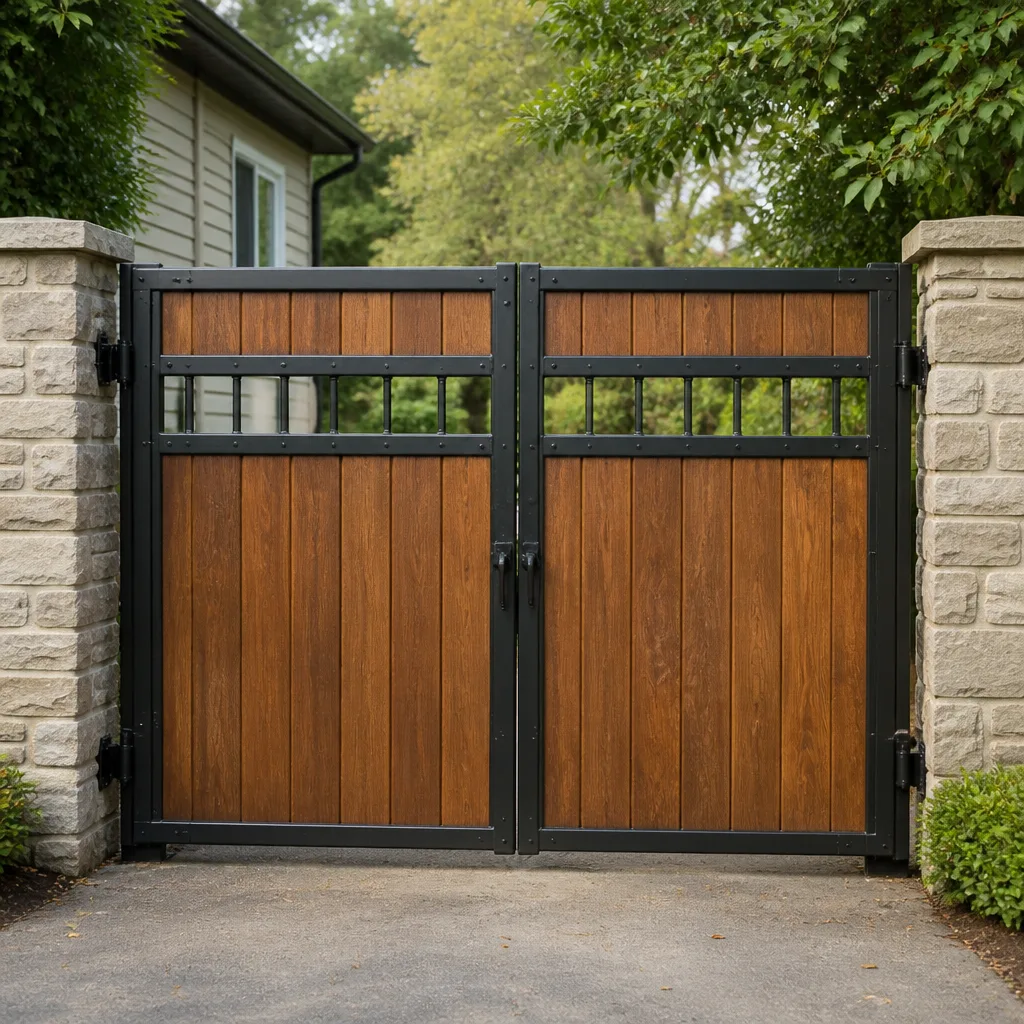 Wood & steel frame
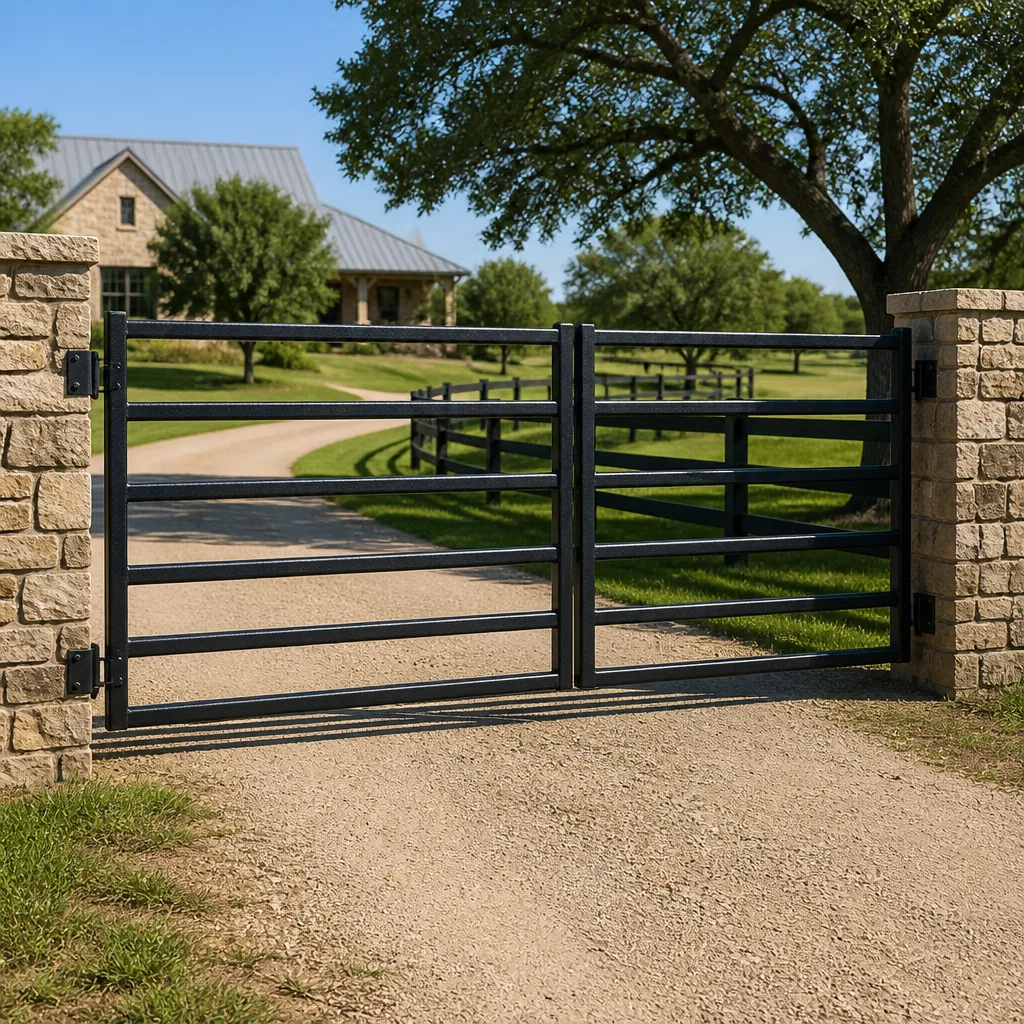 Farm & ranch
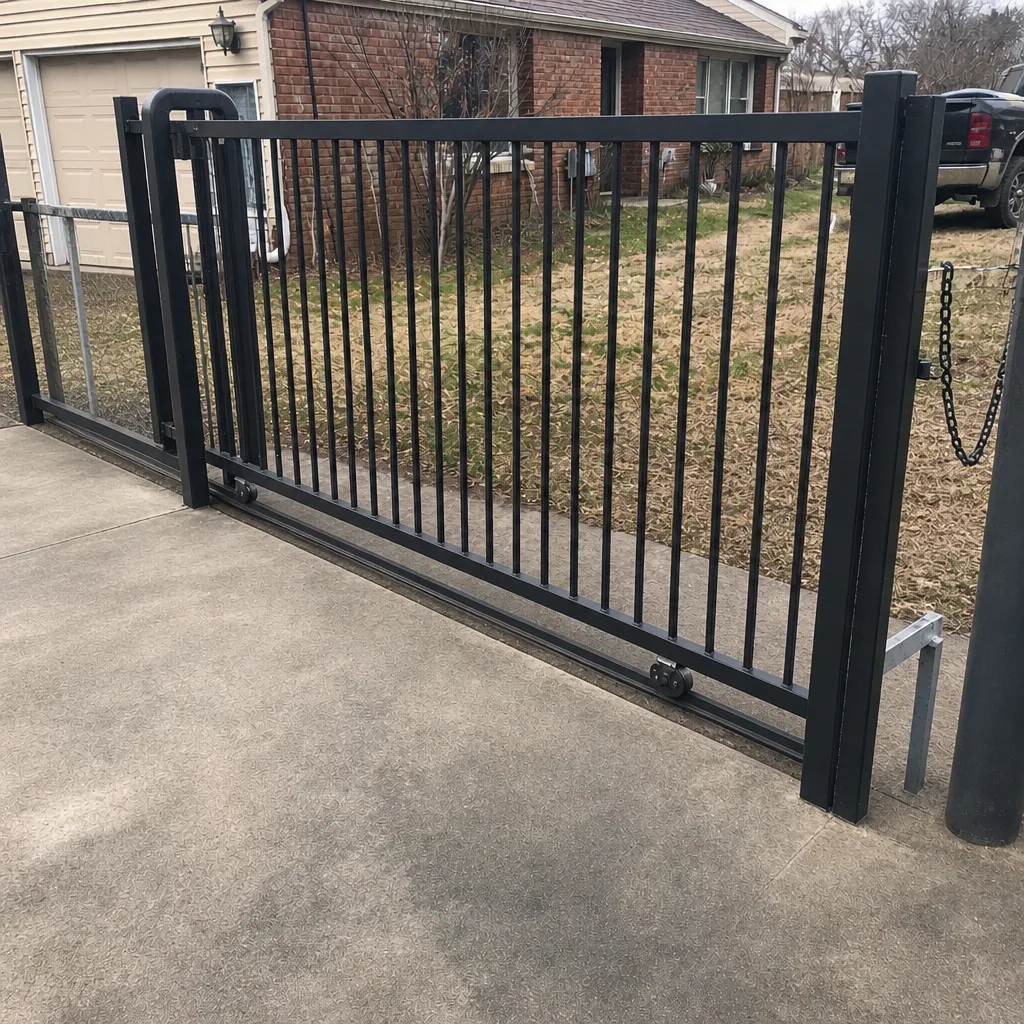
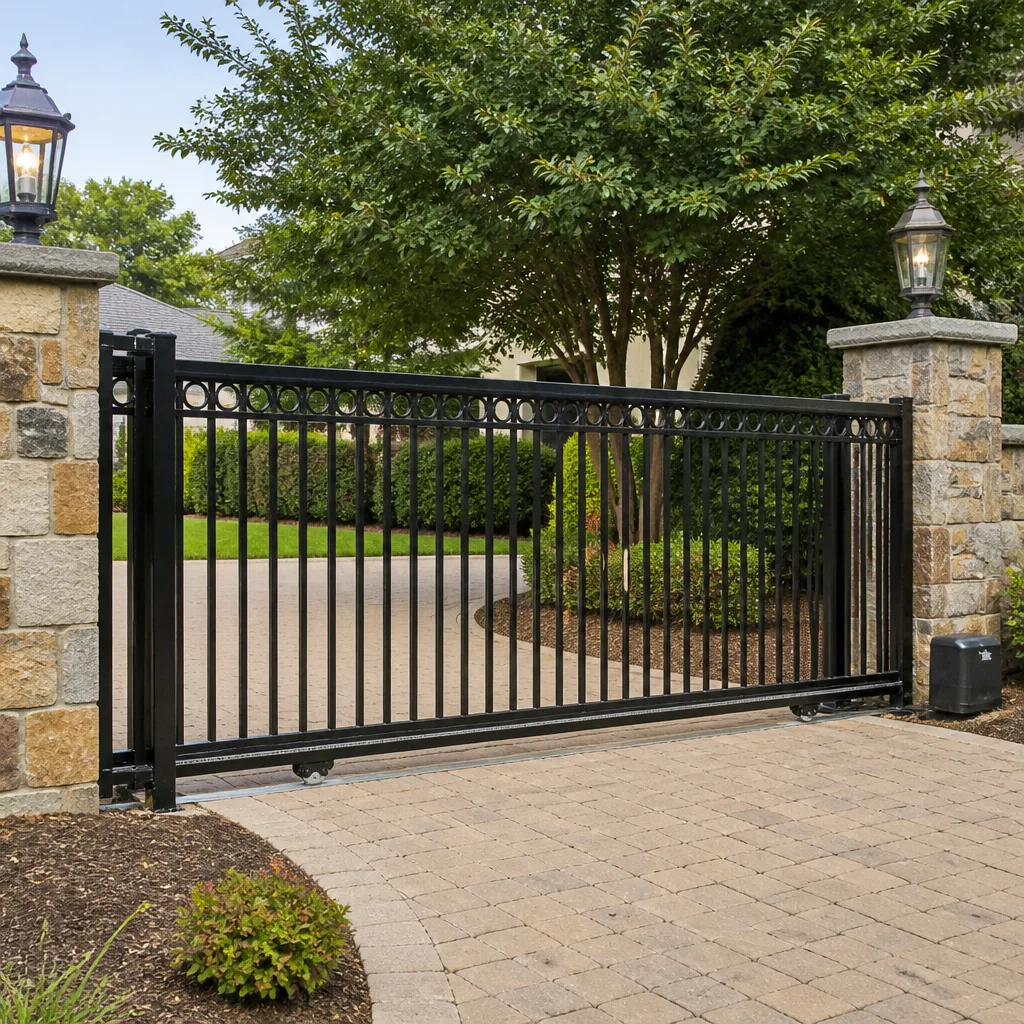 Sliding driveway gates
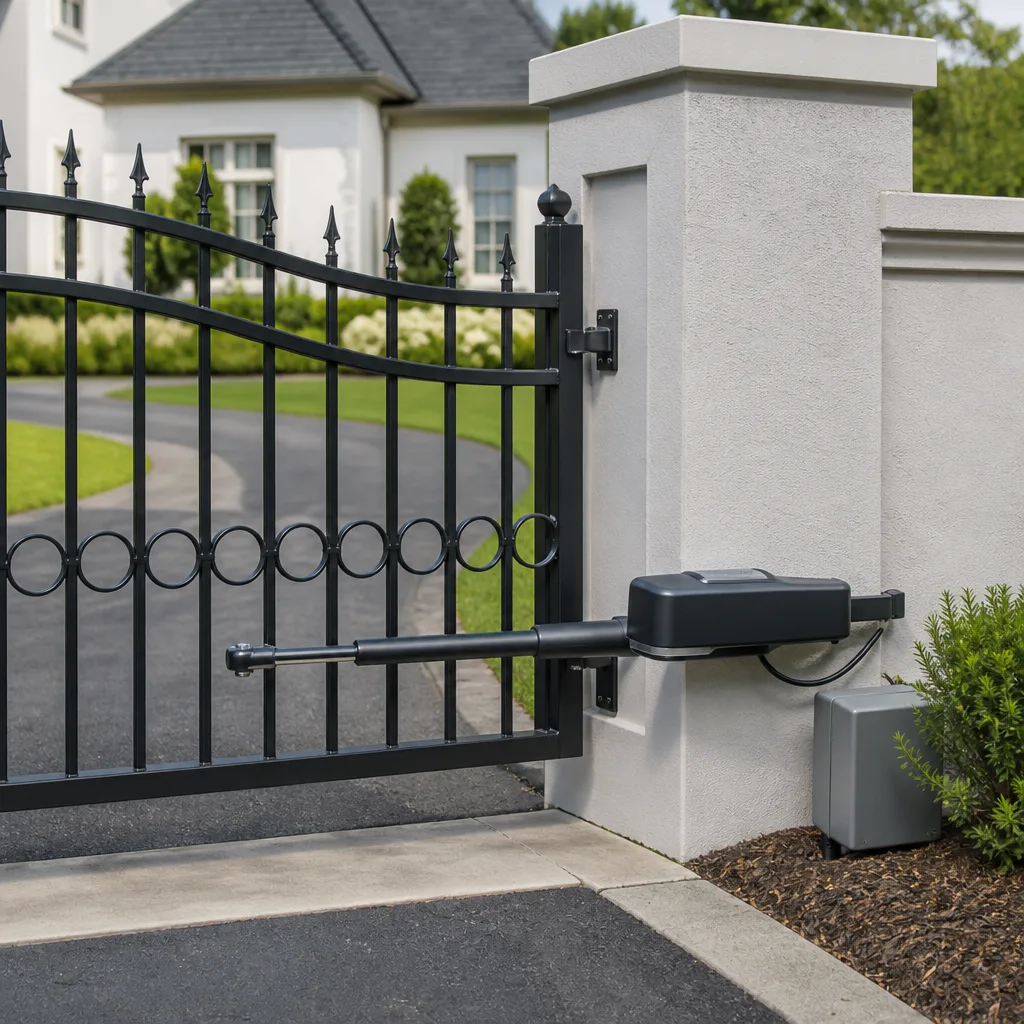 LiftMaster operators
Free on-site gate assessment - hinges, posts, and your LiftMaster or Nice gate operator checked before anything is quoted
The assessment is free and the quote is the invoice.
Get your free estimateThe Complete Guide to Gate Repair in Virginia Beach
Most gate repair advice on the internet was written by someone who has never stood next to a gate that has spent a few summers in Virginia Beach. The failure patterns here are different. Hinges seize in ways inland hinges don’t. Control boards fail on a schedule that follows the humidity, not the calendar. A gate that runs perfectly in a dry climate can be on its third repair before the owner realizes something about the location is driving it.
This guide maps every common gate failure mode to its cause and its fix, explains which jobs need a gate specialist and which don’t, covers the brand-specific symptoms we see most often, and shows you how to document a working system so any technician can work from a baseline. If you own or manage a gate in Virginia Beach, this is the reference we wish every customer had before their first breakdown.
Quick Answer
Gate repair in Virginia Beach usually comes down to three culprits: hinge and hardware corrosion from humidity cycles, operator or control board failure, and track or roller wear on sliding systems. A qualified gate technician can diagnose most of these on-site by testing the operator, inspecting the hardware, and checking the safety devices. Most repairs are straightforward once the actual failure point is identified, and the price should be set by a written estimate before any work starts.
Styles & brands we work with
- Wrought iron
- Wood & steel frame
- Farm & ranch
- Sliding driveway gates
- LiftMaster operators
Table of Contents
- Why Virginia Beach Gates Fail Differently
- Gate Specialist vs. Fence Company: Why the Difference Matters
- Brand-Specific Failure Patterns You’ll See in Virginia Beach
- How We Diagnose a Failing Gate: Step by Step
- Repair or Replace? How to Decide
- The Code Compliance Gap Most Guides Skip
- How to Document Your Gate Before It Fails
- What Gate Repair Costs in Virginia Beach
Why Virginia Beach Gates Fail Differently
Virginia Beach sits in a climate that stresses gate hardware in ways that don’t show up on a spec sheet. You get heat and humidity through the summer, temperature swings in the shoulder months, and plenty of moisture in the air year-round. That combination drives three distinct failure patterns, and once you know what they are, you can predict what your gate is going to do.
Hinge corrosion. Standard steel hinges corrode from the inside out. The pin seizes first, then the hinge stops pivoting cleanly and starts putting lateral stress on the gate leaf and the post. A hinge that “feels stiff” is usually the first sign. Left alone, that stiffness turns into a sagging gate that no amount of adjustment will fix without replacing the hinge.
Operator and control board failure. Electronic operators live in a box attached to the gate, and that box breathes humid air every day. Moisture condenses on cool evenings, then evaporates the next morning. Over months and years, that cycle corrodes circuit board contacts and turns a working operator into an intermittent one. The symptom is usually a gate that works most of the time, then randomly reverses or refuses to close. That behavior is not usually a mechanical problem – it’s the board.
Weld-point rust on steel gates. Welds are where the metal gets hottest during fabrication, and they’re where surface rust starts first. On a steel gate in Virginia Beach, rust at the weld points is the leading indicator that the finish is breaking down. Catch it early and it’s a refinish job. Ignore it and the weld itself becomes a structural concern.
None of this means a Virginia Beach gate is doomed. It means the maintenance calendar and the failure timeline are different here than they’d be in a drier climate, and treating your gate like it’s somewhere else is how small problems become expensive ones.
Gate Specialist vs. Fence Company: Why the Difference Matters
A fence company and a gate specialist are not interchangeable, and the gap between the two shows up after the first repair, not during it. Fence installers know fence panels, posts, and the basic mechanics of a manual gate. That’s a real skill set. It is not the same as understanding an operator’s control board, safety loop, or limit switch, and treating them as if they were is why so many gates in Virginia Beach get “fixed” two or three times before the actual problem is solved.
Here’s the distinction in practical terms:
- A fence company sees a mechanical problem. A gate specialist tests the operator, the power supply, and the safety devices separately before touching the hardware.
- A fence company replaces parts. A gate specialist diagnoses the failure mode and confirms the replacement addresses the cause, not just the symptom.
- A fence company may not know your brand. A gate specialist has worked across the major systems and recognizes brand-specific quirks that make one diagnosis more likely than another.
- A fence company may subcontract the electric side. A gate specialist handles electric gate repair as a core service, including control boards, loop detectors, keypads, and safety sensors.
We’re gate-only specialists, which means every tool, every part we carry, and every technician’s training is built around gates. We work on the gate you have, not the one we’d prefer to sell you. If a fence company genuinely can fix your problem, we’ll say so. But when the failure is inside the operator, the control board, or the safety circuit, that’s a specialist’s job, and the consequences of getting it wrong – including a gate that closes on a car or stays open all night – are why it matters.
Brand-Specific Failure Patterns You’ll See in Virginia Beach
Different operators fail in different ways, and recognizing the pattern is half the diagnosis. Here are the ones we see most often in this area.
Viking
Viking operators are workhorses on residential vehicle gates, but their weak point in humid climates is the control board and the limit switch assembly. When a Viking gate stops mid-travel, reverses randomly, or loses its limits after a power outage, the control board is usually the first place to look. The hardware is fine. The electronics have been breathing humid air for years.
Elite
Elite systems hold up well mechanically, but on sliding gates they’re prone to track alignment drift. A sliding Elite gate that drags, jerks, or grinds is usually a track or roller issue rather than an operator problem, and the moisture-driven expansion of the track base is often the culprit in Virginia Beach. Adjusting the operator before addressing the track is a waste of time.
Linear
Linear operators are common on residential swing gates, and their failure pattern in this climate is the battery backup and the arm mechanism. If a Linear gate stops working during a power blip but runs fine otherwise, the backup battery is the likely culprit. If the arm binds or slips, the mechanical wear on the arm pivot should be checked before blaming the board.
BFT
BFT systems are commercial-grade, and their failures tend to be quieter. The operator itself rarely fails; the failure is usually in the accessories – the safety edges, the loop detector, or the remote receiver. A BFT gate that refuses to close but opens fine is almost always reporting a safety-device fault, not a motor fault. Diagnostics before parts replacement saves real money on these systems.
Ghost Controls
Ghost Controls are popular on residential and hobby-farm gates, and their weak point is the control board and the wireless accessories. In high-humidity environments, the board can develop intermittent faults that present as a gate that works reliably for weeks and then randomly fails to close. Don’t replace the remote first – test the board and the safety devices.
We work across LiftMaster, FAAC, BFT, Linear, Viking, Ghost Controls, DoorKing, Elite, and Mighty Mule, so whatever system you have, we can diagnose it on-site without telling you the only fix is a brand switch. That matters, because the gate on your property is the one that needs to work.
How We Diagnose a Failing Gate: Step by Step
Diagnosis is where most of the value in a repair call happens. A technician who skips steps and guesses at parts will cost you money over the long run. Here’s the sequence we follow when we arrive at a gate that isn’t working as expected.
- Confirm the complaint. Is the gate stuck open, stuck closed, reversing, not responding to remotes, or making a new noise? The answer narrows the possibilities before we touch anything.
- Test the power supply and the operator. We verify the operator is receiving correct voltage and that the board is powering up cleanly. This catches the common “dead gate” that’s actually a tripped breaker or a failed transformer.
- Test every safety device. Loop detectors, safety edges, photo eyes, and keypads all have failure modes. A gate that won’t close is usually telling you a safety device is reporting a fault.
- Inspect the mechanical components. Hinges, rollers, tracks, and the arm mechanism get a physical inspection for corrosion, wear, and misalignment. This is where the coastal climate shows its work.
- Test the operator under load. A gate that works when the technician runs it by hand but fails under its own weight has a mechanical or adjustment problem, not an electronics problem.
- Confirm the fix and quote it before work begins. We explain what we found, what the repair involves, and what it will cost. You agree to the price before any work starts. That’s not a formality – it’s the commitment that keeps the invoice from surprising you.
On-site diagnosis matters because a gate is a system, and a system has to be tested as a whole. Pulling a single part and replacing it without confirming the rest of the system is working is how a “fixed” gate fails again a week later. When a Virginia Beach gate comes back with the same complaint, it’s almost always because one of these steps was skipped the first time.
Repair or Replace? How to Decide
The repair-or-replace question comes down to three things: the age and condition of the structural components, the availability of parts for your operator, and whether the current system actually meets your needs. Answer those honestly and the decision usually makes itself.
Repair makes sense when the gate structure (posts, frame, hinges, track) is sound, the failure is isolated to a component or a control board, and the operator is a current or well-supported model. Most residential and light commercial gate failures fall into this category. A worn hinge, a failed safety edge, or a corroded control board is a repair, not a replacement.
Replacement makes sense when the structural components are compromised, the operator is obsolete and parts aren’t available, or the gate no longer fits how the property is used. A gate that was installed for a single car driveway and now has to handle delivery vehicles and a second household is a replacement conversation, not a repair one.
One pattern worth flagging: in Virginia Beach, a gate that has been “repaired” two or three times in two years on the same issue is often a structural problem that has been masked by component replacement. The hinges keep failing because the post is out of alignment. The operator keeps failing because moisture is getting into the enclosure. A proper diagnosis catches that and addresses the cause, which is often cheaper than the third round of parts.
If you’re not sure which category you’re in, a proper gate repair evaluation will tell you. Estimates are free, and a tech who’s honest about when a repair isn’t worth it will save you more than one who isn’t.
The Code Compliance Gap Most Guides Skip
A gate can be repaired correctly and still be out of compliance. That’s a gap most gate guides skip entirely, and in Virginia Beach it matters.
Gate safety standards have tightened over the years, particularly around entrapment protection. A gate that was installed fifteen years ago may not have the safety edges, photo eyes, or loop detectors that a modern installation would include. If a technician repairs your operator and returns the gate to service without flagging the missing safety devices, your gate works but it doesn’t meet current standards. That’s a liability question, not just a technical one.
Compliance issues we see most often:
- Missing or failed photo eyes on a swing gate. A gate without working photo eyes can close on a person, pet, or vehicle.
- No safety edge on a sliding gate. The leading edge of a sliding gate needs a reversing device to meet current standards.
- Loop detectors that have failed but were never replaced. A loop that doesn’t detect a vehicle means the gate can close on it.
- Keypads and access control with no fail-safe behavior. If the system loses power, does the gate fail open or fail closed? That decision should be deliberate.
We flag compliance issues during any repair and give the property owner the information they need to make a decision. We don’t make the rules, and we can’t promise a specific code outcome for your property without knowing the installation details and the local requirements that apply to it. But we can tell you what’s missing or failed and what it would take to correct it. If you manage a commercial property with an access control system, that conversation is worth having before an incident forces it.
How to Document Your Gate Before It Fails
The single most useful thing a gate owner can do is document the system while it’s working. When a gate fails, the technician on-site has two options: diagnose from scratch, or work from a baseline that tells them what “normal” looked like. The second option takes less time, costs less, and produces better results.
Here’s what to capture:
- Photograph the operator. Get a clear shot of the operator housing, the brand label, and the model information. That saves the technician a guess and ensures the right parts get ordered.
- Photograph the control board. With the cover off (only if you’re comfortable and the power is off), photograph the board itself. The layout tells a technician which generation and revision they’re working with.
- Record a normal cycle. A short video of the gate opening and closing normally is a reference point. If something changes later, you can compare.
- Note the safety devices. Write down what’s installed: photo eyes, safety edges, loop detectors, keypads. Photograph each one and note where it’s mounted.
- Keep the manual and any install paperwork. If you have the original installation documentation, keep it with the gate records. If not, download the manual for your model while it’s easy to find.
- Log every repair. Date, symptom, what was replaced, what it cost. That log is the single best predictor of what’s going to fail next.
If you have an older gate with no documentation, a specialist can build that baseline for you during a routine visit. It takes less time than you’d think, and it pays off the first time something goes wrong.
What Gate Repair Costs in Virginia Beach
Gate repair pricing in Virginia Beach varies by the failure, but most jobs fall into a predictable set of categories. The estimates below are typical ranges for the area, and the written estimate you get before work begins sets the final price.
| Repair Type | Typical Estimated Range |
|---|---|
| Hinge, roller, or hardware replacement | $150 – $400 |
| Operator adjustment or limit switch reset | $150 – $350 |
| Control board replacement | $350 – $800 |
| Safety device replacement (photo eyes, safety edges, loop detectors) | $200 – $600 |
| Track or alignment repair on a sliding gate | $250 – $700 |
| Full operator replacement (residential) | $900 – $2,200 |
Three things drive the price up or down. First, the brand: parts for commercial-grade systems cost more than residential parts, and a Board replacement on a BFT is a different job than on a Mighty Mule. Second, the access to the failure: a hinge that’s easy to reach is a different job than one that requires partial disassembly. Third, whether the failure is isolated or part of a bigger pattern: a gate that’s been repeatedly repaired often needs a structural fix, not another component.
We don’t quote a fee for coming out. The estimate is free, and it’s written, so you’re agreeing to a number before work begins. That’s the standard we hold ourselves to, and it’s the answer to the question every gate owner asks second: will the invoice match the quote? It will.
Common Mistakes to Avoid
- Assuming stiffness is a hinge problem because it feels like one. In this climate, a stiff gate is often a post out of alignment or a track issue that’s putting stress on the hinge. Replacing the hinge without addressing the alignment is a repeat-repair guarantee.
- Replacing the remote first. When a gate stops responding, owners often swap the remote, then the receiver, then the board. A technician diagnoses which of those is actually at fault in minutes, and you avoid buying two parts you didn’t need.
- Ignoring the operator’s safety devices. A gate that closes fine when a technician is watching might be closing on a failed loop detector. The gate works, but the safety system doesn’t, and that’s the failure that actually matters.
- Letting a fence company handle an operator failure. Fence companies are good at fence panels. When the failure is inside the control board or the safety circuit, the right technician is the one who works on gates only.
- Skipping maintenance because the gate is “running fine.” A gate that’s running fine is the best time to inspect it. A failed safety device doesn’t show up in daily use until it’s tested.
- Treating rust at the weld points as cosmetic. In Virginia Beach, weld-point rust is a leading indicator of finish failure. Left alone, it becomes a structural issue and a bigger repair.
- Not documenting the system while it works. Without a baseline, every repair starts from zero and takes longer. That’s time you’re paying for.
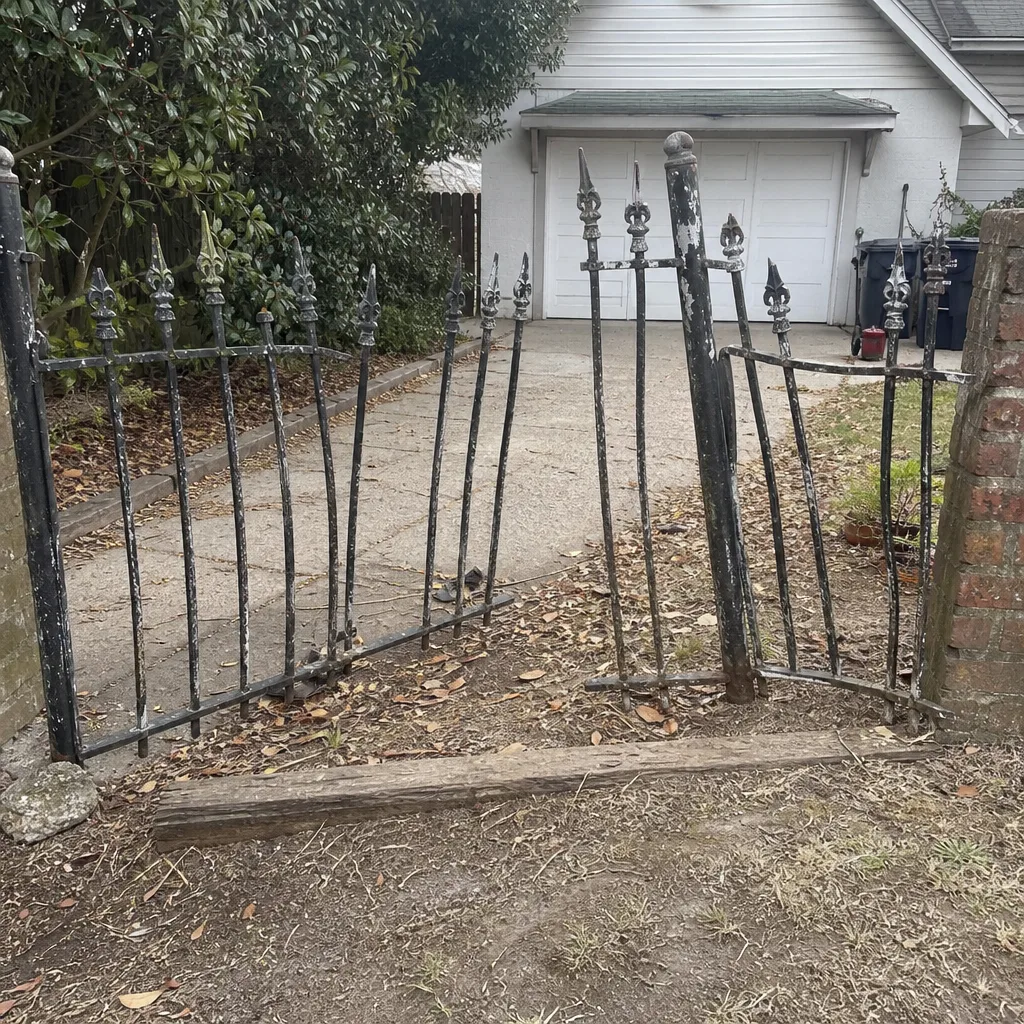
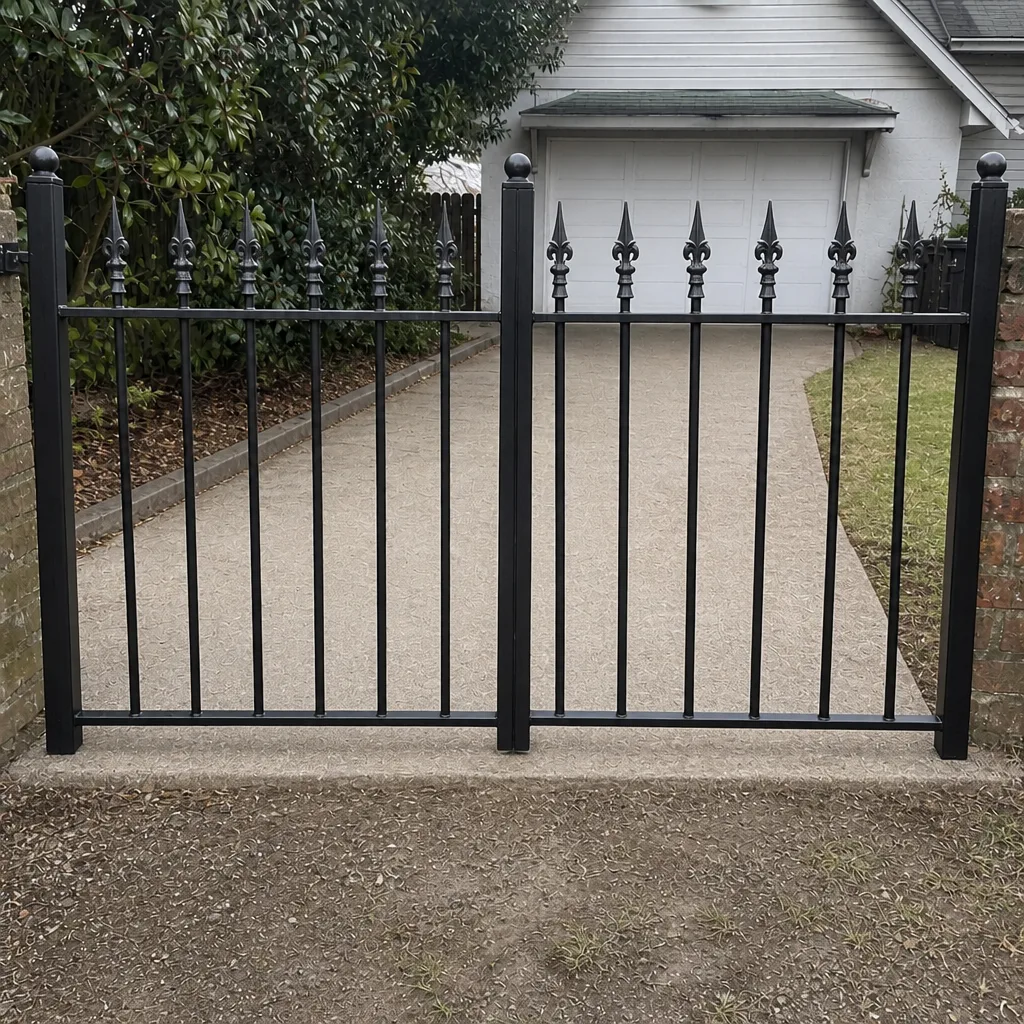
See the difference
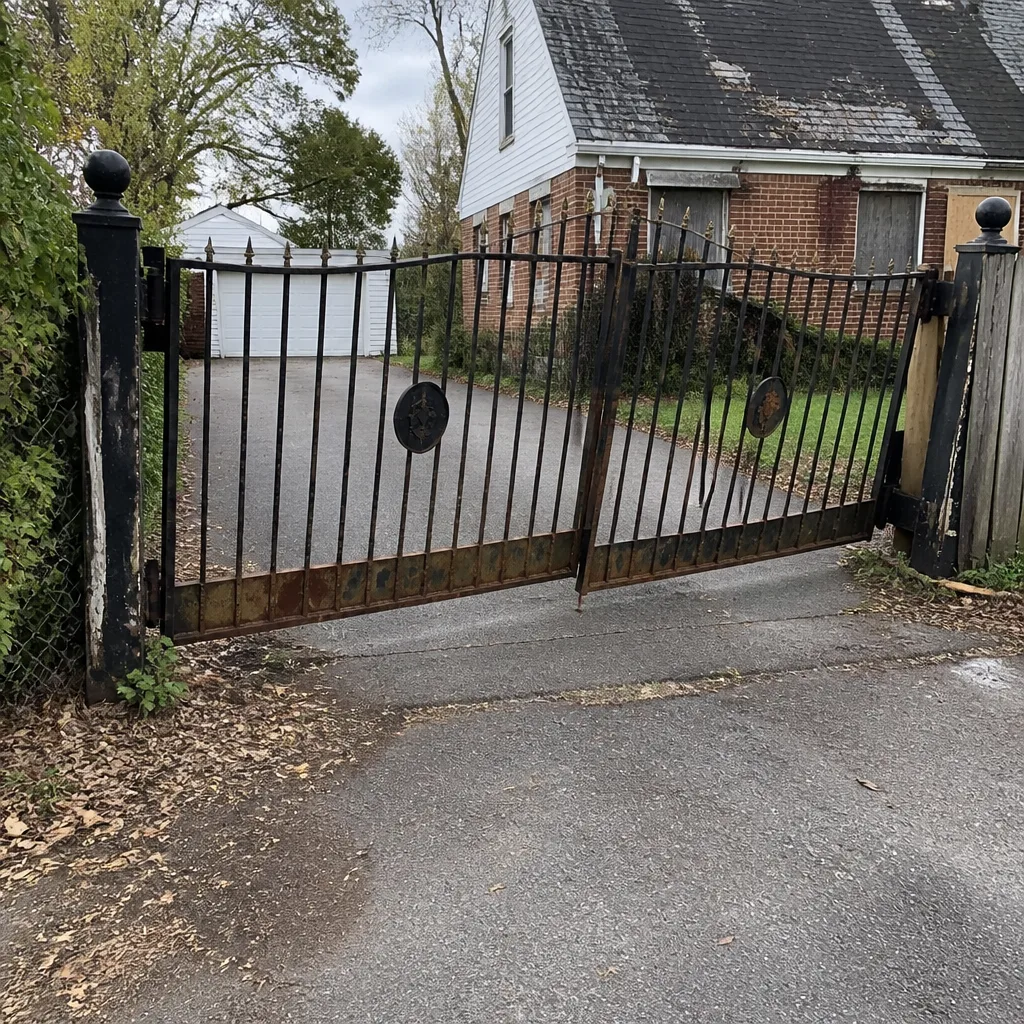 Before
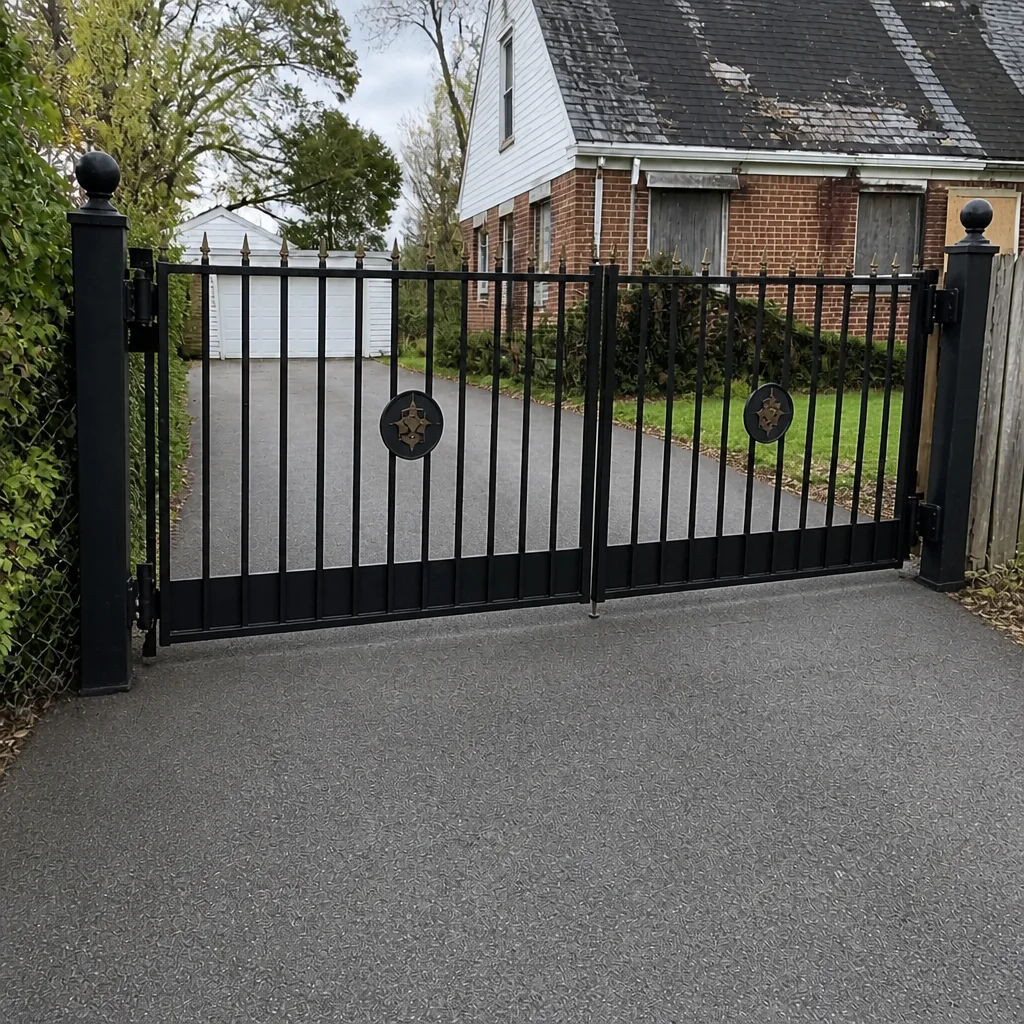 After
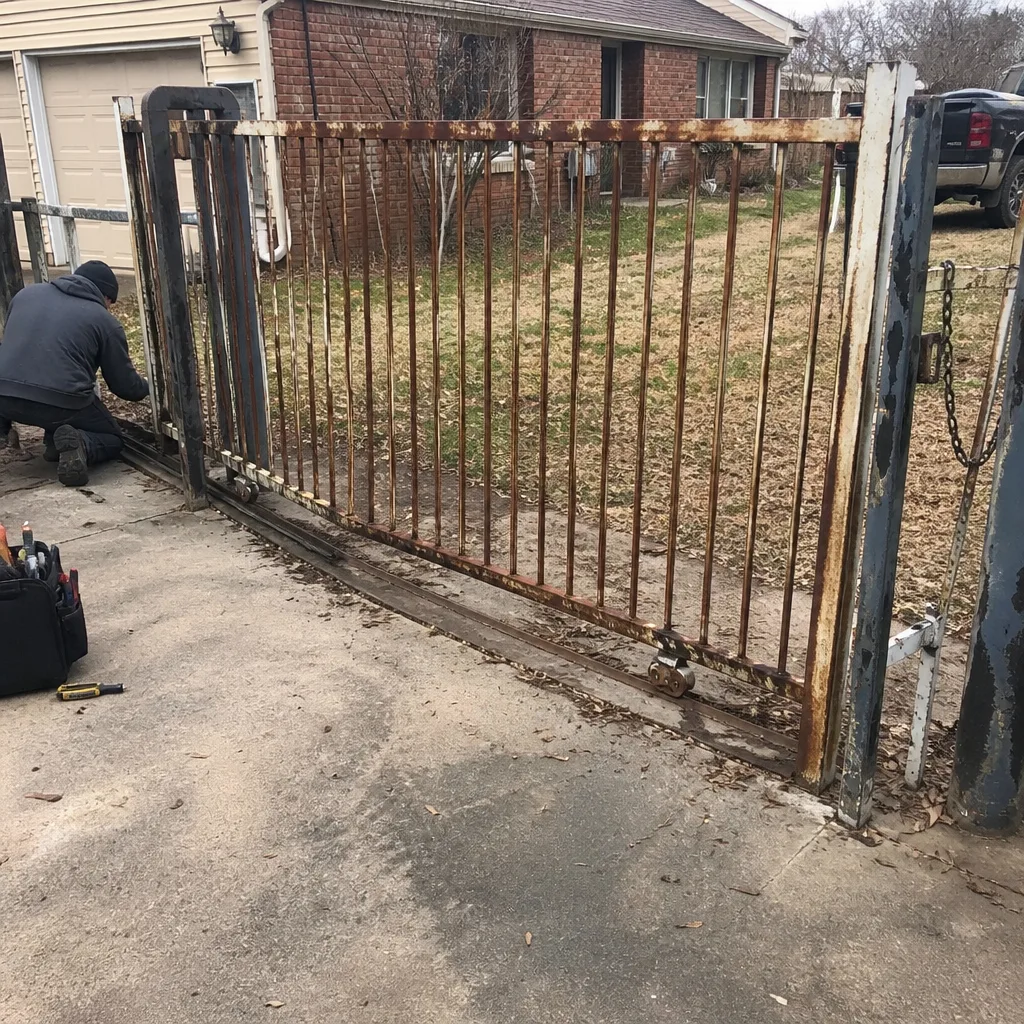 Before
 After
 Before
 After
When to Call a Professional
Some gate issues can wait for a scheduled visit. Others shouldn’t. Call a professional when the gate reverses unpredictably, when a safety device has failed or been bypassed, when the operator is making a new noise, when the gate is stuck open or closed, or when you’ve had the same issue repaired more than once and it keeps coming back. Those cases need a proper diagnosis, not another guess.
Ashton Gate Repair offers free estimates in Virginia Beach. Call (844) 834-3028 to schedule. We answer 24/7, and fast dispatch runs from 7am to 7pm, Sunday through Friday.
If a gate fails outside those hours, a call still gets you on the schedule for the next opening. The phone line is answered around the clock, so you’re not left waiting to find out when someone can come.
Frequently Asked Questions
Most gate repairs in Virginia Beach fall between $150 and $800 depending on the failure, with full operator replacement typically running $900 to $2,200. The written estimate sets the final price, and it’s agreed before any work starts. Call (844) 834-3028 for an exact quote – estimates are free.
In many cases, yes. Fast dispatch runs from 7am to 7pm, Sunday through Friday, and we aim to diagnose and repair on-site in a single visit. Call (844) 834-3028 to find out what’s available.
Yes. We work on residential operators and commercial-grade systems, including DoorKing, FAAC, and BFT. That includes control boards, loop detectors, keypads, and the safety devices that make a commercial gate compliant. Call (844) 834-3028 to discuss your property.
A repeat failure is almost always a sign that the underlying cause wasn’t addressed – a misaligned post, a corroded enclosure, or a structural issue that component replacement doesn’t fix. A proper diagnosis catches that, and it’s usually cheaper than the third round of parts. Call (844) 834-3028 to schedule a diagnostic visit.
Yes. We handle new gate installation as well as repair and electric gate repair, so you don’t need a second company as your needs change. Installation work is measured and scheduled, and you’ll get a written price before any work begins. Call (844) 834-3028 to set up a measurement visit.
Call (844) 834-3028. We answer 24/7, and a call outside dispatch hours is booked into the next opening, Sunday through Friday, 7am to 7pm. If the gate needs to be secured in the meantime, use the manual release if your operator has one and follow the manufacturer’s instructions.
The Bottom Line
Gate failures in Virginia Beach follow patterns, and the patterns come from the climate and the hardware, not from bad luck. Hinges corrode, control boards fail, and tracks drift because of humidity and temperature swings. Recognizing those patterns gets you to the right diagnosis faster, and it helps you avoid the repeat-repair cycle that comes from treating symptoms instead of causes.
The rest is discipline. Document the system while it works. Get a proper diagnosis before parts get replaced. Work with a gate-only specialist when the failure is inside the operator, the control board, or the safety circuit. And get the price in writing before any work starts.
Whether you’re dealing with a gate that’s failing now or one that’s running fine and deserves a preventive look, we’re here to help. Ashton Gate Repair is a dedicated Ashton Gate Repair team serving Virginia Beach and the surrounding area. Call (844) 834-3028 for a free estimate. We answer 24/7. Fast dispatch from 7am to 7pm, Sunday through Friday.
Written by the team at Ashton Gate Repair.