
Last updated November 16, 2026
 Wrought iron
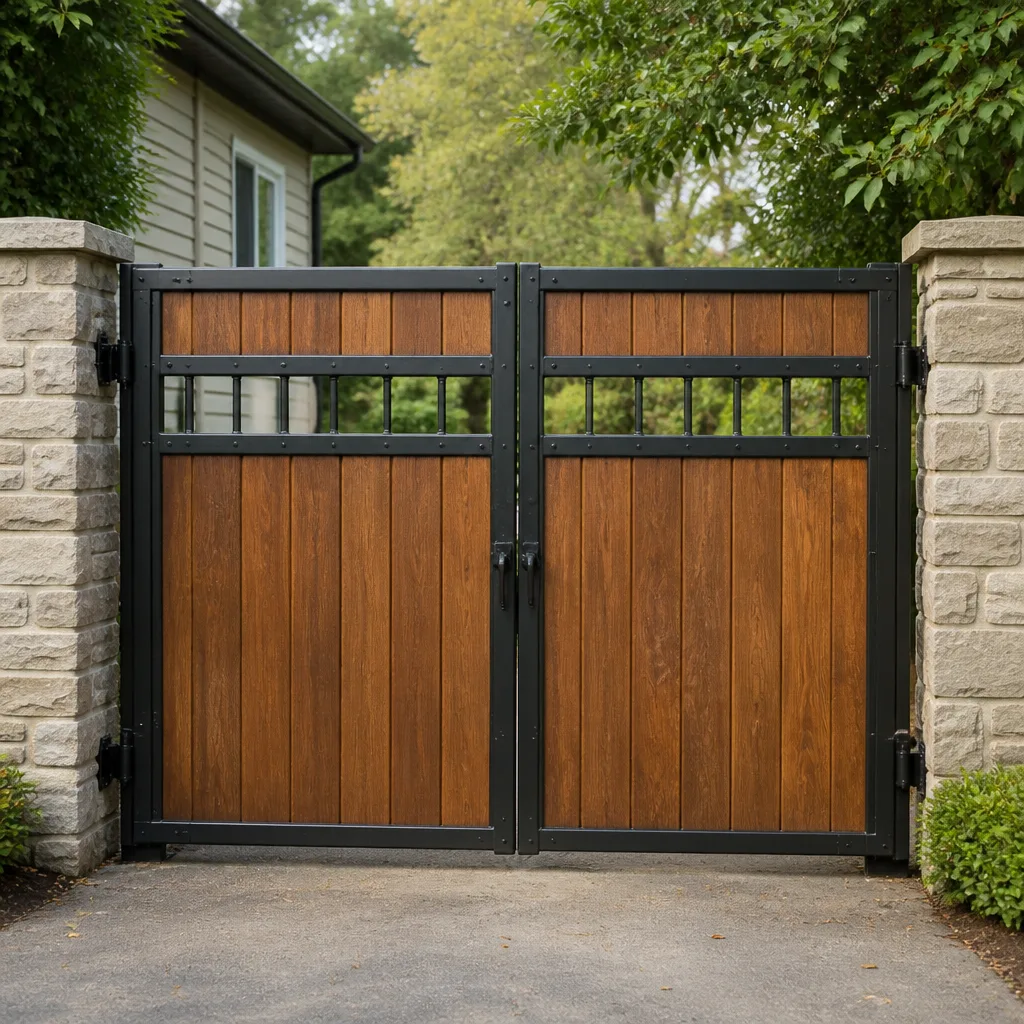 Wood & steel frame
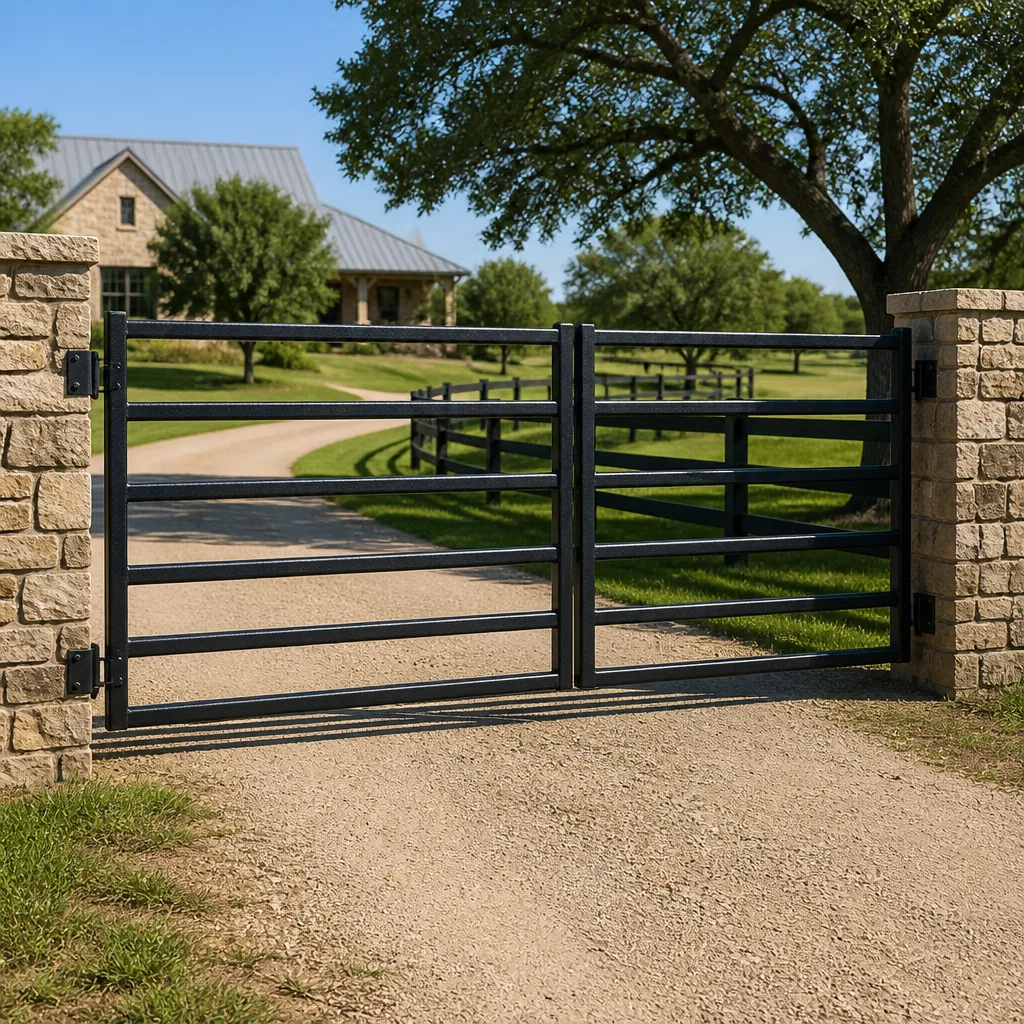 Farm & ranch
 Sliding driveway gates
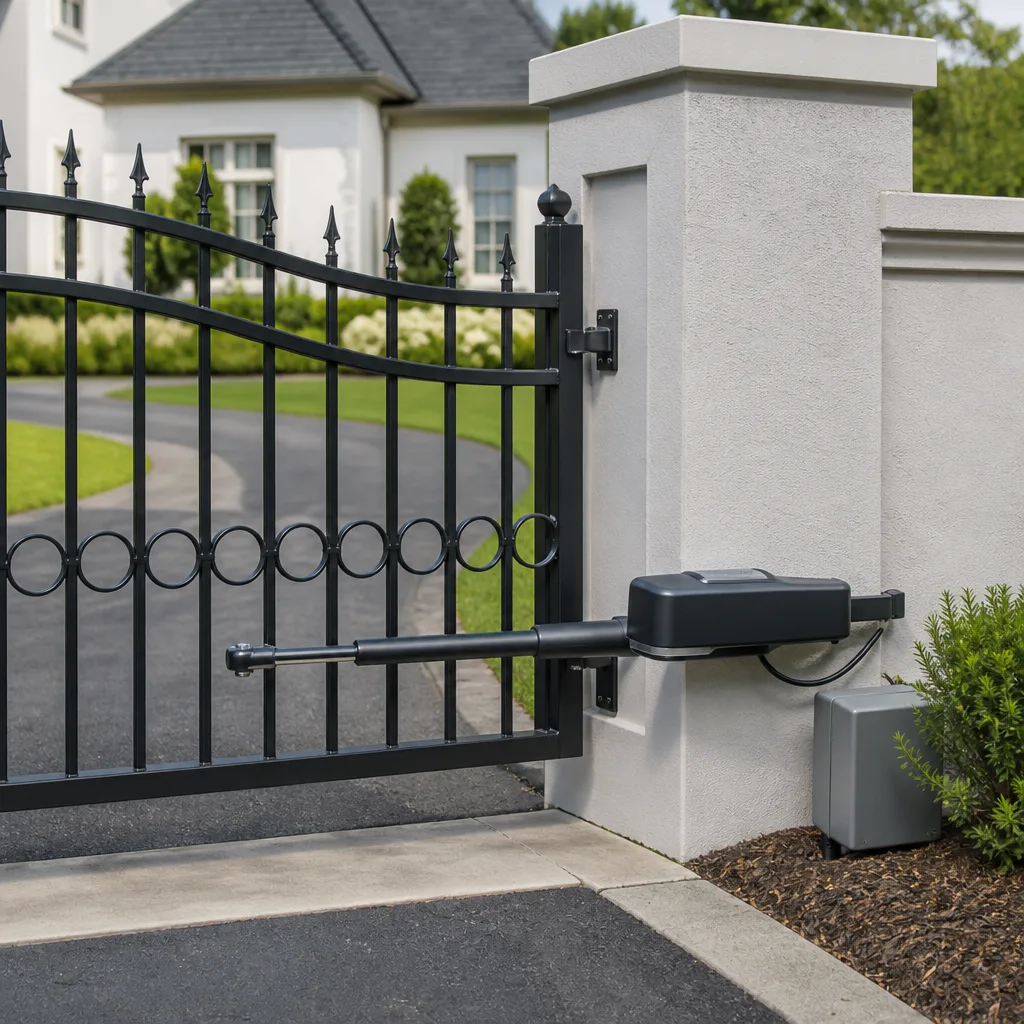 LiftMaster operators
Free on-site gate assessment - hinges, posts, and your LiftMaster or Nice gate operator checked before anything is quoted
The assessment is free and the quote is the invoice.
Get your free estimateGate Repair Maintenance Schedule: What to Do and When
Most maintenance guides tell you to “lubricate moving parts twice a year,” which is about as useful as telling you to “check your car.” The parts that fail first on a coastal Virginia gate are almost never the ones generic checklists mention. In Virginia Beach, the real killers are salt residue baked into hinge pins over winter, humidity that turns a dry control board into a corroded one by August, and a backup battery that quietly dies in the first cold snap of January. A single annual tune-up won’t catch any of that. This guide gives you a calendar you can actually follow, split across four intervals, with tasks that change depending on whether your operator is a LiftMaster, a FAAC, or a BFT.
Quick Answer
The right maintenance schedule for a Virginia Beach gate is task-timed, not annual: a five-minute visual inspection every month, a lubrication and hardware pass every three months, a battery and control-board check before summer humidity and again before winter cold, and a full professional service each spring after the salt-heavy season ends. The specific tasks at each interval depend on your brand. LiftMaster, FAAC, BFT, Linear, and Viking operators each have different battery backup cycles, different lubrication points, and different failure modes, so a universal checklist misses the parts that actually break.
Styles & brands we work with
- Wrought iron
- Wood & steel frame
- Farm & ranch
- Sliding driveway gates
- LiftMaster operators
Table of Contents
- Why a Single Annual Tune-Up Fails in Virginia Beach
- The Four Maintenance Intervals at a Glance
- The Five-Minute Monthly Visual Inspection
- Lubrication: What Goes Where and What Never to Use
- Brand-Specific Battery Backup Test Intervals
- The Virginia Beach Seasonal Calendar, Month by Month
- How to Log Maintenance So a Technician Diagnoses Faster
- Common Mistakes to Avoid
Why a Single Annual Tune-Up Fails in Virginia Beach
A gate in Virginia Beach lives through four distinct stressors every year, and each one hits different components. Winter leaves salt residue on hinges, tracks, and operator housings. Spring rains push that residue into pivot points. Summer humidity sits at peak levels through July and August, which is exactly when control boards and low-voltage wiring are most vulnerable to corrosion. Then hurricane season arrives in September, and cold snaps in January stress every battery in the system. A single tune-up in, say, April catches the winter damage but misses the humidity window and the cold-snap drain entirely.
We see this pattern constantly on gates across Virginia Beach. A homeowner books one service call a year, the gate runs fine for eight months, then fails in August when the control board shorts or in January when the battery can’t hold a charge. The failure looks sudden. It isn’t. It’s the predictable result of skipping the interval that mattered.
The fix is a schedule split across four intervals, each timed to the stressor it addresses:
- Monthly – a five-minute visual walk-around that catches developing problems early.
- Quarterly – lubrication, hardware check, and a listen-and-watch cycle test.
- Seasonal – battery and control-board checks before summer humidity and before winter cold.
- Annual professional service – a full inspection timed for after the salt-heavy season ends.
This isn’t a schedule you can hand to any general fence company and expect them to follow. Gate-only specialists know which parts of a LiftMaster operator corrode first in Virginia Beach humidity and which parts of a FAAC swing operator need the most attention after winter. That knowledge is what makes the calendar work. If you want to see how we approach routine problems, our gate repair page covers the diagnostic side in more depth.
The Four Maintenance Intervals at a Glance
Here’s the schedule in one view. Print it, tape it inside the operator housing, or keep it in your phone. The point is to have a rhythm you follow rather than a vague intention to “get the gate serviced eventually.”
- Every month (5 minutes, DIY). Walk the full length of the gate. Look for debris in the track or on the swing path, listen for grinding or squealing during a full open-close cycle, check that safety sensors and photo-eyes respond, and note any new rust spots on hinges or the operator housing.
- Every three months (20-30 minutes, DIY-friendly). Lubricate hinges, rollers, and the gate track with the correct product (see the lubrication section below). Tighten visible bolts on hinge plates and mounting brackets. Wipe down the operator housing and check that the control box is free of standing water or debris.
- Twice a year (before June and before December). Test the battery backup under load. Inspect control-board terminals for corrosion. Verify that safety edges and loop detectors trigger a reversal. This is the interval most homeowners skip, and it’s the one that prevents the most expensive failures.
- Once a year (professional service, spring). A trained technician inspects the full system: operator gearing, limit switches, wiring connections, motor draw, and every safety device. Timing matters. Book it after the salt-heavy season ends and before peak humidity arrives.
Some tasks overlap across brands and some don’t. A BFT sliding operator and a Viking swing operator share a lubrication rhythm but have different battery backup test procedures and different control-board layouts. That’s why the calibration steps in this guide point to “check your manual” for anything model-specific. It’s also why we ask what brand you have before we schedule a visit, and why our technicians carry the diagnostic experience to work on any of the nine major systems we service.
The Five-Minute Monthly Visual Inspection
This is the single highest-value thing you can do. In our experience, roughly eight out of ten developing gate problems announce themselves visually or audibly weeks before they become an actual failure. The catch is that someone has to look. A five-minute walk-around once a month catches developing issues early, and it costs nothing.
Run through this list in order:
- Walk the track or swing path. On a sliding gate, look for leaves, gravel, toys, and pet debris in the track. On a swing gate, check that neither leaf is dragging on the ground. Debris in a track is the number-one cause of a sliding gate stalling or reversing mid-cycle.
- Listen during a full open-close cycle. Grinding, squealing, or a brief hesitation at the same point every time means a worn component or a lubrication gap. A smooth cycle sounds steady.
- Watch the gate travel. A gate that shudders, jerks, or moves unevenly is telling you something is loose. On swing gates, check that the hinge-side post isn’t shifting.
- Test the safety reversal. Break the photo-eye beam with your hand (or a piece of cardboard) while the gate is closing. It should reverse immediately. If it doesn’t, stop using the automatic function and call a technician. A safety sensor that fails is the most serious problem on this list.
- Check the operator housing. Look for water pooling, insect nests, rust spots, or cracked seals. Electronics and water don’t mix.
None of this requires tools or training. If anything on the list looks wrong, note it in your maintenance log (more on that below) and get it looked at before it gets worse. In Virginia Beach, this five-minute habit is the difference between a repaired hinge and a replaced operator.
Lubrication: What Goes Where and What Never to Use
Here’s the counterintuitive part that generic guides get wrong: standard WD-40 is the wrong product for gate hinges in a humid climate. It’s a water-displacing solvent, not a long-term lubricant. It cleans and displaces moisture briefly, then evaporates and leaves the hinge drier than before. In Virginia Beach’s summer humidity, that turns a hinge pin into a rust trap faster than doing nothing at all.
Here’s what to use instead, component by component:
- Gate hinges and pivot pins: a lithium grease or a marine-grade synthetic grease. Something that stays put, resists washout, and holds up to humidity. Apply sparingly with a grease gun or a small brush, wipe off the excess, and reapply every three months.
- Sliding gate track and rollers: a dry PTFE or silicone-based lubricant. Not grease on a track. Grease on a track collects grit and turns into an abrasive paste that wears out the rollers fast.
- Operator drive chain (chain-drive units): chain-specific lubricant applied with a brush along the full length. Check your operator manual for the manufacturer’s recommendation, because some chain-drive units call for a specific weight.
- Locks, latches, and key cylinders: a graphite-based lock lubricant. Never grease. Grease in a lock cylinder gums up with dust and humidity.
- Control-board terminals and connectors: a dielectric grease applied sparingly to a clean, dry connection. This is the one product that meaningfully slows corrosion in a humid climate, and it’s the one most homeowners never use.
Two more rules. Don’t lubricate the operator’s gearbox or motor housing. Those are sealed, and opening them voids the seal. And don’t over-lubricate. Excess grease attracts grit, and grit is what kills hinges and rollers prematurely. A thin, even coat every three months beats a heavy coat once a year.
Brand-Specific Battery Backup Test Intervals
Battery backup is the part of a gate system that fails silently. The gate runs normally on AC power, so the battery looks fine until the power goes out and the gate stops mid-cycle. Skip the test interval and you find out the hard way. Here’s the problem: different operators have different recommended test cycles, and a universal annual test isn’t enough for all of them.
What we’ve seen across the systems we service in Virginia Beach:
- LiftMaster operators: these typically call for a load test every six months, timed to catch the cold-snap drain in January and the humidity degradation in August. LiftMaster battery backup systems on residential operators are usually tested by tripping the AC breaker and observing a full open-close cycle on battery. If the cycle is sluggish or stalls, the battery needs replacement, not a recharge.
- FAAC operators: FAAC commercial and high-cycle systems often have a different test cadence than residential units. Check your manual for the specific interval. What matters is testing under an actual load, not just checking the voltage with a meter. A battery can read full voltage and still fail under the motor’s startup draw.
- BFT operators: BFT battery backup typically has a manufacturer-recommended test cadence that’s more frequent than a once-a-year check. Again, follow the manual’s interval. What we see in Virginia Beach is that summer humidity accelerates battery terminal corrosion, so the visual check for terminal crust matters as much as the load test.
- Linear, Viking, and the rest: Linear and Viking operators typically recommend a semiannual test. Whatever your brand, the rule is the same. Test under load, inspect the terminals for corrosion, and replace the battery on the manufacturer’s cycle, not when it fails.
What happens when you skip the test? The gate works fine for months, then the power goes out in a storm, and the gate is stuck in whatever position it was in. On a commercial property, that means a stuck access point. On a residential driveway, it means a gate you can’t open. The fix isn’t expensive, but it always seems to happen at the worst time. If you’re not sure what your operator’s manual specifies, call us and we’ll tell you what we recommend for your brand.
The Virginia Beach Seasonal Calendar, Month by Month
This is the version homeowners actually use. It ties the four intervals to the real seasonal stressors in Virginia Beach.
January – cold-snap battery drain. The first cold snap of the season is when weak batteries fail. Test the battery backup under load early in the month, before the coldest nights. Check that the operator housing seal is intact. Cold makes plastic brittle, and a cracked seal invites moisture.
February – hardware tightening. Cold weather contracts metal. Bolts on hinge plates and mounting brackets that were tight in October can loosen. Do a full hardware pass with a wrench. Listen for new rattles during a cycle.
March – post-winter salt residue. This is the big one. Winter leaves salt residue and grit baked into hinge pins, tracks, and the operator housing. Wipe down all exterior surfaces, clean the track, and lubricate every hinge, pivot, and roller with the correct product. March is when you book the annual professional service, before the humidity arrives.
April – safety system check. Test the photo-eyes, safety edges, and loop detectors. Spring storms can knock sensors out of alignment. Verify reversal on obstruction and check that the gate stops and reverses within the manufacturer’s specified distance.
May – pre-summer control-board inspection. Open the control box (if your manual allows it) or have a technician inspect it. Look for corrosion on terminals, signs of insect nests, and any water intrusion. Apply dielectric grease to clean terminals. This step is what prevents the August control-board failure.
June – full load test. Run a complete open-close cycle and time it. Compare to what it was in March. A cycle that’s getting slower is telling you something is wearing. Note the cycle time in your log.
July – peak humidity window. This is when control boards and low-voltage wiring are most vulnerable. Recheck terminals for corrosion. Confirm the operator housing is dry. If you see any signs of moisture, get it looked at before it turns into a board replacement.
August – second battery test. The heat stresses every battery. This is the second load test of the year for operators on a semiannual cycle.
September – hurricane prep. Before storm season peaks, test the manual release and confirm the gate can be opened by hand. Check that the operator is anchored firmly and that nothing loose can become a projectile in high wind. Trim vegetation back from the gate path. In Virginia Beach, hurricane prep is a September task, not a last-minute scramble when a storm is named.
October – post-storm inspection. After any significant storm, inspect the full travel path for debris, check that the safety sensors still align, and test the full cycle. Storm debris in a track is a common cause of a stalled gate.
November – pre-winter lubrication. Apply the final lubrication pass of the year. Check that the battery is holding a charge and that the manual release still works smoothly.
December – winter readiness. Confirm the operator housing seal is intact. Test the battery one last time before the coldest stretch. Verify that the gate will still open manually if the power goes out during a winter storm.
This calendar is a guide, not a rigid rule. A high-cycle commercial gate needs more frequent attention than a residential driveway gate. A brand-new installation often needs an initial check after the first month, then settles into this rhythm. The point is to have a schedule tied to the actual stressors in Virginia Beach, not a generic twice-a-year guess.
How to Log Maintenance So a Technician Diagnoses Faster
Here’s a detail almost nobody talks about: a maintenance log is a diagnostic tool, not a chore. When something goes wrong with your gate, the log tells a technician what the gate has been doing for months. That cuts diagnostic time roughly in half, because we’re not starting from scratch. The specific data points that matter:
- Cycle count. Most modern operators track this internally. Note the count each month. A gate that’s cycling far more than expected may have a sensor problem causing extra cycles.
- Cycle time. Time a full open-close cycle each month. A cycle that’s getting slower is an early warning of wear. A cycle that’s suddenly faster may indicate a limit switch issue.
- Last board reset date. If the control board has been reset or the operator has thrown error codes, note the date and the code. Error codes that repeat point straight to the problem. Codes that happened once and never again are usually power blips.
- Last hinge lubrication date. Note when you lubricated and with what product. If a hinge starts squealing early, the product or the application may be the issue.
- Battery test results. Note the date of each test and whether the gate completed a full cycle on battery. A battery that used to complete a cycle and now stalls is failing, regardless of what the voltage meter says.
- Anything unusual. New noises, hesitation at a specific point in travel, a safety sensor that triggered without an obvious cause. Note the date and what you observed.
A notebook works. So does a note on your phone. The format doesn’t matter. What matters is having the dates and the observations when a technician asks. On a more sophisticated commercial system, like a DoorKing access control setup, the log becomes even more valuable because the controller itself logs events. Knowing which events to look for is the difference between a quick diagnosis and an afternoon of testing. Our electric gate repair technicians rely on this kind of history regularly, and it’s one of the reasons gate-only specialists resolve issues faster than general repair companies.
Common Mistakes to Avoid
These are the patterns we see most often on Virginia Beach gates. Each one turns a small repair into a big one.
- Using standard WD-40 as a lubricant. It’s a solvent, not a lubricant. In humidity, it leaves hinges drier than before. Use a lithium or marine-grade grease on hinges and a dry PTFE or silicone on tracks. Two sentences, but this one habit change prevents most premature hinge failures.
- Greasing the track. Grease on a sliding gate track collects grit and turns into an abrasive paste. It wears out the rollers faster than no lubrication. Use a dry silicone or PTFE product on the track, grease only on the hinges and pivots.
- Skipping the summer battery test. The battery fails silently under AC power. Test under load before June and before December, not once a year. A battery that reads full voltage but can’t complete a cycle is dead, and you won’t know until the power goes out.
- Not cleaning post-winter salt residue. March is the critical month in Virginia Beach. Salt and grit baked into hinge pins and tracks over winter accelerates corrosion all summer. Wipe down and relubricate every exterior component in March, before humidity sets in.
- Ignoring scheduled maintenance timing before hurricane season. September is when you test the manual release, anchor bolts, and sensor alignment. Waiting until a storm is named means you’re doing it in the rain, or worse, you’re finding out the manual release is stuck when the power is out.
- Using the wrong battery backup test procedure for your brand. A FAAC commercial operator and a LiftMaster residential operator don’t have the same test cadence or the same load test. Check your manual or call a specialist who knows your brand. A generic test misses the load-stall condition that predicts battery failure.
- Skipping the maintenance log. Without dates and observations, a technician has to test every component from scratch. With a log, we go straight to the likely cause. It’s the single easiest thing you can do to speed up a repair.
See the difference
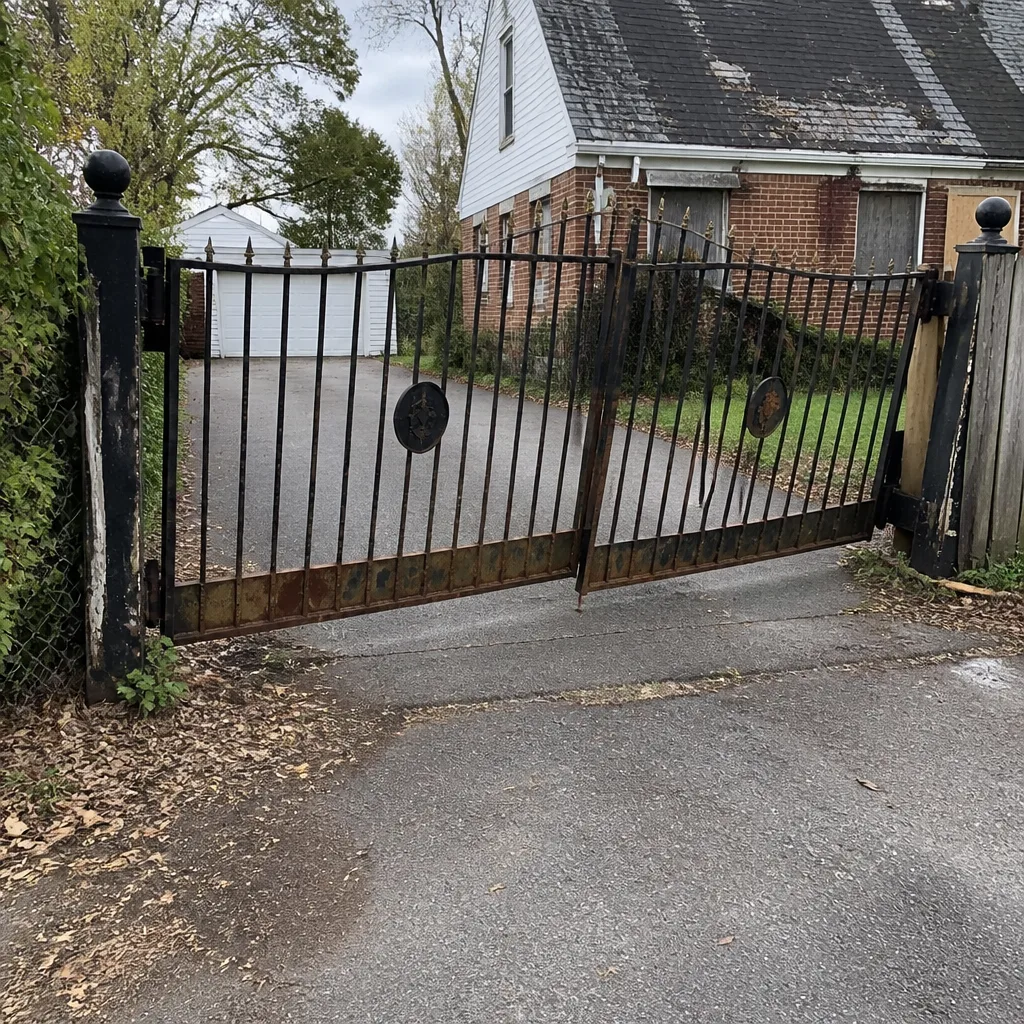 Before
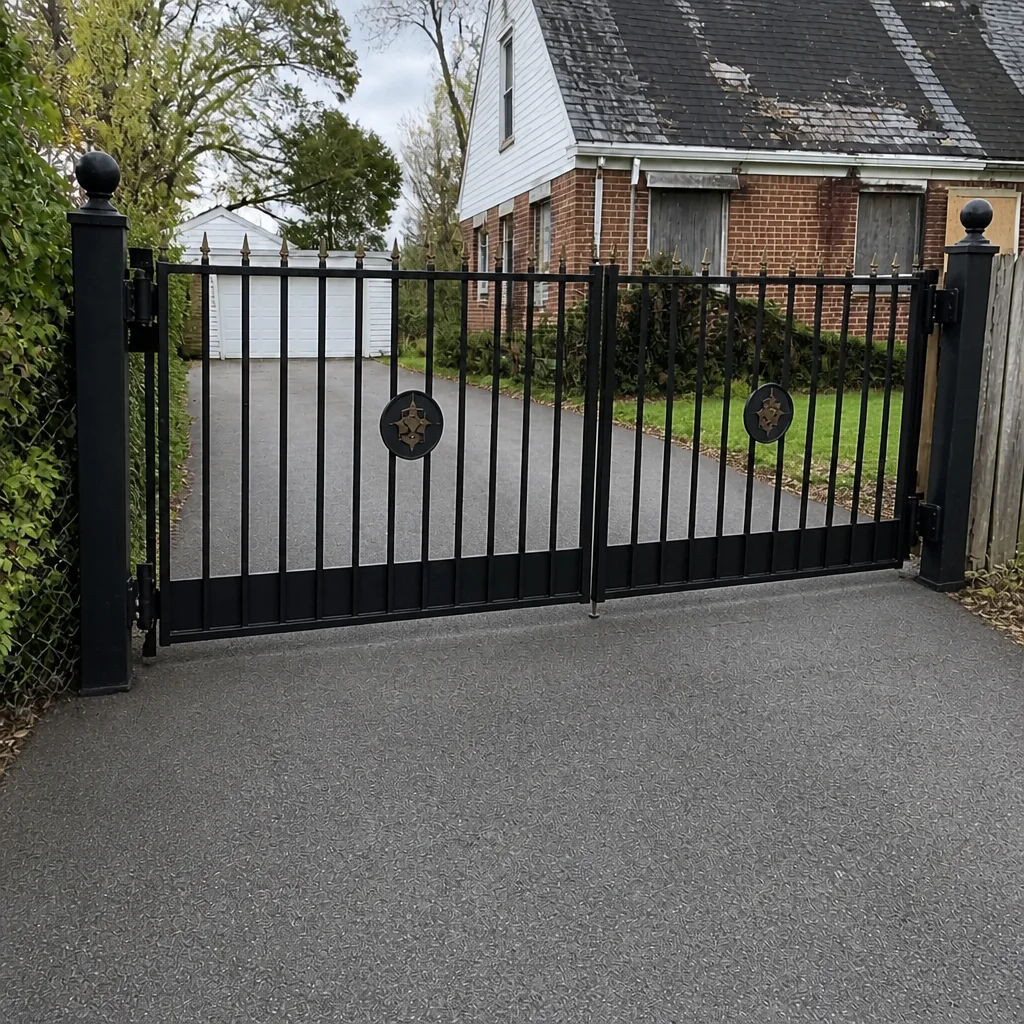 After
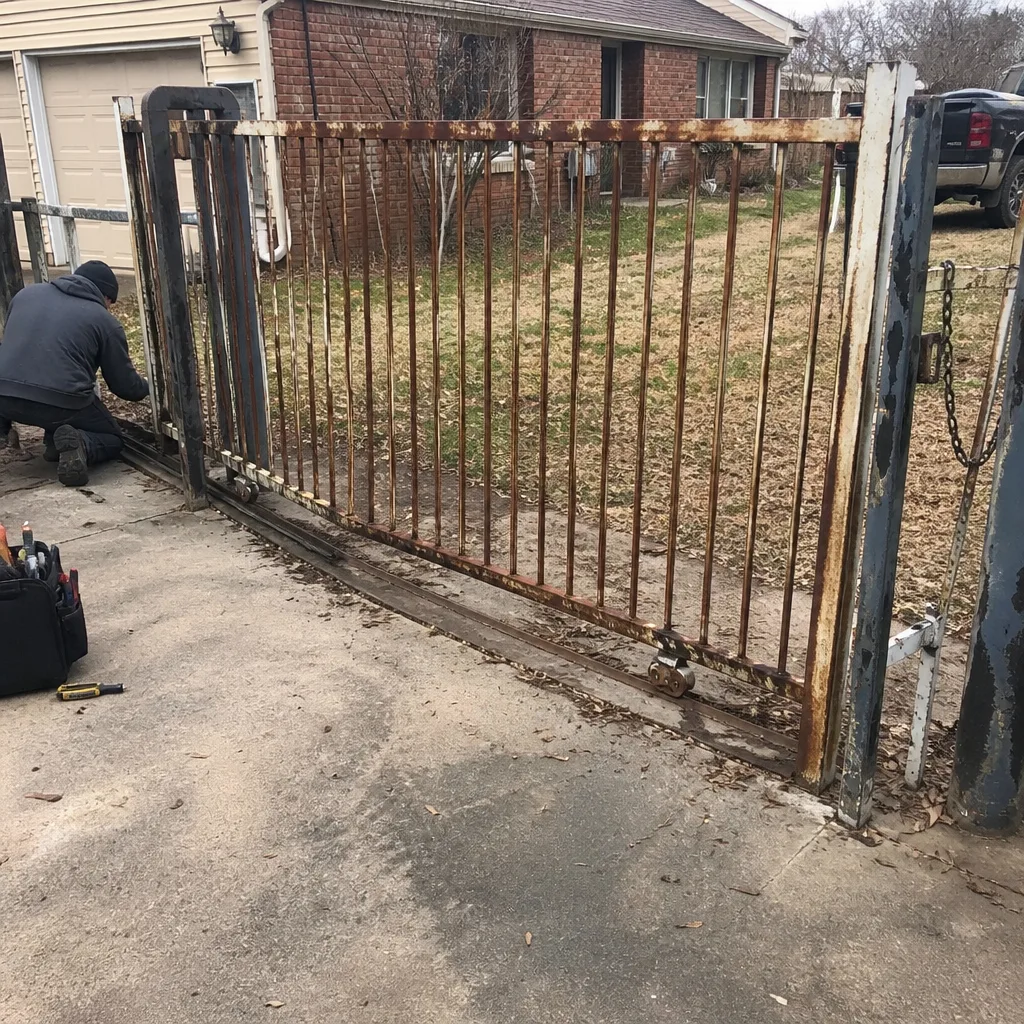 Before
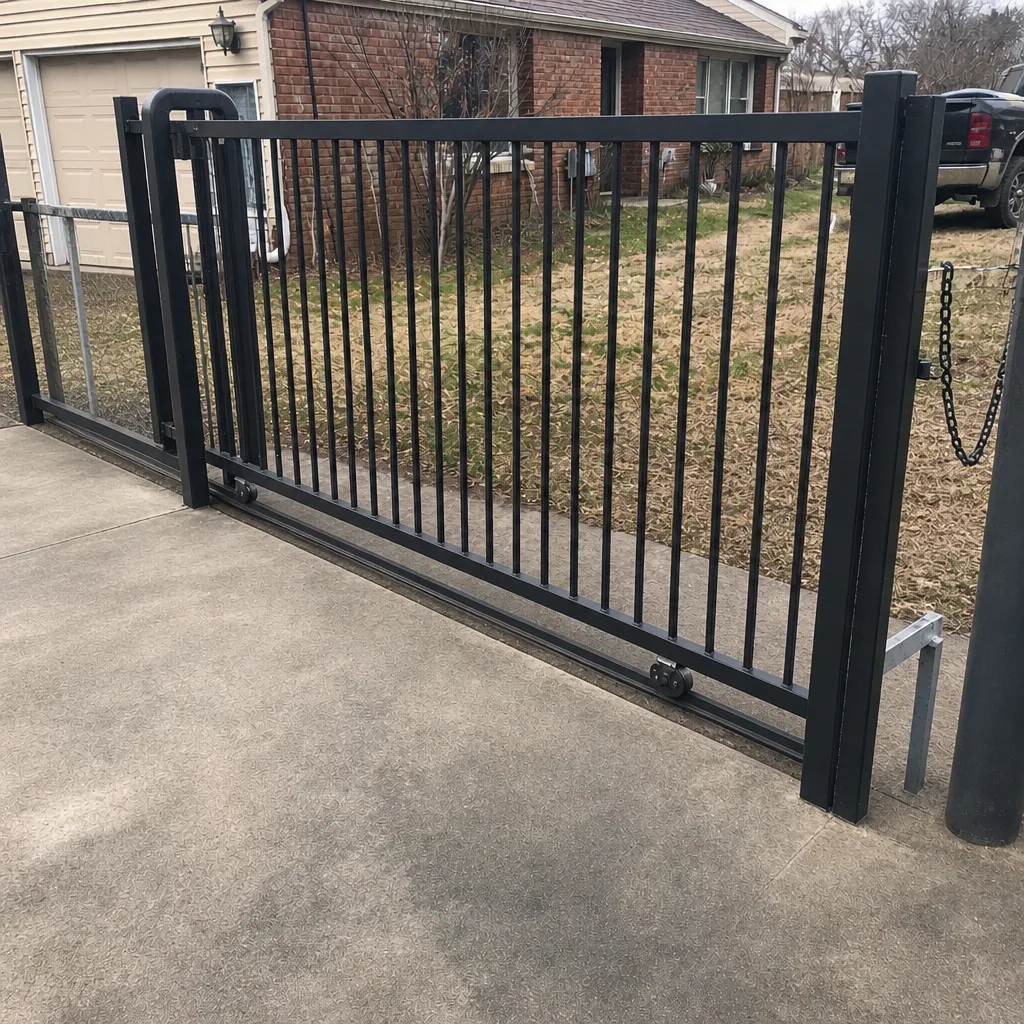 After
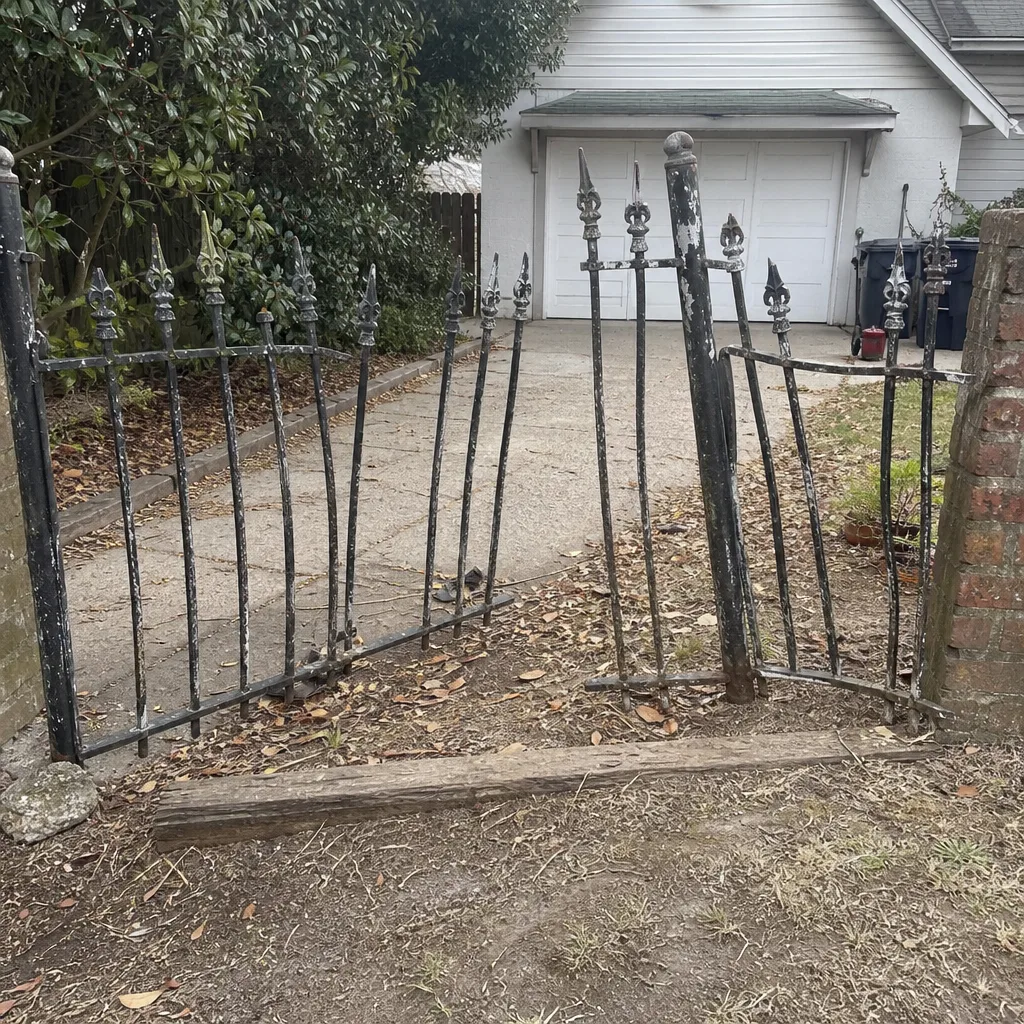 Before
 After
When to Call a Professional
Some tasks are DIY-friendly. Others are not. Call a professional when any of the following is true: the safety reversal fails when you break the photo-eye beam, the control board shows error codes you can’t clear, the gate stalls or reverses at the same point every cycle, the operator makes grinding or squealing sounds, the manual release won’t move smoothly, or you see visible corrosion on the control board or wiring terminals. Also call if your operator is a brand you’re not sure how to test, because the procedure varies between FAAC, BFT, Linear, Viking, and the other systems we service.
Electrical work on an operator’s wiring, power supply, and safety devices is not a DIY job. A miswired safety sensor or a loose power connection isn’t just a gate problem; it’s a genuine safety hazard, and a heavy gate that reverses incorrectly or fails to stop can cause serious injury. Trained technicians carry the tools, the meters, and the brand-specific experience to diagnose and repair on-site, usually in a single visit. Ashton Gate Repair offers free estimates in Virginia Beach. Call (844) 834-3028. We answer 24/7. Fast dispatch from 7am to 7pm, Sunday through Friday.
Frequently Asked Questions
A Virginia Beach gate should be serviced professionally once a year in spring, with DIY checks monthly, lubrication and hardware passes every three months, and battery and control-board inspections twice a year. The annual professional service is timed for after the salt-heavy season ends. The rest of the schedule is designed to catch developing problems before they become expensive failures.
Use a lithium grease or a marine-grade synthetic grease on gate hinges and pivot pins, applied sparingly every three months. Standard WD-40 is the wrong choice because it’s a solvent, not a long-term lubricant, and it leaves the hinge drier than before in humid weather. Use a dry PTFE or silicone product on sliding gate tracks, not grease.
Different gate brands have different battery test intervals because their operators draw different loads, their battery capacities vary, and their manuals specify different load-test procedures. LiftMaster typically recommends a semiannual test, FAAC commercial systems often call for a different cadence, and BFT operators specify their own interval. Always test under load, not just with a voltage meter. Call (844) 834-3028 if you’re not sure what your brand requires – estimates are free.
Yes, for the visual inspection, lubrication, and hardware check. No, for control-board work, battery load testing on commercial systems, and anything involving the operator’s electrical wiring or safety sensors. Those require a trained technician because a miswired safety device is a genuine hazard. The monthly five-minute walk-around is the part you should definitely do yourself.
Skipping the annual service means small issues compound. A worn hinge becomes a worn gearbox. A corroded terminal becomes a failed control board. In Virginia Beach, the humidity speeds up every one of those processes. The gate might run fine for months, then fail all at once. Skipping the service doesn’t save money; it just moves the cost to a bigger, more urgent repair.
The brand is usually printed on the operator housing, inside the control box door, or on the manual that came with the gate. Look for names like LiftMaster, FAAC, BFT, Linear, Viking, Ghost Controls, DoorKing, Elite, or Mighty Mule. If you can’t find it, snap a photo of the housing and control board and call (844) 834-3028 – our technicians work on all nine major systems and can identify it from a photo.
The Bottom Line
The gate maintenance schedule that actually works isn’t an annual tune-up. It’s a task-timed calendar: five minutes a month, a lubrication pass every three months, battery and control-board checks before summer humidity and before winter cold, and a professional service each spring after the salt-heavy season ends. The specific tasks change by brand, so know whether you’re working with a LiftMaster, FAAC, BFT, Linear, or Viking system. Log what you do, because dates and observations cut diagnostic time in half. If you’re in Virginia Beach and you’d rather have a specialist build the schedule for you, Ashton Gate Repair offers free estimates and gate-only expertise. Call (844) 834-3028. We answer 24/7. Fast dispatch from 7am to 7pm, Sunday through Friday.
Written by the team at Ashton Gate Repair.