
Last updated November 16, 2026
 Wrought iron
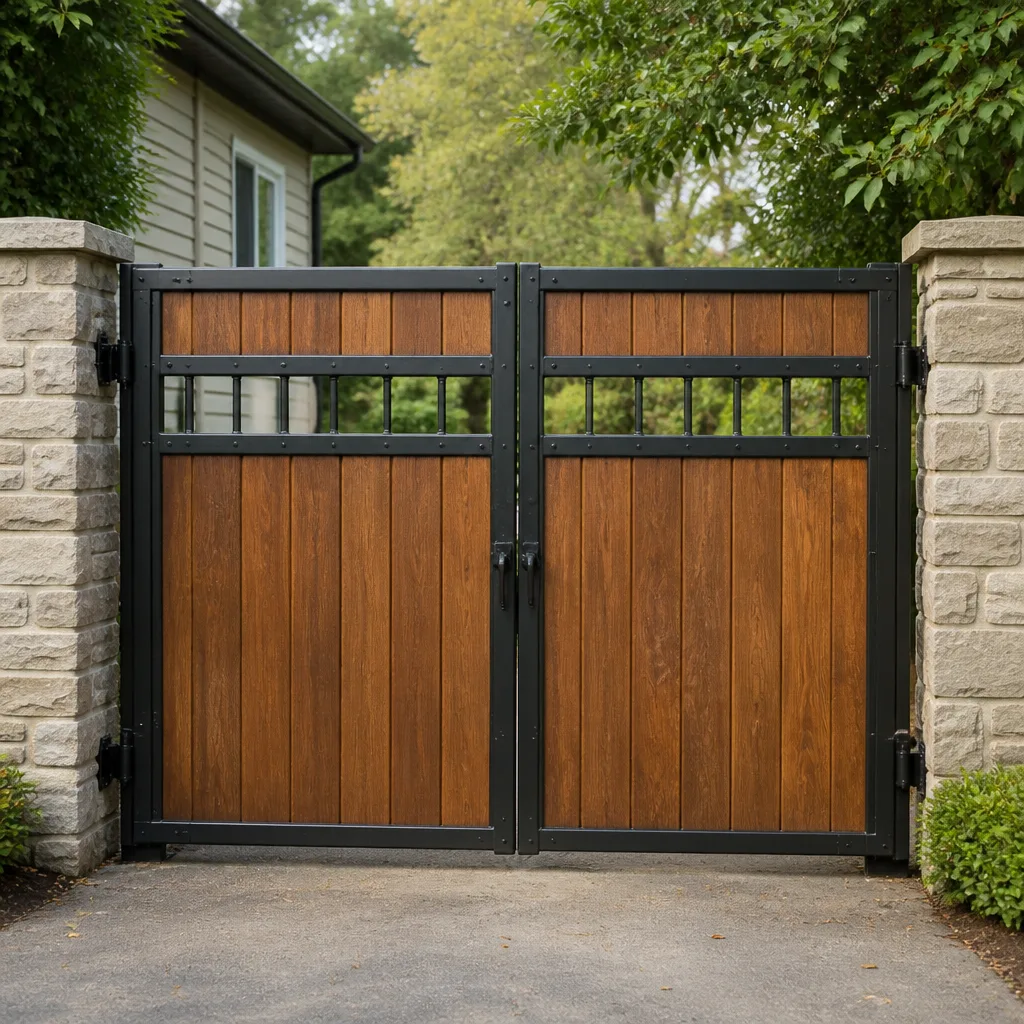 Wood & steel frame
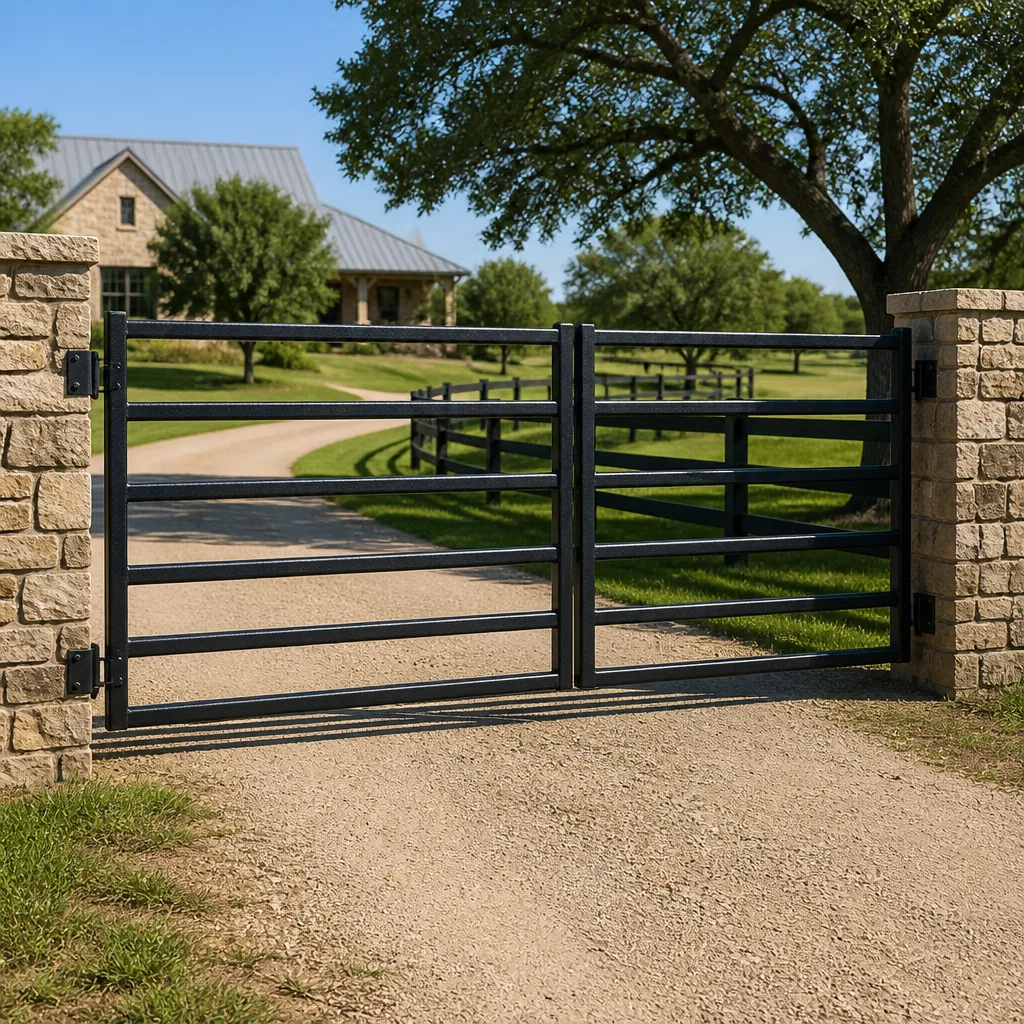 Farm & ranch
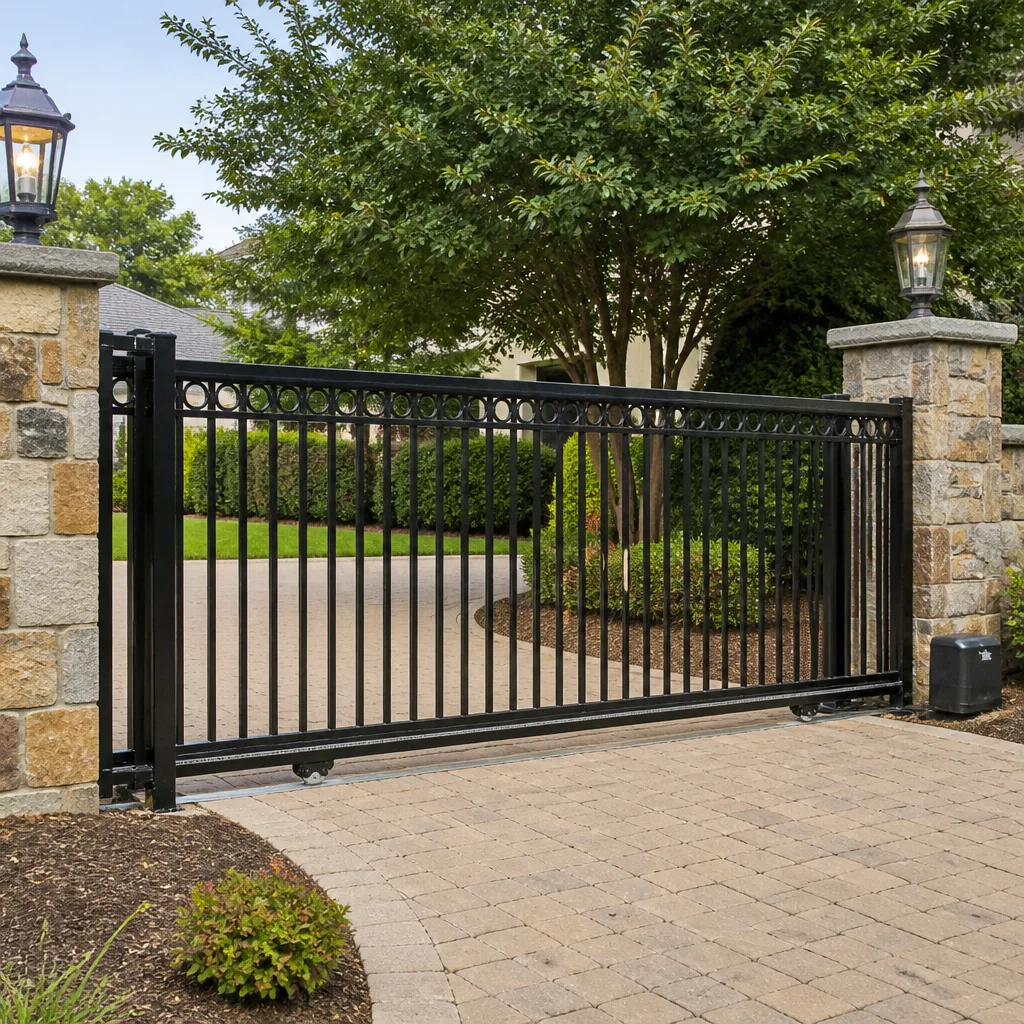 Sliding driveway gates
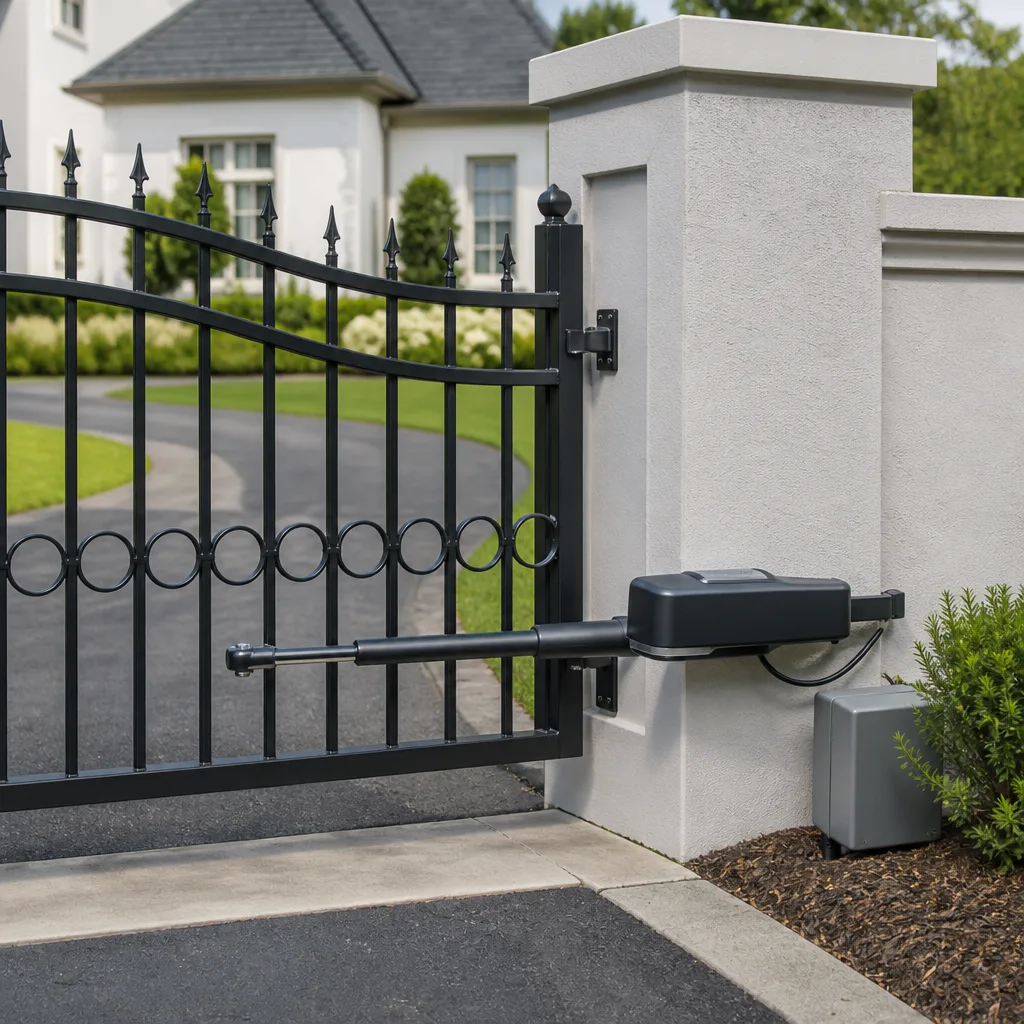 LiftMaster operators
Free on-site gate assessment - hinges, posts, and your LiftMaster or Nice gate operator checked before anything is quoted
The assessment is free and the quote is the invoice.
Get your free estimateSeasonal Gate Repair Care for Virginia Beach: Year-Round Homeowner’s Guide
The most expensive gate repair calls we see in Virginia Beach don’t come after a named storm. They come in October, when the first genuinely cold morning arrives and a gate that’s been sliding on corroded hardware since July finally stops dead. The failure looks sudden. It isn’t. Virginia Beach doesn’t really run four equal seasons. It runs two high-stress periods for gate hardware and two windows for maintenance, and the homeowners who understand that pattern spend far less on repairs. This guide walks you through a care calendar built around the climate and road conditions here, so your gate keeps working instead of surprising you.
Quick Answer
Seasonal gate care in Virginia Beach means preparing in May before storm season, checking hardware after any major weather event, watching for road-treatment buildup near your driveway through winter, and re-commissioning the gate in spring after months of light use. The single most valuable habit is a short inspection in late spring and again in early fall, because almost every costly repair starts as a small alignment, lubrication or force-setting issue that a routine check would have caught.
Styles & brands we work with
- Wrought iron
- Wood & steel frame
- Farm & ranch
- Sliding driveway gates
- LiftMaster operators
Table of Contents
- Why Virginia Beach Climate Is Harder on Gates Than You’d Think
- The May Pre-Storm Checklist
- After the Storm: What to Check When the Gate Still Works
- Winter in Virginia Beach: Road Brine, Cold Snaps and Hardware
- Spring Re-Commissioning After Reduced Winter Use
- Adjusting Operator Force Settings Through the Year
- Reading the Warning Signs Early
- Common Mistakes to Avoid
Why Virginia Beach Climate Is Harder on Gates Than You’d Think
Gates in Virginia Beach live in a climate that never fully rests. Summers run hot and humid for long stretches, winters swing between mild days and sharp cold snaps, and the transitional weeks in between bring heavy rain. None of that is extreme on its own. The wear comes from the repetition: metal expands and contracts dozens of times a season, lubricant thins and migrates in the heat, and moisture finds every seal and fastener that lost its protection. That’s why we treat gate care here as a rhythm rather than a checklist. Two high-stress periods and two maintenance windows.
The high-stress periods are storm season, roughly early summer into fall, and the cold-snap winter weeks when road treatment appears on nearby streets. The maintenance windows are May, right before the stress starts, and early fall, right before the cold arrives. If you only do two things to your gate all year, put them in those windows. The work is modest and the return is large. A gate serviced in May meets storm season with tight bolts, fresh lubrication and a correct force setting. A gate serviced in October meets the first cold morning with hardware that isn’t already halfway to failure.
One local wrinkle matters more than most homeowners realize. Virginia Beach winters aren’t brutal, but they’re cold enough that road crews treat the roads, and that treatment doesn’t stay on the roads. It migrates. Snowmelt and brine spray travel along curbs, gutters and driveways, and if your gate sits within reach of a treated street or a shared drive, that material finds the hinges, tracks, rollers and the operator housing. Left alone through winter, it quietly eats the thin protective layer on moving parts. So winter isn’t your rest period here. It’s a period of exposure you manage with a rinse and a check.
If you’re already dealing with a gate that’s struggling, our gate repair team can take a look and tell you plainly what the gate needs.
The May Pre-Storm Checklist
May is the most important maintenance month on the Virginia Beach calendar. Atlantic storm season begins in June, and everything you tighten, clean and document now is something that won’t fail under load later. Think of this as the pre-flight check. You’re not repairing anything yet. You’re confirming the gate is in condition to take stress and recording what it looks like now so that if something does shift later, you have a baseline to measure against.
Work through this in order:
- Walk the gate through its full cycle. Open and close it completely, watching for hesitation, jerking, slow spots or unusual noise. A slow spot in one part of the travel often signals a binding roller or a track that has moved slightly.
- Check every fastener. Hinges, brackets, track bolts and post anchors all loosen over a season of vibration. Tighten what’s loose, and replace anything that’s stripped or corroded.
- Clean and lubricate moving parts. Clear grit from the track, then apply lubricant to hinges, rollers and pivot points. Grit is more damaging than a lack of lubricant, so clean first, then lubricate.
- Inspect the operator and wiring. Look at the control box, sensor lenses, keypads and loop detector for dirt, looseness or cracked covers. Confirm the safety edges and photocell sensors trip the gate the way they should.
- Test the manual release. Confirm the gate can be released by hand when the operator is off. Storm season is exactly when you might lose power and need that release to work.
- Document the gate’s condition. Photograph the post anchors, hinge points, the track and the operator label. Note the brand and model. If you’re ever calling for service, that label is the first thing anyone asks for, and knowing it saves time.
That documentation step is where a lot of homeowners fall short, and it’s the one we’d keep if we could only keep one. A photo of the gate before and after a storm tells you whether a footing moved. A model number on hand means a technician can arrive knowing what they’re working with. Whether your gate runs a LiftMaster, a FAAC or a Mighty Mule, the brand and model are stamped on the operator label, and a picture of that label costs you nothing now and a lot of guesswork later.
Electric gates deserve a little more attention here, because the control board, loop detectors and safety sensors are the parts that respond worst to moisture and voltage swings. If a component is already flaky, storm season will finish it. Our electric gate repair service is built around exactly this layer of the system, and a pre-season check is the cheapest way to find a weak part before it strands the gate.
After the Storm: What to Check When the Gate Still Works
The counterintuitive part of storm recovery is that the gates that fail outright get attention, and the ones that survive mostly get ignored. That’s backwards. A gate that came through a major weather event still working has been loaded, shifted and stressed in ways you can’t see from the driveway. A post that moved a fraction of an inch changes the geometry of the whole gate. Hardware that took a sudden load can be one cycle from failing. The question after a storm isn’t “does it still open?” It’s “did anything move?”
Here’s the sequence we recommend after any significant weather event:
- Look at the ground before you touch anything. Check the base of each post for cracking, soil separation, sinking or a gap that wasn’t there before. A post starting to move is the single most serious thing you can find, and it should stop you from running the operator until it’s looked at.
- Run the gate slowly and watch both ends. Does it still meet the posts squarely when closed? Does it clear the ground evenly along its travel? A gate that drags now didn’t drag before the storm, which points to a shifted footing or a bent track.
- Listen and feel. New grinding, popping or groaning during the cycle is a signal that a component took a hit. Don’t cycle it repeatedly trying to diagnose it. One careful pass tells you more than ten.
- Check the safety sensors and edges. Confirm the reversing function still works by interrupting the sensor and watching the gate respond. Safety devices that stopped working are the reason not to leave a storm-damaged gate running unattended.
- Look for debris in the track and behind the gate. Small debris jams the track and puts constant load on the operator. Clear it before running the gate.
If the post has moved, or the gate drags or binds, stop operating it and get it looked at. Forcing a misaligned gate through its cycle to “see if it works” is how a manageable repair becomes a bent gate and a burned-out operator. A heavy gate panel that’s come off its alignment can also hurt someone, so treat a gate that binds as a safety issue and leave the cycling to a trained technician until you know what’s wrong.
Winter in Virginia Beach: Road Brine, Cold Snaps and Hardware
Winter is the season most Virginia Beach homeowners assume they can ignore, and it’s where a lot of slow damage accumulates. The two pressures are road treatment and temperature. Both are manageable with small, regular attention.
Road brine and salt spray travel farther than people expect. If your gate sits near a treated street, a shared drive or a curb where plowed material piles up, that material reaches the operator housing, the hinges, the rollers and the track. Over a winter of exposure, the protective coating on moving parts wears away and corrosion starts under the surface. You won’t see it until something stiffens in spring. Here’s how to keep it in check:
- Rinse the moving parts after a treatment event. A hose rinse of the track, hinges, rollers and operator housing clears the material before it settles. Avoid spraying directly into the control box or electrical connections.
- Reapply lubricant to moving parts after rinsing. Cleaning and lubrication go together. A clean dry hinge corrodes faster than a cleaner greased one.
- Keep the track clear of accumulated grit and debris. Road material and grit collect at the low points of the track and grind with every cycle.
- Watch the cold snaps. The sharp early-morning cold is when hardware under tension is more likely to crack. Don’t force a gate that feels stiff on a cold morning. Let it warm and check the hardware before cycling it.
- Test the manual release again. Cold snaps and winter power interruptions are when you most need to be able to release the gate by hand.
On the electrical side, winter is when control issues surface. Cold mornings load the operator harder, and a control board that was marginal in summer becomes unreliable in the cold. If the gate starts behaving inconsistently only on cold mornings, that’s a real signal, not a coincidence. That’s the kind of problem our electric gate expertise is built for, and the fix is usually a specific component rather than a whole operator replacement.
Spring Re-Commissioning After Reduced Winter Use
Gates in Virginia Beach often sit in reduced-use mode through winter. People drive fewer times a day, use the manual gate less, and the automatic gate maybe runs a handful of times a week instead of dozens. That reduced use is kind of the point, but it leaves a gate in a state that’s not the same as the state it was in during fall. Moving parts sitting in one position for weeks develop stiff spots. Lubricant migrates or dries. Debris collects in places winter use never cleared. Spring re-commissioning is about bringing the gate back into duty carefully instead of running it hard on the first busy morning.
Work through these steps before you settle into normal use:
- Inspect before you power up. Walk the gate by hand if it can be released. Check for debris, corrosion, a track that’s moved, and hardware that’s loosened over the winter.
- Clean the track and re-lubricate moving parts. A clean track and fresh lubrication is the cheapest improvement you can make to a gate’s reliability for the coming season.
- Run a slow full cycle and watch it. Watch the gate meet the posts, watch the ground clearance, listen for new sounds. Note anything that hesitates.
- Re-test the safety devices. Confirm sensors, safety edges and keypads all work. This is also the moment to replace dead keypad batteries and clean sensor lenses.
- Re-set the operator force if the gate ran hard last season. If the gate feels stiff or slow on the first cycles, don’t turn the force up to compensate. Find out why it’s stiff first. That’s the difference between a repair and a deferred repair that fails later.
Spring is also your window to line up those deferred projects. If the gate came through winter limping, or the operator is at the end of its life, we handle new gate installation as well as repairs, so you don’t have to string the fix together across multiple trades.
Adjusting Operator Force Settings Through the Year
Gate operators don’t feel the cold the way we do, but they behave differently in it. Hydraulic operators respond to temperature changes in the fluid, and electromechanical operators respond to the mechanical resistance that builds when cold makes metal stiff and lubricant thick. That means a force setting that worked perfectly in July can feel too weak in January, and a force setting that worked in January can feel too strong in July. The mistake to avoid is using the force setting as a fix. Force is there to keep the operator from stalling under normal conditions, not to overcome a binding track or a failing hinge. If force is being turned up to compensate for resistance, the gate has a problem that power can’t solve.
Here’s the right way to think about force through the year:
- Set force in mild weather, not mid-season. Late spring is the best time to set force, because you’re setting it against normal resistance rather than a seasonal extreme.
- Watch for seasonal sluggishness. If the gate is sluggish only on cold mornings, that’s temperature, and it usually resolves as the day warms. If it’s sluggish all day, that’s a mechanical issue.
- Never chase a binding gate with higher force. Higher force on a binding gate wears the operator faster and stresses hinges and posts. Fix the resistance instead.
- Know your control board. Force settings live on the control board, and how you adjust them differs across brands. A LiftMaster, a BFT, a Linear and a Viking all handle force adjustment differently. If you don’t know your brand’s procedure, don’t guess at it.
- Treat the safety limit as a limit. If the gate is tripping the force limit and reversing, that’s the operator doing the right thing. That’s your cue to look for resistance, not to raise the limit.
We work on all of these systems and diagnose force-related issues on the specific brand in front of us rather than trying to force one brand’s procedure onto another. That’s part of what being gate-only specialists means to us: the tools, the knowledge and the parts are built around gates, not stretched across a wide general service list. When force issues come from the control board or a sensor that’s misreporting, that’s core electric gate repair work, which is a named specialty for us rather than an afterthought.
Reading the Warning Signs Early
Almost every expensive gate repair begins as a small symptom a homeowner noticed and set aside. Reading the early signals correctly is the difference between a short service visit and a replacement. Here’s how we translate the common symptoms:
- Intermittent stops mid-travel: usually a control board, a sensor misread, or a binding point. Don’t assume the operator is failing until the binding is ruled out.
- A slow spot in one part of the travel: often a track issue or a worn roller. Localized slow spots point to the hardware at that spot, not the whole operator.
- The gate reversing without an obstacle: a sensor or safety edge issue, or a force limit set wrong. Safety devices exist to reverse, so don’t treat a reversing gate as “just a quirk.”
- Grinding, scraping or popping: moving hardware losing lubrication, worn rollers, or a track that’s moved. Grinding is the sound of metal wearing.
- The gate sticking or dragging only on cold mornings: more often temperature-related resistance than a failing operator. Watch it across a few warm days before assuming it needs parts.
- The gate hitting the same spot every time: an alignment issue, often a post that’s shifted slightly, or a track that’s out of position. This is the one to have looked at sooner rather than later.
If you’re in Virginia Beach and noticing any of these, it’s worth a look before they snowball. The pattern we see most often is a small symptom in early summer that becomes a large one by October. Early attention is the whole game.
Common Mistakes to Avoid
- Turning up the operator force to fix a binding gate. Higher force wears out the operator faster and stresses hardware. Find out why the gate is binding before raising the limit. If you don’t know your brand’s force procedure, leave it to a technician who does.
- Skipping the May inspection. Storm season is precisely when you want the gate in its best condition. Preparing in May costs a little time. Repairing in September after a storm-loaded failure costs a lot more.
- Assuming a gate that still works after a storm is fine. A gate can cycle normally with a footing that’s moved slightly or hardware that’s cracked. Check the posts and alignment before regular use, especially if the storm was significant.
- Letting road brine sit on the hardware all winter. Rinse the moving parts after treatment events and re-lubricate. Corrosion that starts in winter shows up as a stiff, binding gate in spring.
- Cycling a gate that’s dragging or struggling. Forcing a misaligned gate is how a small repair becomes a bent gate and a dead operator. A heavy gate panel that comes off track can hurt someone. Stop and get it checked.
- Keeping a manual release that doesn’t work. If you can’t release the gate by hand during a power interruption, that’s the moment you’ll need it. Test it in May and again before winter starts.
- Guessing at a control board or sensor fault. Electrical and control faults on electric gates are the least forgiving part to get wrong, and the most likely to be misdiagnosed. That’s the point of bringing in a specialist.
See the difference
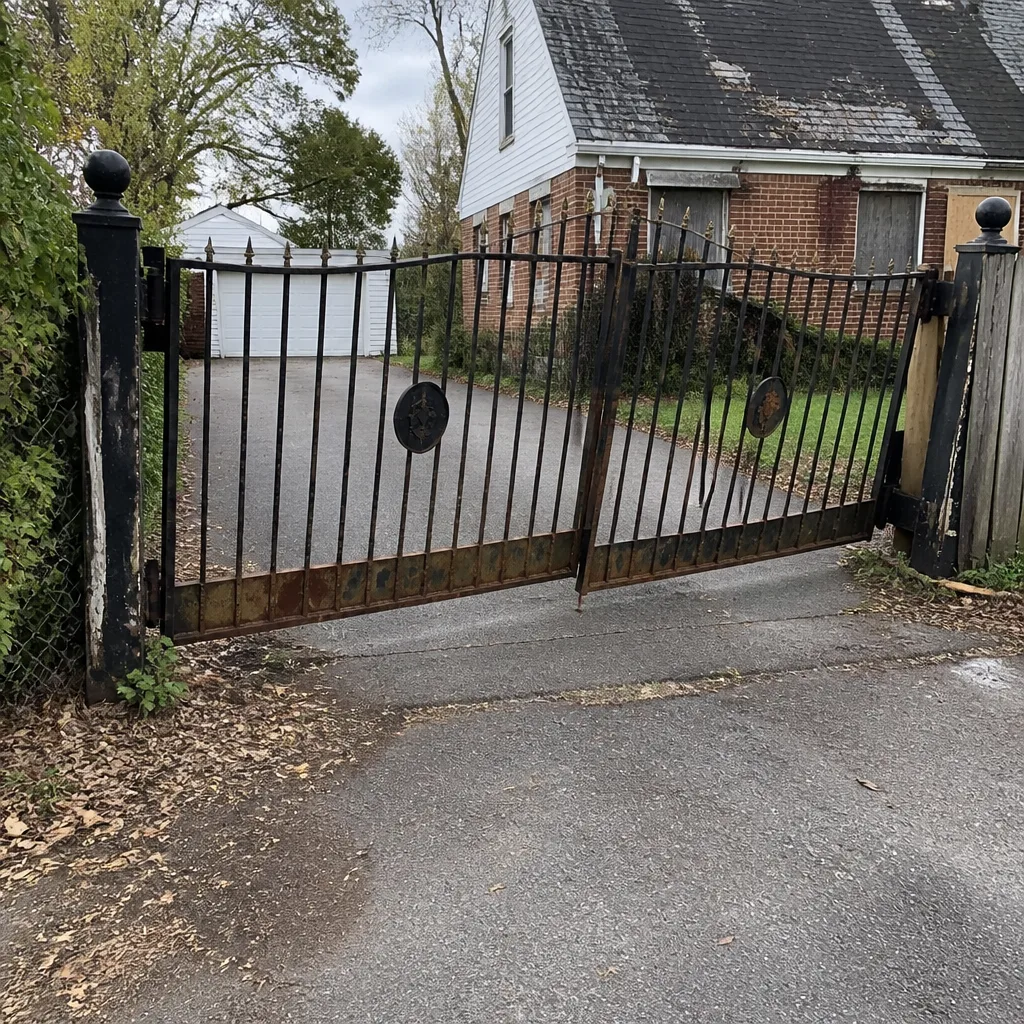 Before
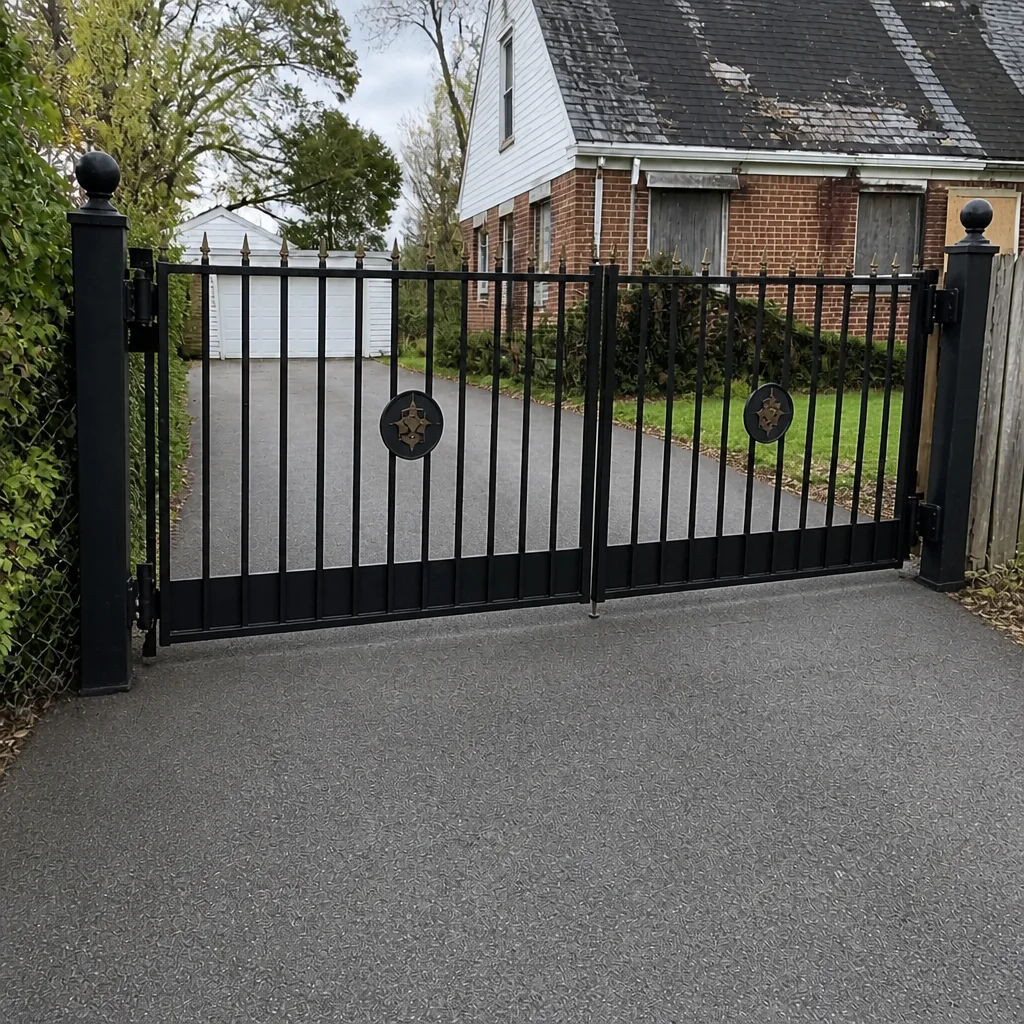 After
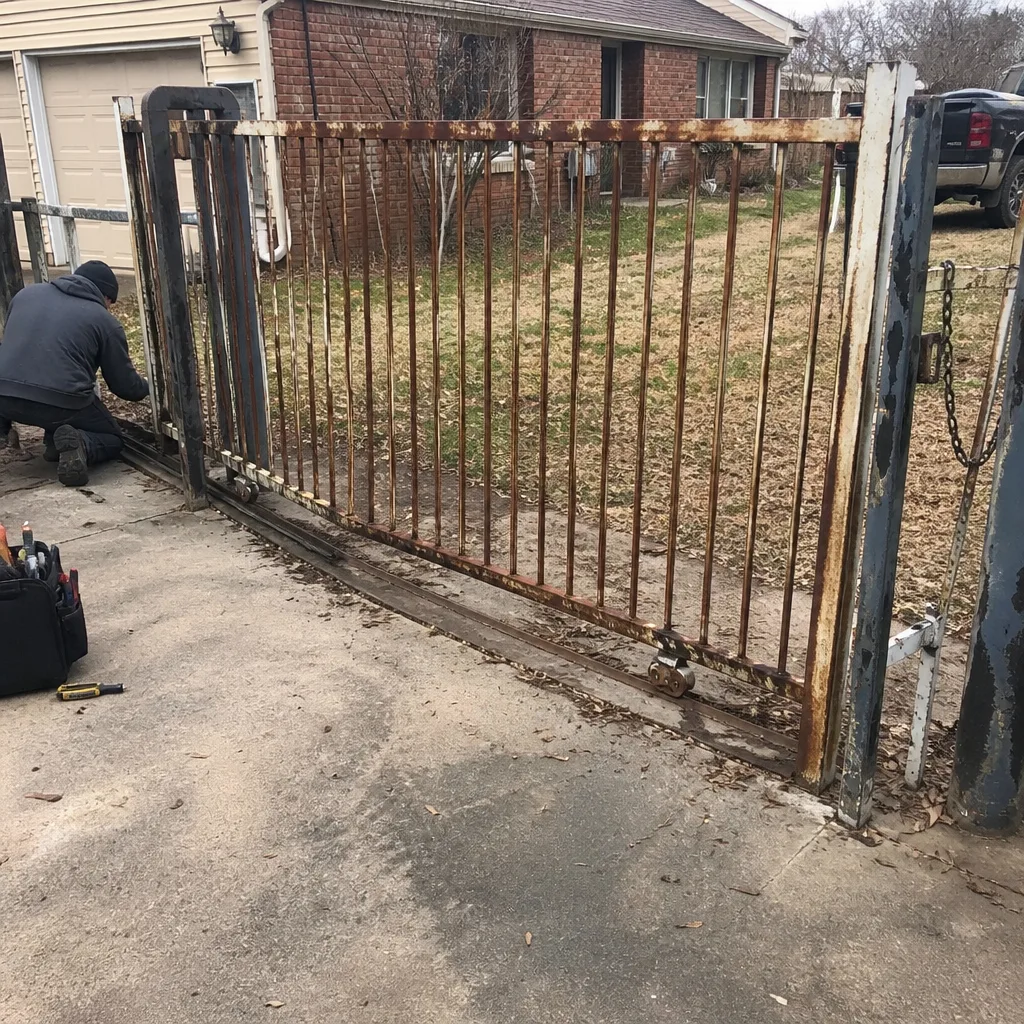 Before
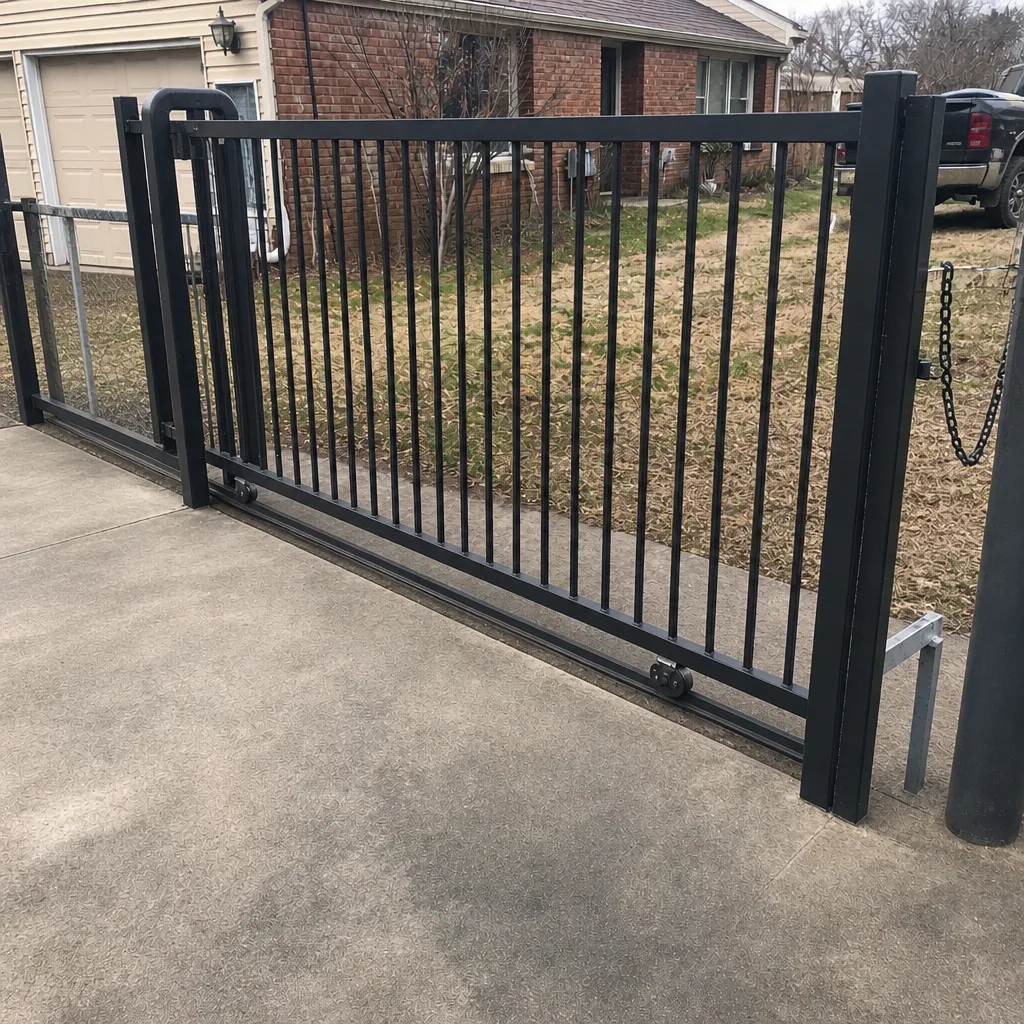 After
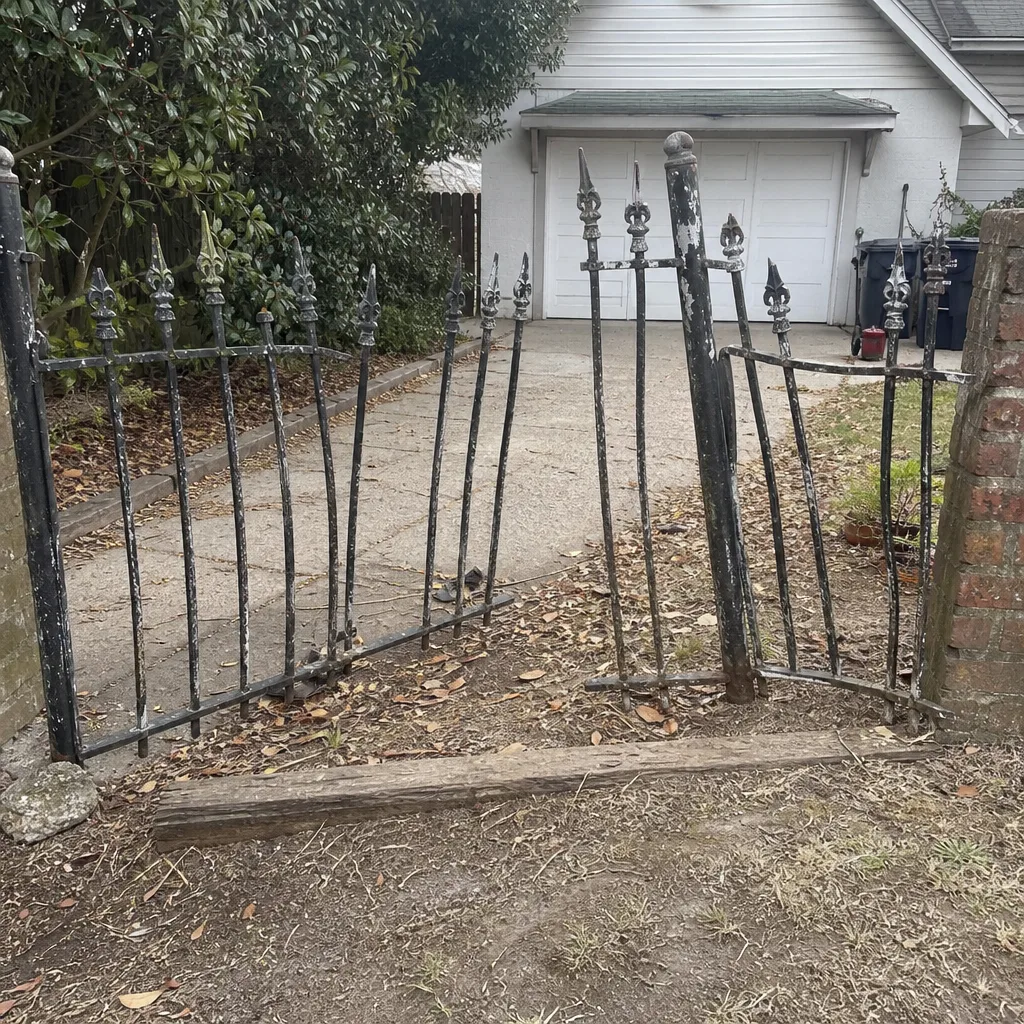 Before
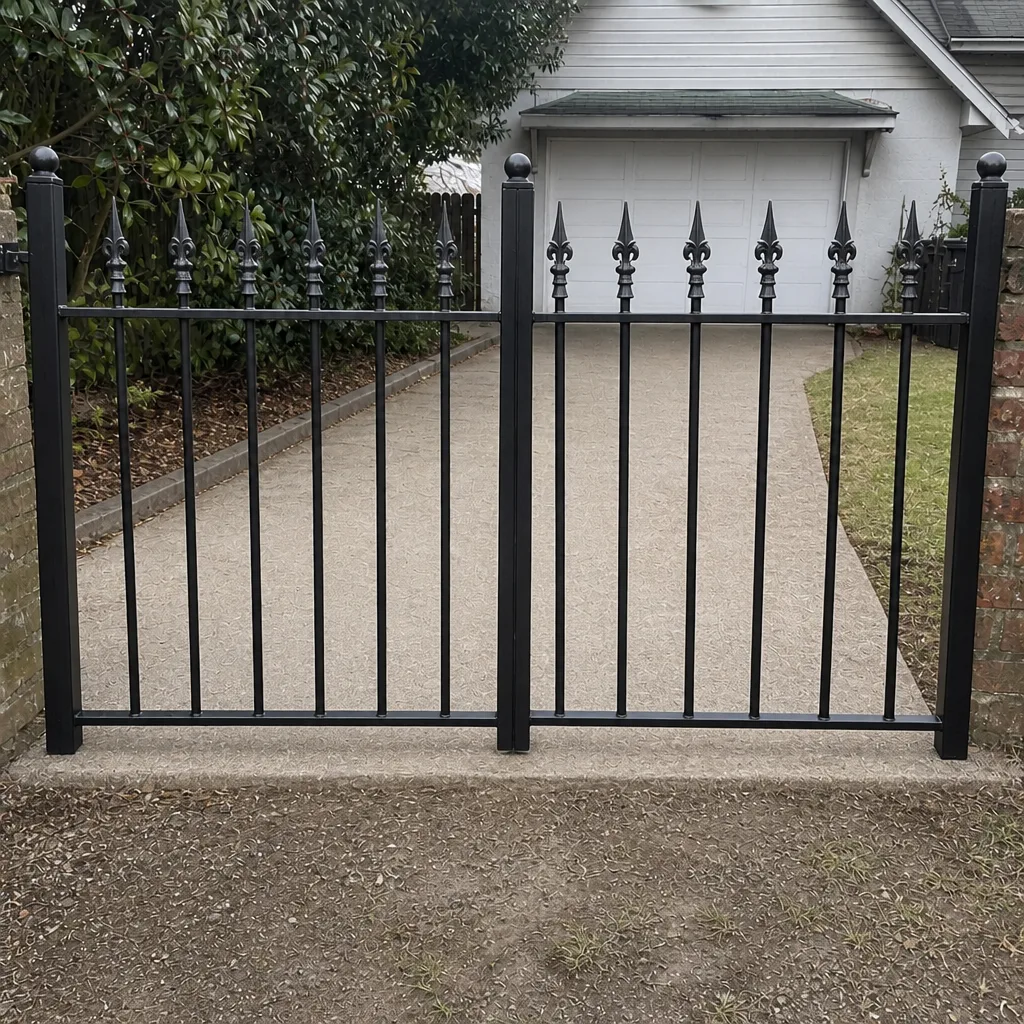 After
When to Call a Professional
Some gate issues are routine care. Others are work to hand over. Call a professional when a post has moved, cracked or shows soil separation at the base. Call when the gate drags, binds, or hits a spot it never hit before. Call when the operator reverses without an obstacle, trips a force limit repeatedly, or shows control board or sensor problems. Call when you can’t release the gate by hand, when hardware is failing under tension, or when a storm left you unsure whether the gate shifted. And call when you’re tired of chasing symptoms with guesses. As gate-only specialists, we work on the gate you have rather than the one we’d prefer to sell, and we service the widest range of gate brands in the market. Ashton Gate Repair offers free estimates in Virginia Beach. Call (844) 834-3028. We answer 24/7. Fast dispatch from 7am to 7pm, Sunday through Friday.
Frequently Asked Questions
Twice a year is the right rhythm here: once in May before storm season and once in early fall before the cold arrives. Add a rinse and a hardware check after any road-treatment event through winter, and a full look after any significant storm. Two main service visits plus storm and winter checks prevent most of the repairs we see.
Cold makes metal stiff and thickens lubricant, so a gate that’s already close to binding will bind on the coldest mornings first. That’s usually resistance rather than the operator itself failing. Watch it across a few warmer days and have it checked before assuming the operator needs replacement. It’s worth calling before the pattern becomes a total failure. Call (844) 834-3028 for an exact quote. Estimates are free.
Yes. Road treatment travels farther than most people expect, and if your gate sits near a treated street, a shared drive or a curb where plowed material collects, brine spray and winterized grit reach the hinges, rollers, track and operator housing. A hose rinse of moving parts after a treatment event and a re-lubrication keeps the damage from accumulating under the surface.
Yes, and that’s exactly when you should have it checked. A gate that cycles normally after a storm can still have a footing that’s moved slightly or hardware that’s cracked under load. We check the posts, alignment, alignment at both ends of travel, and safety devices, and we tell you plainly whether there’s anything to address.
No. Force settings exist to keep the operator from stalling under normal conditions, not to overcome a binding track or a worn hinge. Raising force to chase resistance wears the operator and stresses the hardware. If the gate feels sluggish, find the resistance first. Force adjustment belongs on the control board, and the procedure differs by brand.
We service the widest range of residential and commercial gate brands in the market, including LiftMaster, FAAC, BFT, Linear, Viking, Ghost Controls, DoorKing, Elite and Mighty Mule. We work on the gate you have rather than pushing a brand switch. Bring us the model and what’s going wrong, and we’ll diagnose it on-site. Call (844) 834-3028. We answer 24/7. Fast dispatch from 7am to 7pm, Sunday through Friday.
The Bottom Line
Virginia Beach gate care isn’t four equal seasons of maintenance. It’s May preparation, storm-season vigilance, winter brine management and spring re-commissioning. The May checklist prevents storm-season failures. Post-storm checks catch shifts and stress damage early. Winter rinses and lubrication stop the slow corrosion that road treatment brings. Spring re-tests safety devices and finds the stiffness before it becomes a binding problem. The through-line is reading symptoms early. Almost every expensive gate repair here starts as a small signal a homeowner noticed and deferred, and the homeowners who avoid that deferral spend less and worry less. If you’re in Virginia Beach and want a free estimate, call (844) 834-3028.
Written by the team at Ashton Gate Repair.