
Last updated November 16, 2026
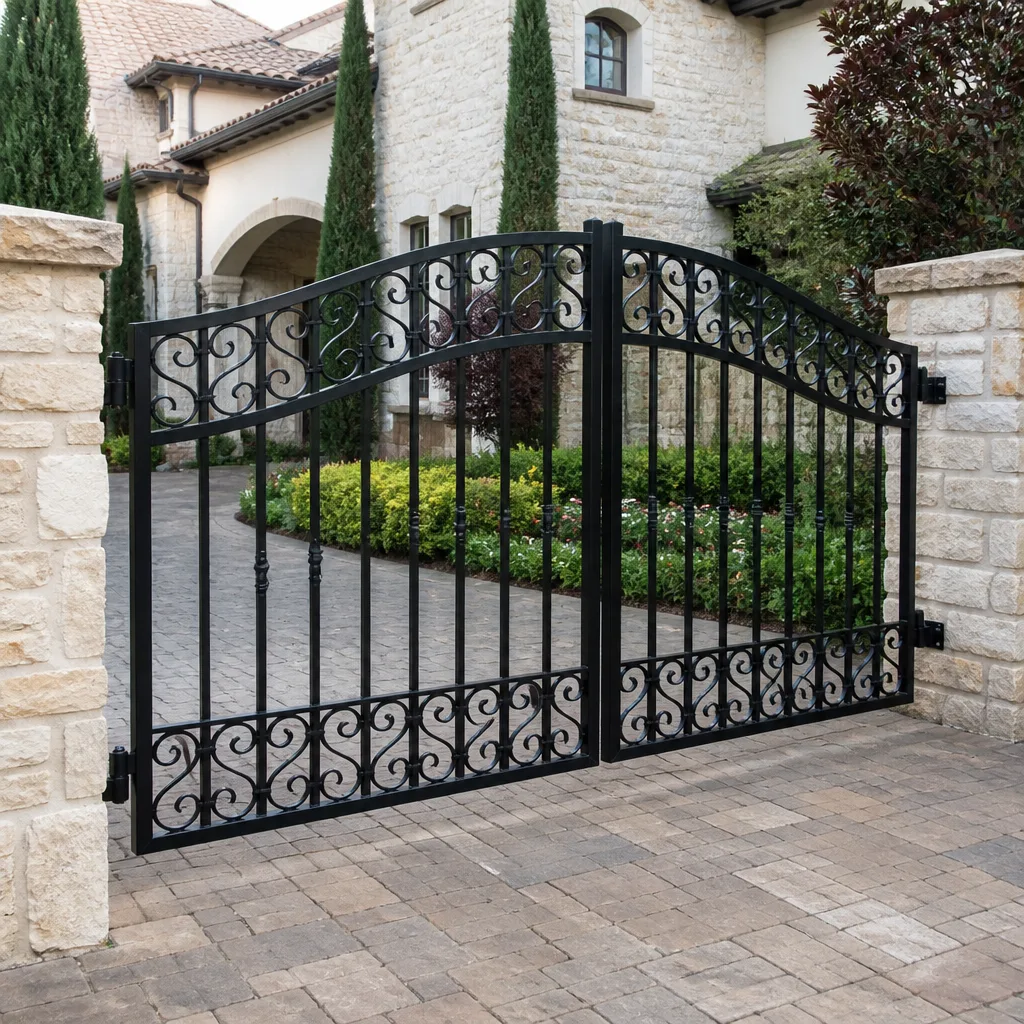 Wrought iron
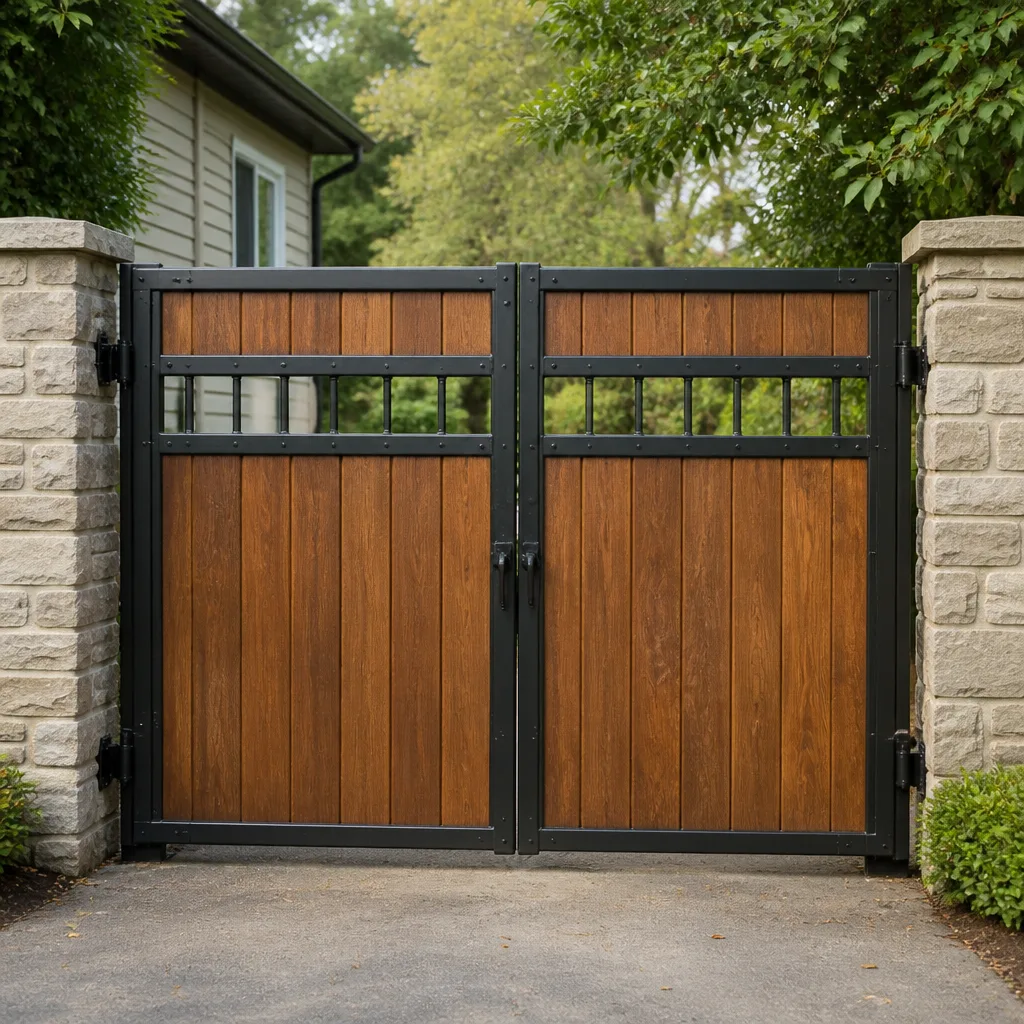 Wood & steel frame
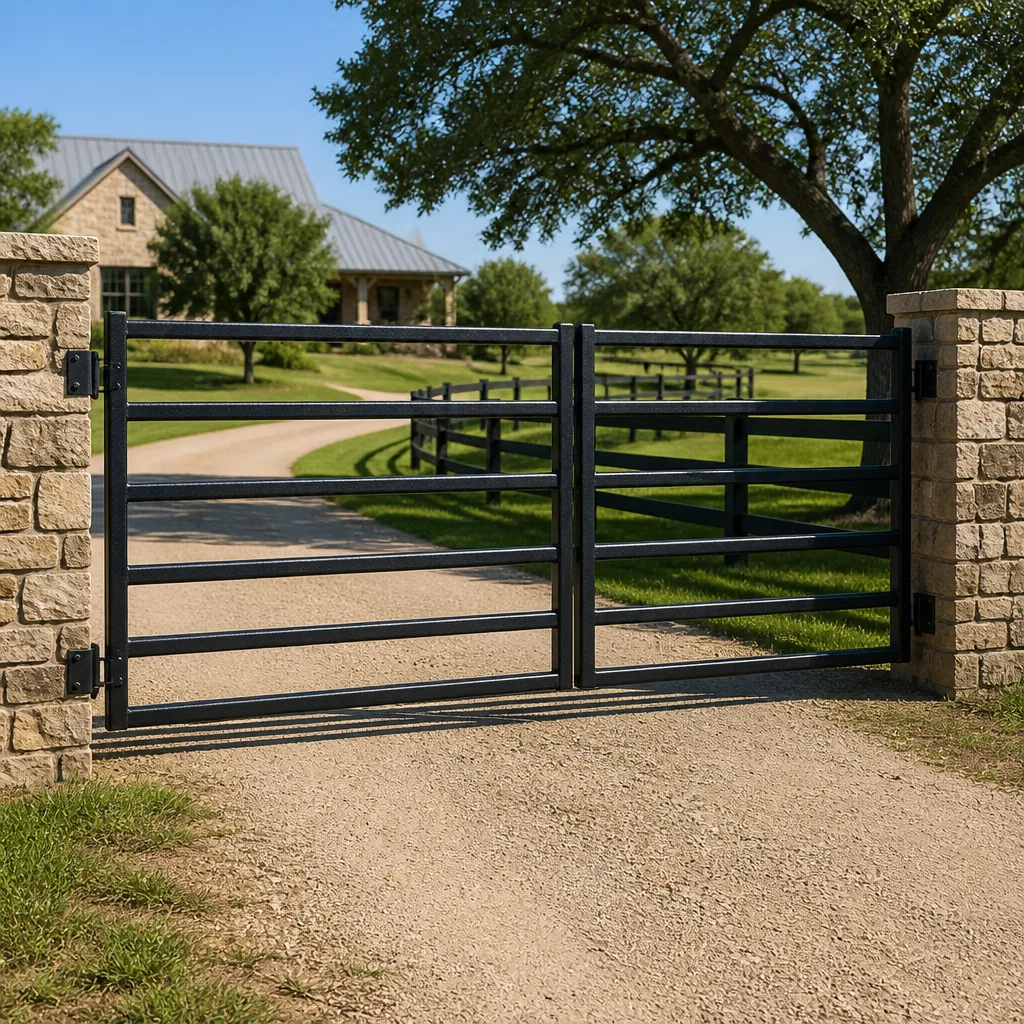 Farm & ranch
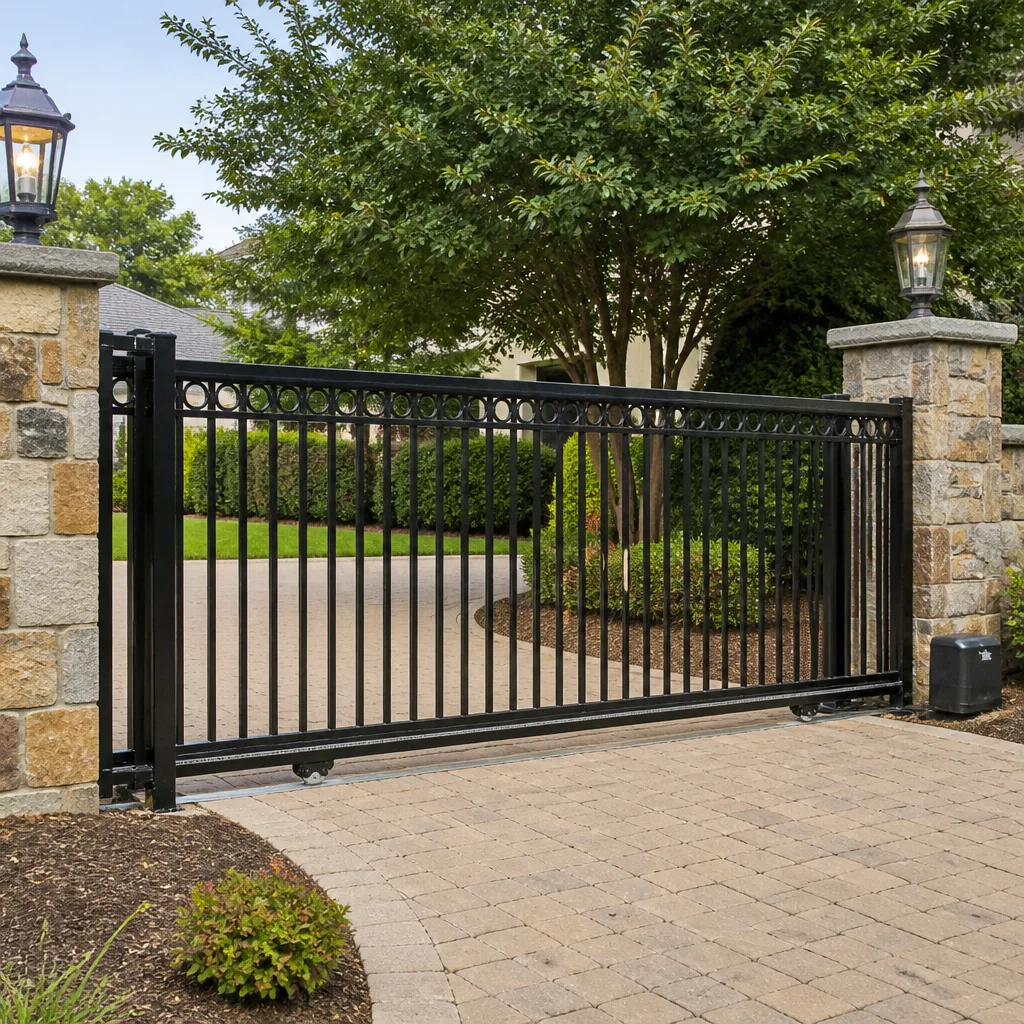 Sliding driveway gates
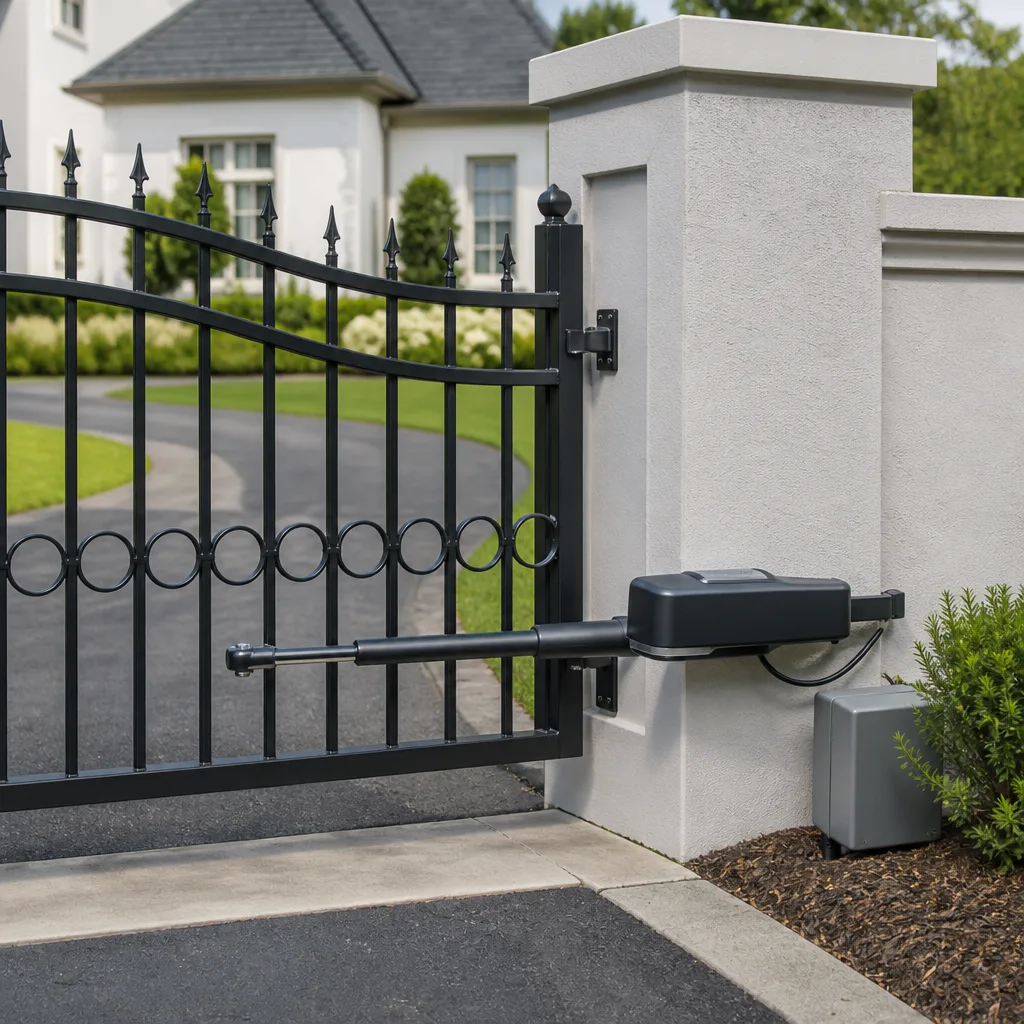 LiftMaster operators
Free on-site gate assessment - hinges, posts, and your LiftMaster or Nice gate operator checked before anything is quoted
The assessment is free and the quote is the invoice.
Get your free estimateGate Repair Emergency Preparedness Guide for Virginia Beach Homes
Most gate advice focuses on the mechanics. This guide focuses on the moment. During a Virginia Beach evacuation order, a gate stuck closed with a failed manual release stops being an inconvenience and becomes a vehicle blocked in a driveway when you needed to be gone twenty minutes ago. That scenario plays out more than homeowners expect, and it almost always comes down to a release mechanism nobody tested. The two emergencies that matter here are opposite in shape: a gate stuck open before or after a storm, and a gate stuck closed after a power outage. This guide walks through both, brand by brand, so you know what to do before you have to do it.
Quick Answer
A gate emergency in Virginia Beach is usually one of two things: a gate stuck open when a storm is coming (a security failure), or a gate stuck closed after a power loss (an access and safety failure). The fix in both cases starts before the emergency, with a tested manual release, a documented operator model, and a written plan for who to call. If you handle those three things now, most gate failures stop being emergencies.
Styles & brands we work with
- Wrought iron
- Wood & steel frame
- Farm & ranch
- Sliding driveway gates
- LiftMaster operators
Table of Contents
- How to Manually Release Your Gate Operator Before an Emergency
- What to Do When Your Gate Is Stuck Open and a Storm Is Coming
- How to Check a Gate for Storm Damage Before You Operate It
- What to Document Before an Emergency Happens
- What Counts as a True Gate Emergency vs. What Can Wait
- How to Describe the Problem When You Call for Help
- After the Storm: Getting Your Gate Back in Service Safely
- Building a Simple Emergency Plan for Your Virginia Beach Property
How to Manually Release Your Gate Operator Before an Emergency
The single most valuable thing you can do for gate emergency preparedness is test your manual release. When a gate operator loses power, the release is what lets you open the gate by hand. If it has never been tested, you don’t know whether it works. In our experience, releases seize, keys go missing, and handles bend from disuse. Testing it once a season takes a few minutes and tells you whether you have a functioning backup.
The release method varies by brand and operator type, so you need to know yours before you need it. Here’s how the common residential operators generally release:
- LiftMaster operators typically use a manual release lever or a keyed release on the operator housing. On many models you turn the key, pull the release lever, and the gate arms free to swing by hand. Check the operator cover for the release diagram specific to your unit.
- Viking operators usually have a release key and a manual release handle near the operator. Insert the key, turn it, and pull the handle to disengage the drive. Then open the gate by hand slowly.
- Ghost Controls operators commonly use a manual release pin or a keyed lever depending on the model. Your install documentation or the operator label will show the exact release point.
- Elite operators vary by model; many use a keyed release lever on the arm or housing. Confirm the release point and the key location before a storm season, not during one.
Whatever the brand, test the release with the gate closed, confirm the gate swings or slides freely by hand, then re-engage the operator and run it once with the remote. If the gate won’t move by hand after release, or the release mechanism is stuck, that’s a repair item, not a “we’ll figure it out later” item. Our technicians see this often in Virginia Beach, where gate systems run for years without a release test.
What to Do When Your Gate Is Stuck Open and a Storm Is Coming
A gate stuck open as a storm approaches is a security problem first and a mechanical problem second. Wind, debris, and rain will make it worse. The goal is to secure the opening without damaging the operator, the frame, or the gate itself, and to do it before conditions make it unsafe to be outside.
Before you do anything mechanical, check the obvious causes: a tripped breaker, a remote with a dead battery, or a control board that needs a reset. If the operator simply has no power, the gate needs to be manually released and closed by hand, then held closed. If the operator has power but won’t respond, the problem is more likely control board, sensor, or motor related, and it needs a technician.
What we recommend when a gate won’t close and you need it secured:
- Release the operator first so you’re moving the gate by hand, not fighting the motor.
- Close the gate slowly by hand and check it isn’t dragging on the ground, binding in the track (on a slide gate), or hitting an obstruction.
- Secure the gate with a strap, cable, or ratchet tie-down rated for outdoor use, anchoring to a fixed post rather than the gate itself. Do not wedge tools or boards into the operator or track; that’s how frames get bent and control arms get snapped.
- Do not drive a vehicle through a manually secured gate without releasing it first, and never leave a secured gate unattended if someone else has access to the property.
If a slide gate has come off its track or a gate panel is loose, stop. A heavy panel that shifts can crush a person. That’s a professional call, not a homeowner fix. Discussing options with gate repair specialists early, before the storm, beats a rushed call during it.
How to Check a Gate for Storm Damage Before You Operate It
After a storm, the gate may look fine and still be unsafe to run. That’s especially true if wind, water, or debris has affected the operator housing, the control board, or the gate’s alignment. Running a damaged gate can turn a repairable problem into a full operator replacement.
Walk the gate and inspect before touching a remote or keypad. This is a visual inspection, not a repair, and if anything looks doubtful, stop and call.
- Look at the gate panel and frame. Check for bent panels, twisted frames, or a gate that no longer lines up with its posts. On a slide gate, check that the gate is still seated on its track and rollers.
- Check for debris. Limbs, gravel, and storm debris can obstruct a gate’s path or jam a track. Clear debris only when it’s safe to reach, and never with the operator engaged.
- Inspect the operator housing and controls. Look for standing water around the operator, water inside the control box, or scorched components. If water has reached the control board or wiring, do not power the gate on. Electrical components and standing water are a serious hazard; this is a job for a trained professional.
- Test the safety devices. If your gate has safety edges, loop detectors, or photo eyes, check they’re intact and free of debris. A gate that runs without working safety devices can close on a vehicle or a person.
- Listen and watch. If you do run the gate after inspection, listen for grinding, clicking, or strain, and watch for the gate moving unevenly. Stop immediately if anything sounds or looks wrong.
Water intrusion and debris impact are the two storm-damage causes we see most in Virginia Beach gate systems. Both can leave the operator looking normal while the control board or motor is compromised. electric gate repair is usually the right call when water has reached the electronics.
What to Document Before an Emergency Happens
An emergency call goes much faster when you already have the right information in one place. The typical emergency call we take includes a scramble to find the operator model, the installer, or the access code. That delay is avoidable. Put together a single “gate file” (digital or paper) with the following, and store a copy somewhere you can reach it without power or internet.
- Operator make and model number. This is the single most useful piece of information. The model number is usually on a label inside or on the operator housing. Knowing it tells the technician what they’re dealing with before they arrive.
- Control board serial number. If your operator has a serial number on the control board, record it. It helps with parts matching.
- Installer or service contact. Note who installed the gate and who services it. If you don’t have a regular service contact yet, set one up now.
- Access codes and where the backup is kept. Record your keypad access codes and the location of a written backup. Don’t rely on memory, and don’t store the codes somewhere that becomes inaccessible when the power is out.
- Manual release instructions. A one-page note on how your specific operator releases is invaluable during an actual emergency. If you don’t have one, ask the installer or a gate technician to walk you through it.
- Photos of the gate and operator in working condition. Photos of the wiring, the control board, and the gate’s closed position help a technician understand the system quickly.
This file takes an hour to build and reduces the stress of every future gate problem. Our Ashton Gate Repair technicians ask for exactly this information when homeowners call, and having it ready makes a real difference.
What Counts as a True Gate Emergency vs. What Can Wait
Not every gate problem needs a same-day call. Knowing the difference saves you money and keeps technicians available for genuine emergencies. A true gate emergency has a specific shape: someone or something is blocked, unsafe, or exposed.
These are true emergencies that warrant a same-day response:
- The gate is stuck closed with no working manual release and a vehicle or person needs to get out. This is the evacuation scenario, and it matters in Virginia Beach during storm season.
- The gate is stuck open and cannot be secured with a property exposed to the street. Security failures are real emergencies.
- Electrical hazard. Water in the control box, sparking, a burning smell, or a tripped breaker that won’t reset. Do not touch it; call for help.
- A gate panel or slide gate off its track and at risk of falling or crushing someone.
- A safety device failure where the gate closes on vehicles or people.
These can generally wait for a scheduled visit:
- A remote or keypad that works inconsistently.
- Slow gate operation without other symptoms.
- A gate that works but makes a new noise.
- Cosmetic damage to the gate panel or frame.
When in doubt, call and describe it. We answer 24/7, and we’ll tell you whether it’s a today problem or a this-week problem. If it’s the latter, we book you into the next opening, Sunday through Friday, 7am to 7pm. You can reach us at (844) 834-3028.
How to Describe the Problem When You Call for Help
A clear description on the phone can save a technician half an hour on-site. It also gets you the right help faster. Before you call, take sixty seconds to gather the following, and be specific.
- What the gate is doing (or not doing). “Stuck open after a power outage” is more useful than “the gate is broken.” Note whether the gate moved at all, made any noise, or stopped halfway.
- The operator brand and model if you have it in your gate file. This is the single biggest time-saver.
- What you’ve tried. Tell the technician whether you tested the manual release, reset the breaker, or checked the remote. This avoids repeating work.
- Any visible hazards. Water in the control box, a bent gate panel, or a loose gate matters for how the technician approaches the job.
- Access details. How a technician gets to the operator, whether the property is gated or dog-occupied, and the best point of entry.
We work on the gate you have, not the one we prefer to sell, and that includes operators from Linear, Viking, Ghost Controls, DoorKing, and the other major brands. Knowing the brand on the phone helps us confirm we can help on the call and bring the right parts. Call (844) 834-3028. We answer 24/7. Fast dispatch from 7am to 7pm, Sunday through Friday.
After the Storm: Getting Your Gate Back in Service Safely
Once the storm has passed and it’s safe to be outside, the gate recovery process is a checklist, not a guess. Rushing to run the gate before checking it is how small storm damage becomes a larger repair. Whether you have a residential operator like Ghost Controls or a commercial-grade system like DoorKing, the recovery steps are the same.
- Recheck the physical condition. Walk the gate and confirm it’s intact, aligned, and clear of debris before you touch a control.
- Dry and inspect the electronics. If water reached the operator housing or control box, don’t power it on. This is a professional call.
- Re-engage and test the manual release. After the gate is confirmed safe, re-engage the operator and test the release again.
- Run the gate and observe. Watch for uneven movement, listen for new noises, and confirm the safety devices work before normal use.
- Re-book a service check if anything looked marginal. A gate that survived the storm but showed water intrusion or a bent frame should be inspected before the next one.
Gates built around Linear, Viking, Ghost Controls, or DoorKing operators hold up differently depending on age and condition, and the recovery check matters for every brand. In our experience in Virginia Beach, gates that get a post-storm check avoid most repeat problems.
Building a Simple Emergency Plan for Your Virginia Beach Property
Emergency preparedness for a gate is simpler than for the rest of the house. It comes down to three things: a tested release, documented information, and a call contact. Build that plan once, review it once a season, and update it whenever the gate is serviced or the operator is replaced.
Here’s the plan we recommend for Virginia Beach homeowners, property managers, and small business owners:
- Test the manual release every season. Confirm the release works and the gate opens by hand.
- Build and update your gate file. Model number, serial number, installer contact, access codes, release instructions, and photos.
- Identify a gate service contact now. Don’t wait until an emergency to find someone.
- Know the true-emergency list. Stuck closed with no release, stuck open unsecure, electrical hazard, a panel off its track, safety device failure.
- Prepare for storm season. Clear debris in advance, confirm the gate closes and secures, and take photos before the storm.
This plan costs you an hour now and saves hours later. If anything in it looks doubtful, or the release won’t work, get it looked at before storm season. A free estimate tells you what’s wrong without guesswork, and you’ll know the gate is ready before you need it. Call (844) 834-3028 for a free estimate.
Common Mistakes to Avoid
- Never testing the manual release until you need it. A release that worked when the gate was installed can seize from disuse. Test it every season, so you know it works when the power is out.
- Running a storm-damaged gate before checking it. Running a gate with water in the operator or a bent frame can turn a repair into a replacement. Inspect first, run second.
- Improvising a manual closure that damages the operator. Wedging boards or bricks into a gate frame or track to hold it shut is how frames bend. Use a proper tie-down to a fixed post, never the operator.
- Not knowing the operator model. Emergency calls take much longer when the brand and model are unknown. Record them in your gate file now.
- Storing access codes only in memory. When the power is out and the keypad doesn’t work, memory isn’t enough. Keep a physical backup code location.
- Ignoring a safety-device failure after a storm. A gate that runs without working photo eyes or safety edges can close on a person or vehicle. Fix it before the gate is put back into normal use.
- Calling a general fence company for a gate operator problem. Gates need a specialist who knows control boards, loop detectors, keypads, and safety sensors across brands, not a generalist who dabbles. Gate-only specialists diagnose faster and fix it right.
See the difference
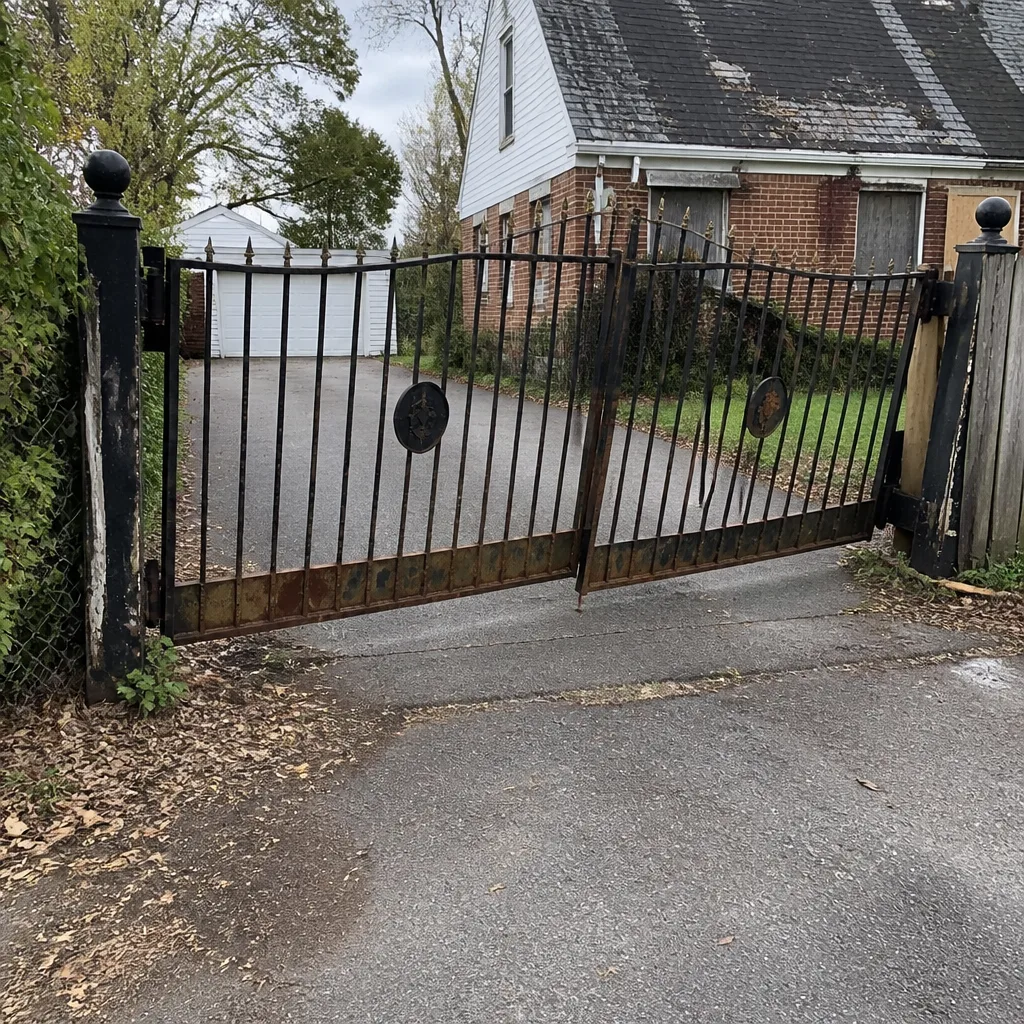 Before
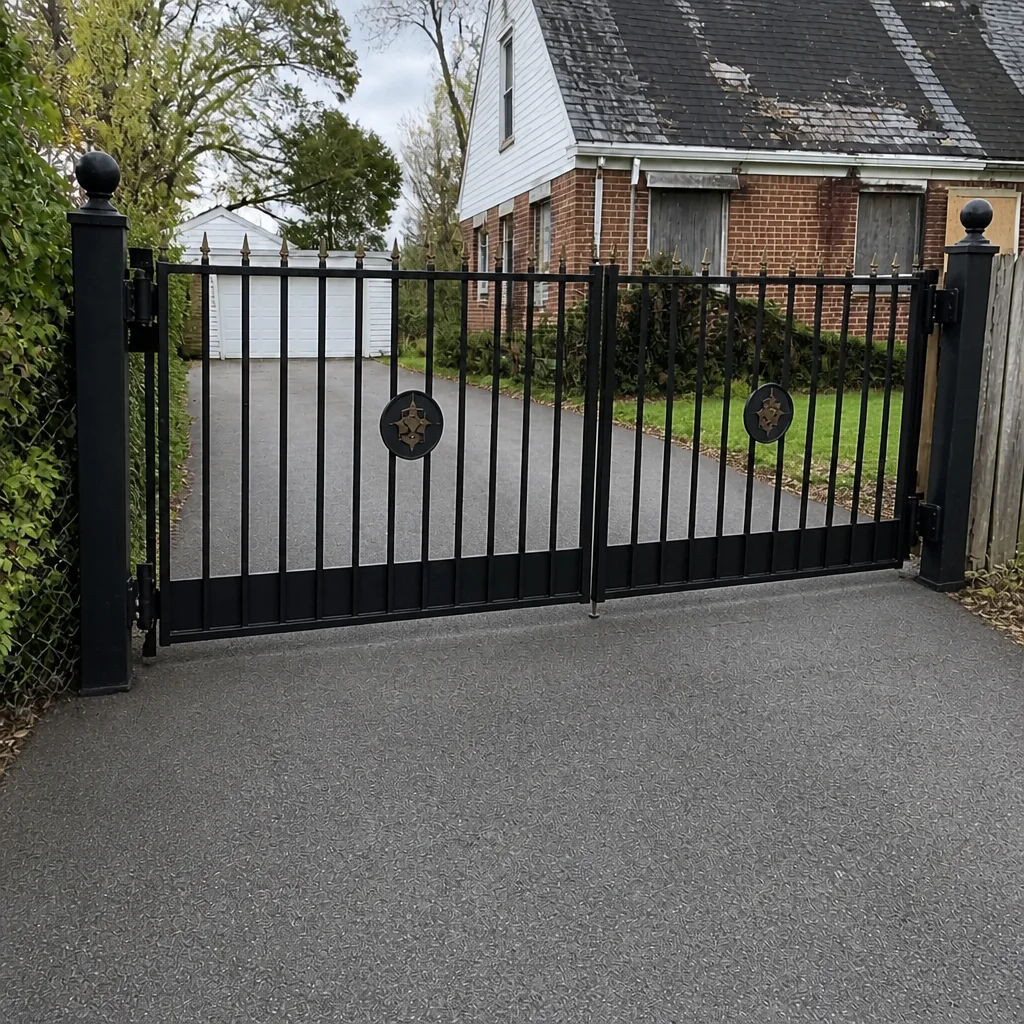 After
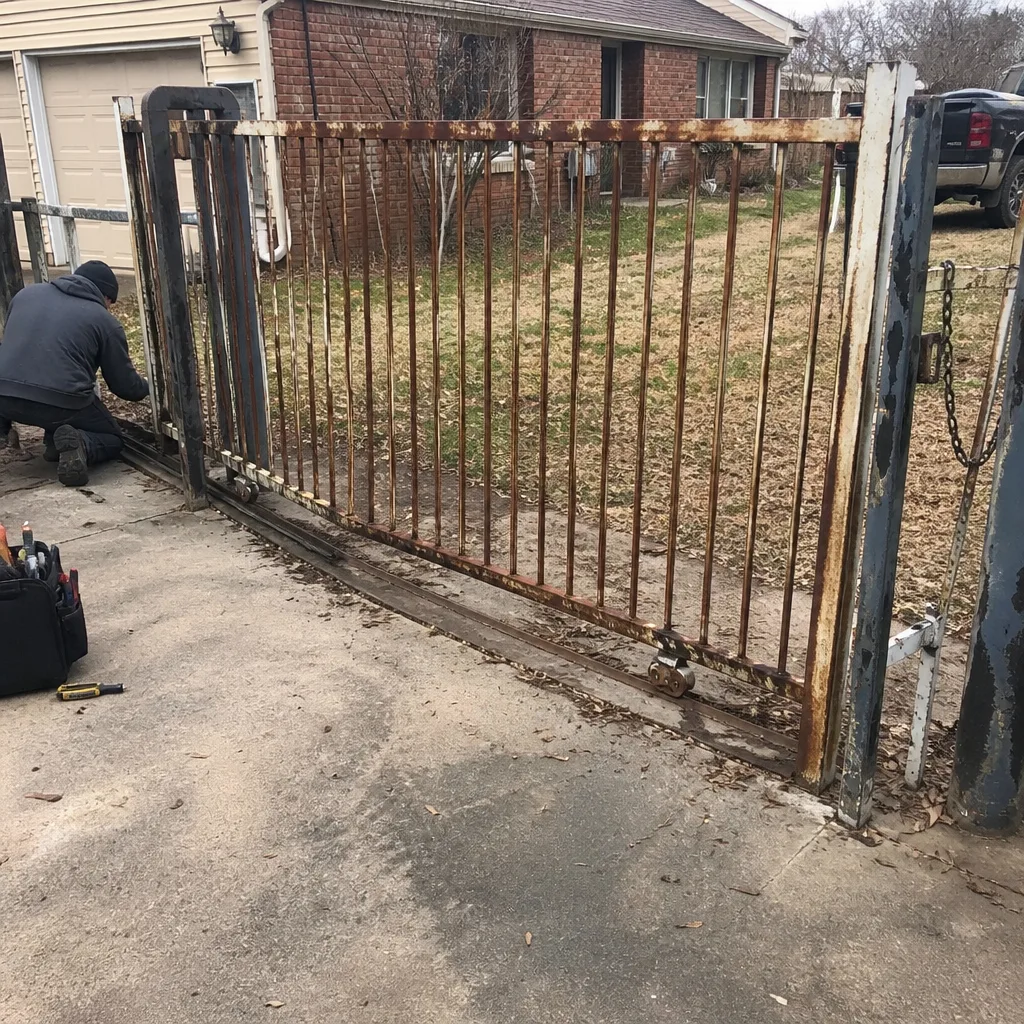 Before
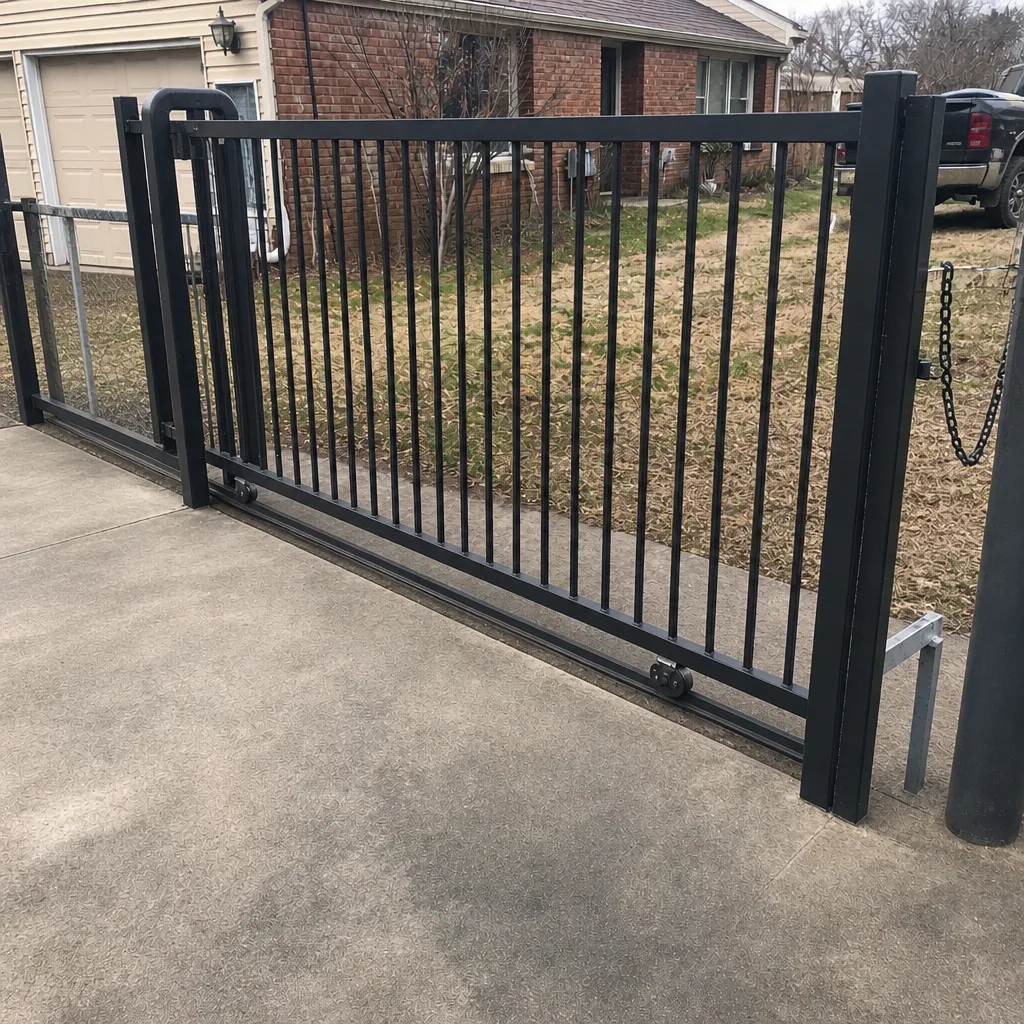 After
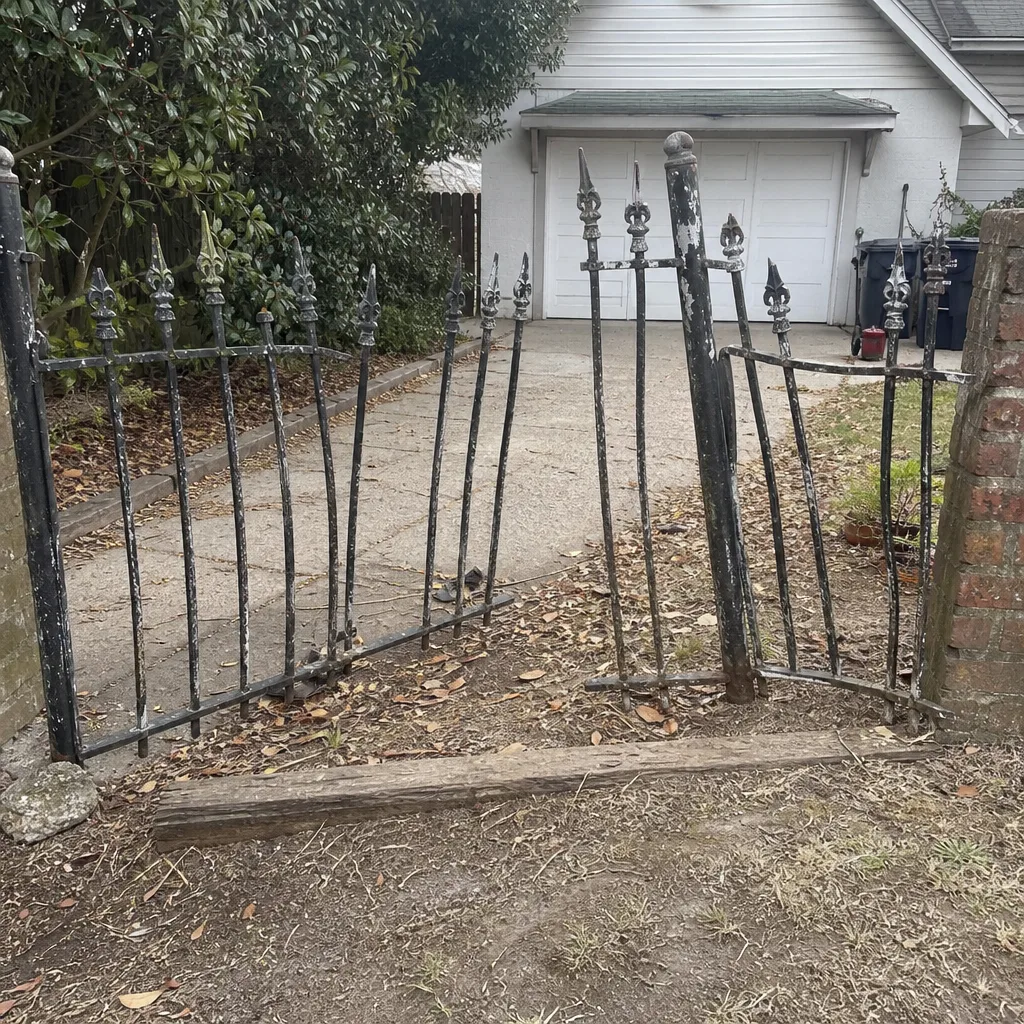 Before
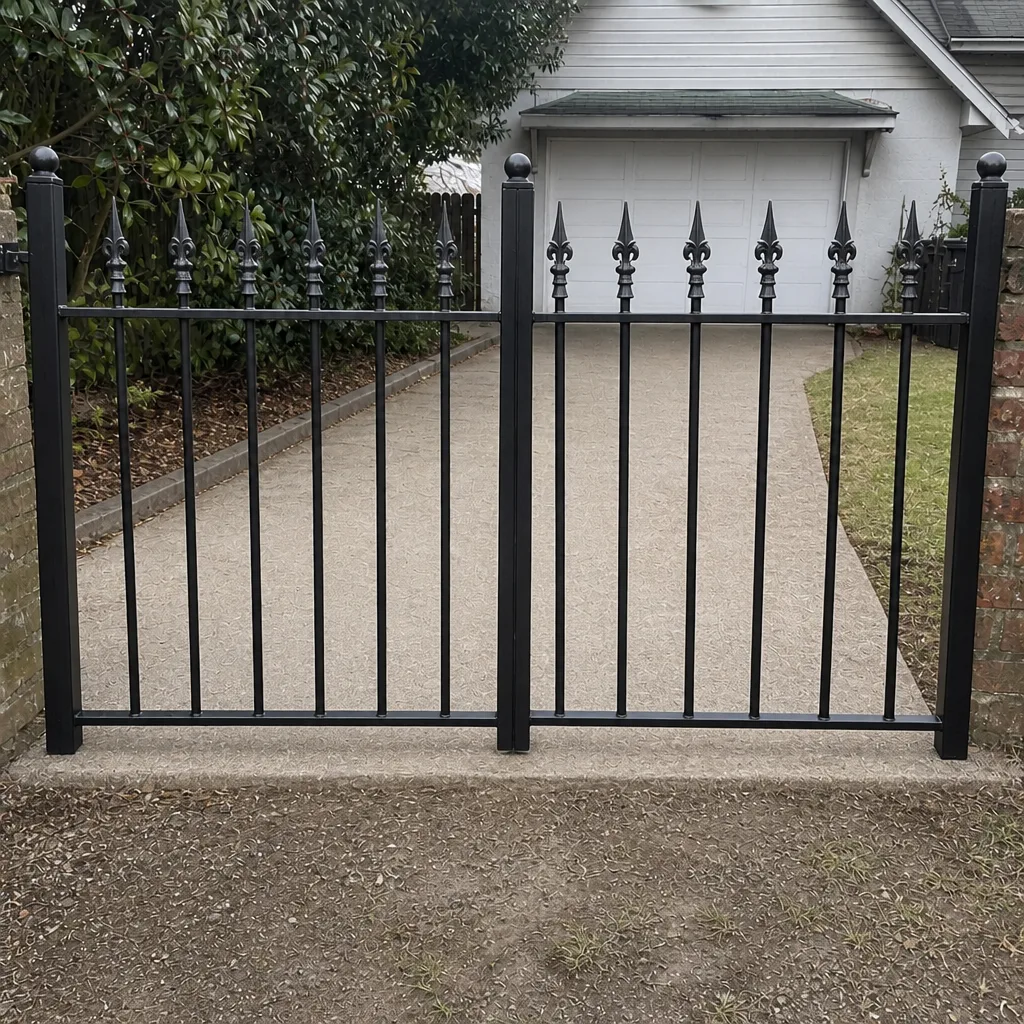 After
When to Call a Professional
Call a professional for any true gate emergency: a gate stuck closed with no working release, a gate stuck open and unsecure, water in the controls, a burning smell, a panel or slide gate off its track, or a safety device failure. Also call when a storm has left the gate looking damaged but still operating, because that’s when damage gets worse. As a dedicated gate specialist, Ashton Gate Repair services nine major brands, from residential operators like Mighty Mule and Ghost Controls to commercial systems like FAAC, BFT, and DoorKing, and handles repair, electric gate repair, and new installation. Ashton Gate Repair offers free estimates in Virginia Beach. Call (844) 834-3028. We answer 24/7. Fast dispatch from 7am to 7pm, Sunday through Friday.
Frequently Asked Questions
The exact method depends on your operator brand. Generally, you locate the keyed release or release lever on the operator housing, turn the key, and pull or disengage the lever to free the gate to swing or slide by hand. Test the release before you need it, and record the method in your gate file. If the release is stuck or the gate won’t move by hand, call (844) 834-3028 for an exact diagnosis; estimates are free.
Release the operator and close the gate by hand, then secure it with an outdoor-rated strap or cable to a fixed post. Don’t wedge anything into the operator or track. If the gate can’t be secured or a panel looks unstable, call (844) 834-3028. We answer 24/7, and we’ll help you decide what to do next.
It’s an emergency when there’s no working manual release and a vehicle or person needs to get out, or when a safety device has failed. It’s a scheduled repair when the manual release works and you can open the gate by hand. In Virginia Beach, during storm season, plan around a stuck-closed gate before evacuation orders because it’s one of the most common emergency calls we take.
Have the operator brand and model, the control board serial number, the gate’s symptoms, what you’ve already tried, any visible hazards like water in the controls, and access details. A quick description saves time on the call and gets you the right help. Call (844) 834-3028 for an exact quote; estimates are free.
We service nine major brands, including LiftMaster, FAAC, BFT, Linear, Viking, Ghost Controls, DoorKing, Elite, and Mighty Mule, so we handle most operators we’re called about. We are independent and experienced across brands, not tied to a single manufacturer. Call (844) 834-3028 for a free estimate.
We quote the price per job in writing before any work starts, so you know the cost before the technician begins. That written estimate sets the final price. For an exact quote, call (844) 834-3028; we answer 24/7 and dispatch from 7am to 7pm, Sunday through Friday.
The Bottom Line
The two gate emergencies in Virginia Beach are a gate stuck open before a storm and a gate stuck closed after a power outage, and preparing for both comes down to a tested manual release, a documented gate file, and a gate service contact you trust. Build that plan once, review it each storm season, and the next gate failure becomes a fix instead of an emergency. Call (844) 834-3028 for a free estimate, so you know your gate is ready before you need it.
Written by the team at Ashton Gate Repair.