
Last updated November 16, 2026
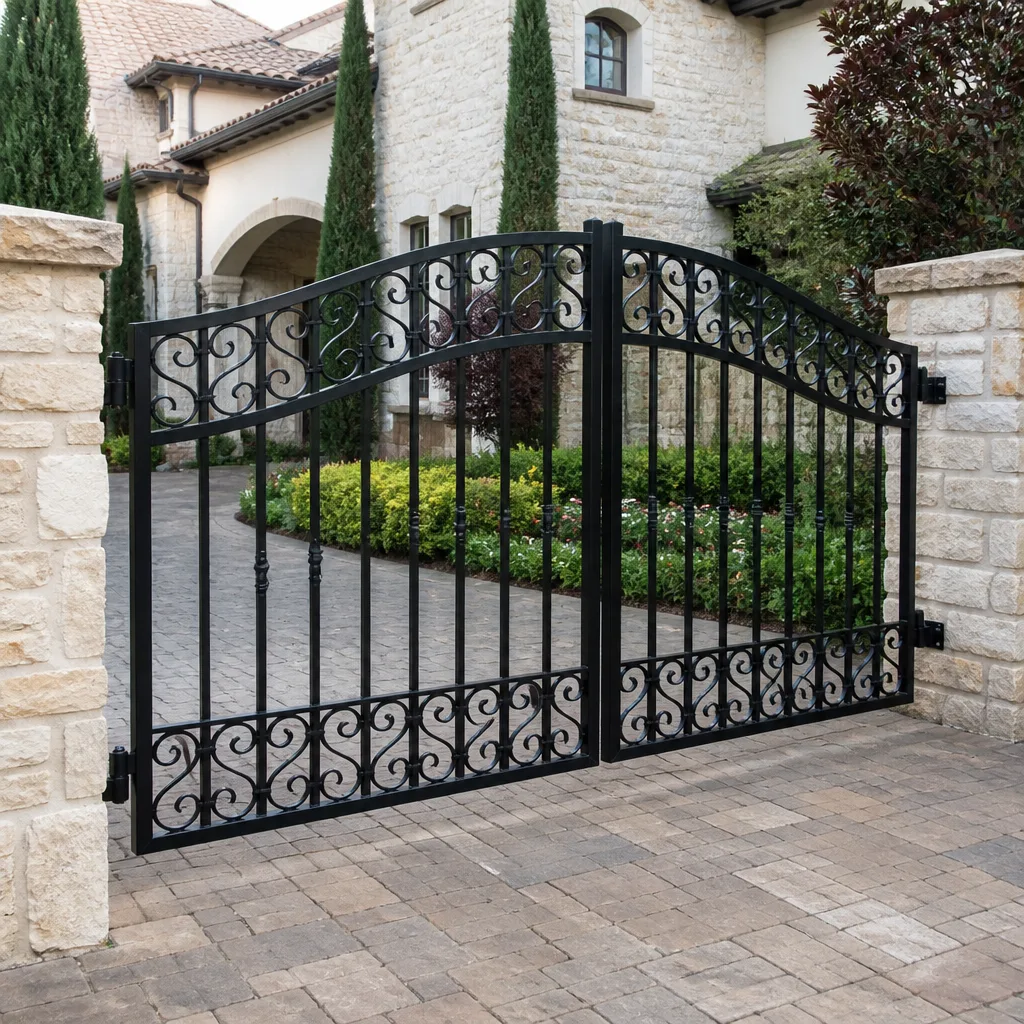 Wrought iron
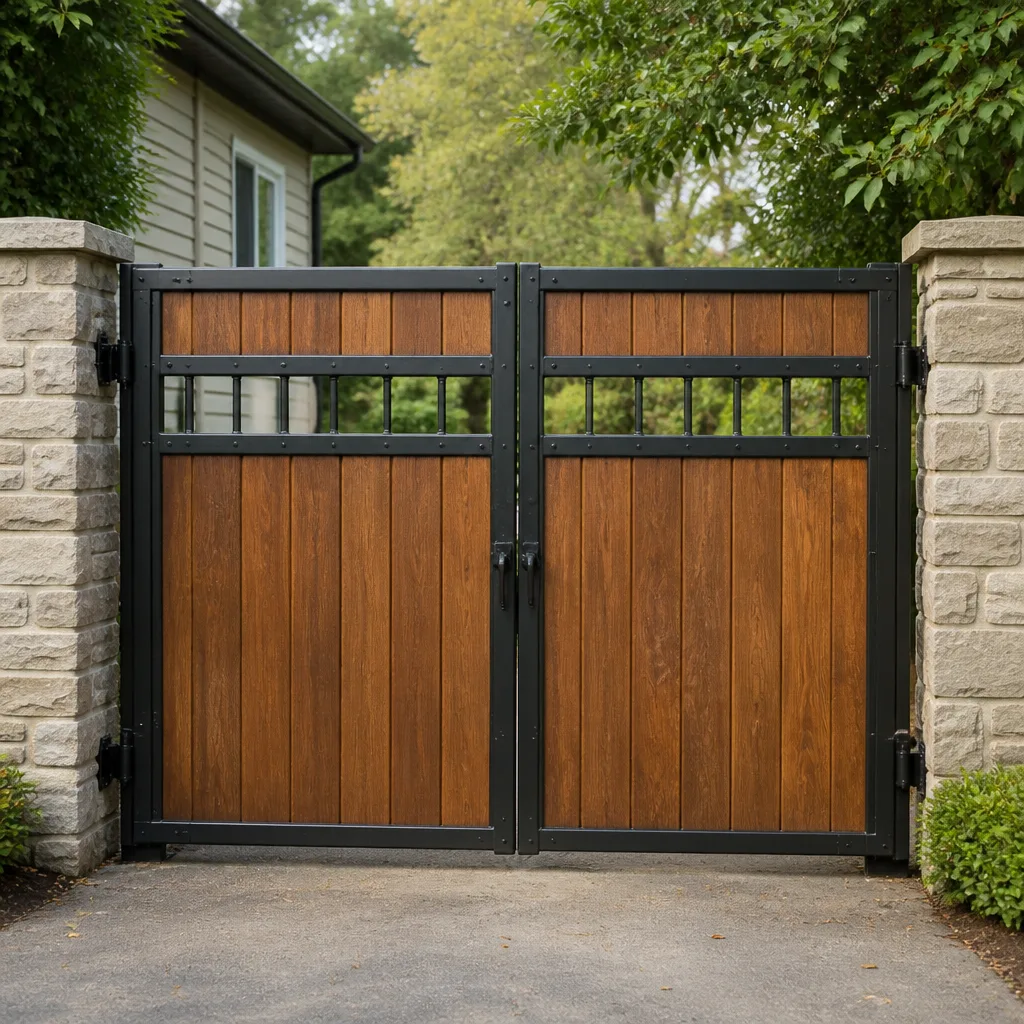 Wood & steel frame
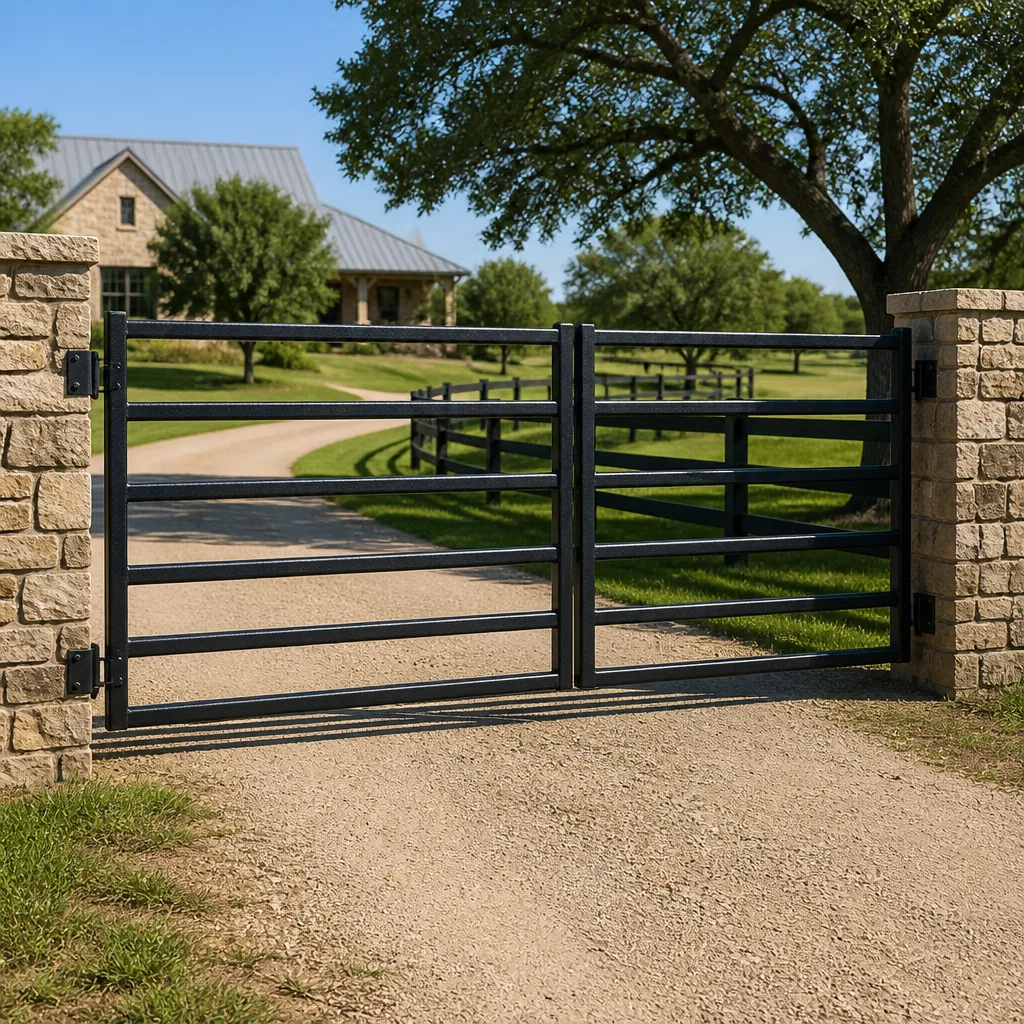 Farm & ranch
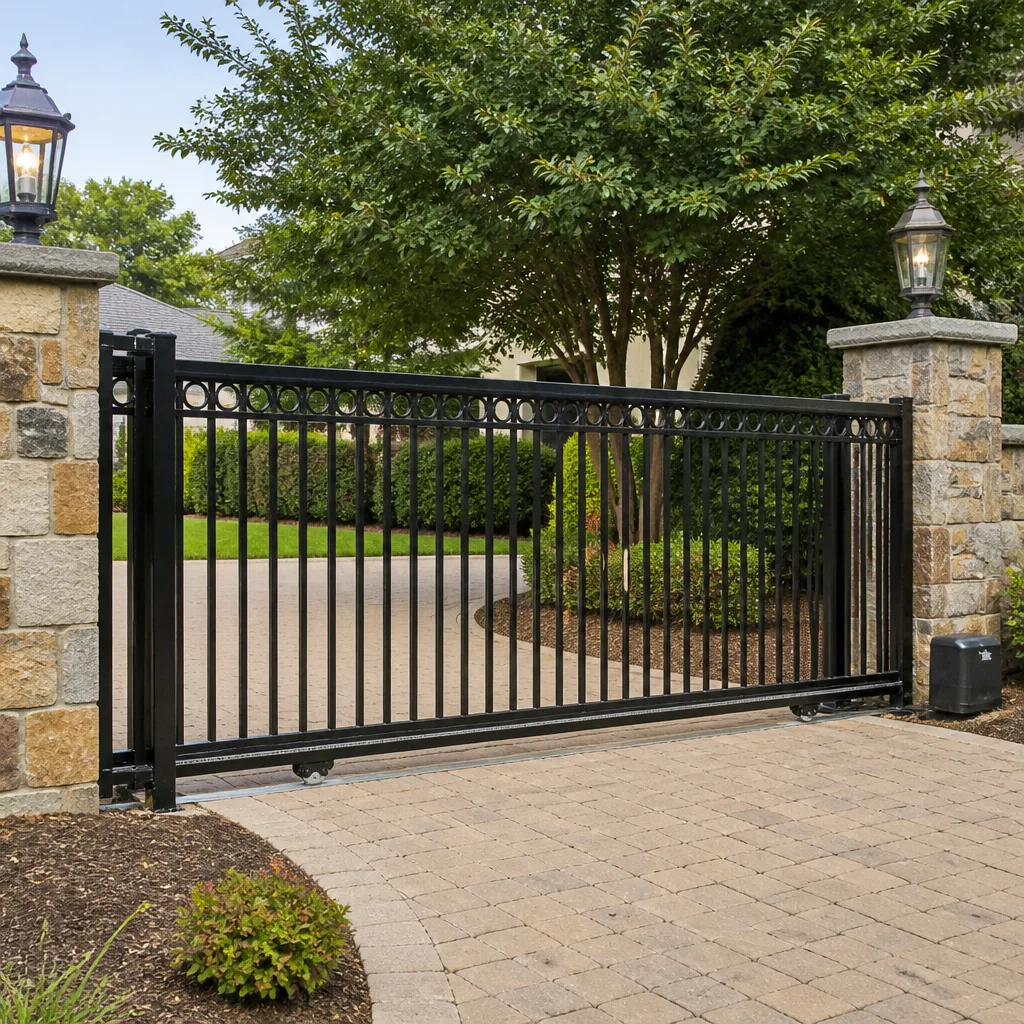 Sliding driveway gates
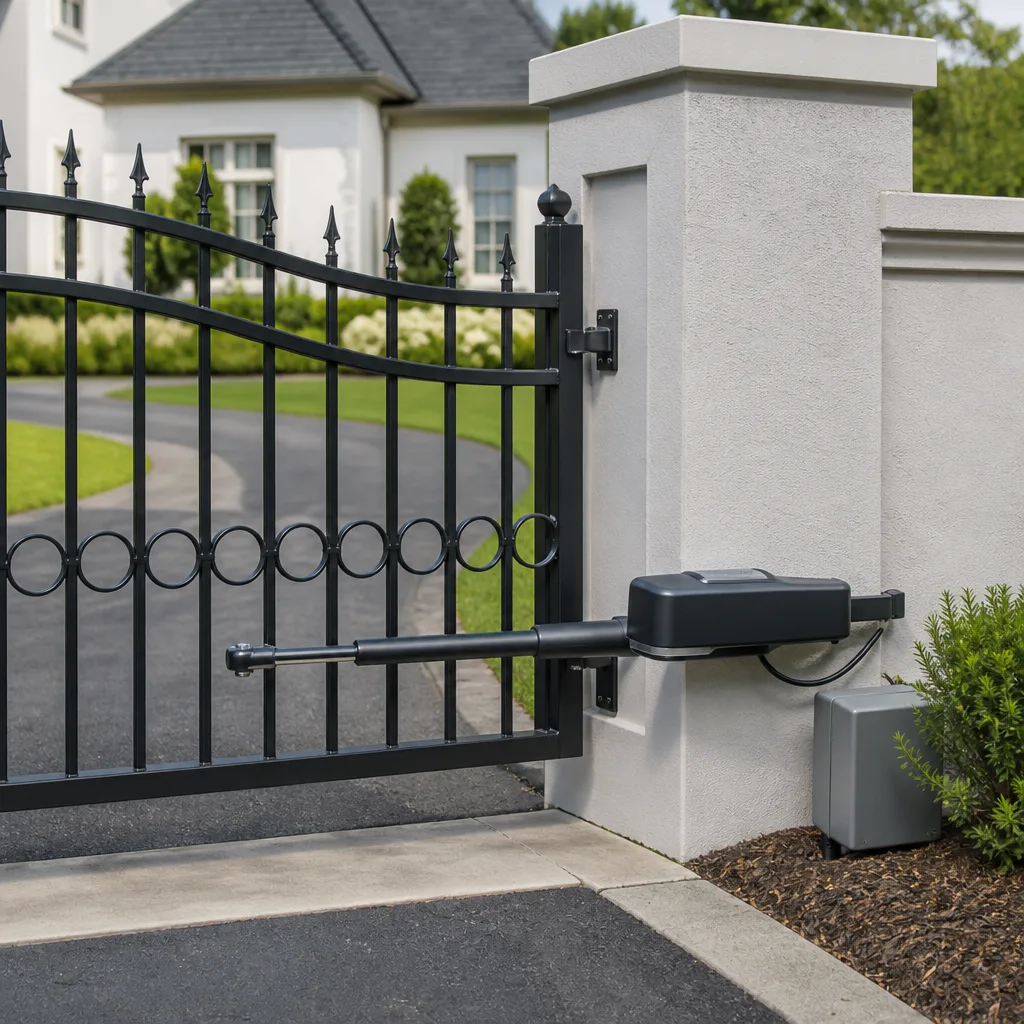 LiftMaster operators
Free on-site gate assessment - hinges, posts, and your LiftMaster or Nice gate operator checked before anything is quoted
The assessment is free and the quote is the invoice.
Get your free estimateChoosing the Right Gate Repair Brand: A Buyer’s Guide for Virginia Beach
Most gate buyers in Virginia Beach start with the same question: which brand is best? That’s the wrong first question. The better one is which brand will still be serviceable five years from now, when a control board fails or a limit switch gives out and you need someone local who can actually fix it. A nationally famous operator can be the worst possible choice for a Virginia Beach property if the nearest source for its parts is a drive up to Richmond, and a quieter brand with a strong independent service network can be the smarter buy. This guide walks through parts availability, warranty structure, corrosion exposure, and duty cycle so you can pick a brand that holds up in Hampton Roads, not just one that looks good on a spec sheet.
Quick Answer
The best gate brand for Virginia Beach is the one a local technician can diagnose, get parts for, and repair without waiting on a factory-authorized dealer in another city. In practice that means weighing four things together: local parts availability across Hampton Roads, how the operator’s enclosure handles year-round moisture and humidity, whether the warranty can be honored by independent technicians, and whether the operator’s duty cycle matches real daily traffic. Popularity nationally is a separate question and often a misleading one.
Styles & brands we work with
- Wrought iron
- Wood & steel frame
- Farm & ranch
- Sliding driveway gates
- LiftMaster operators
Table of Contents
- Parts Availability: Why It Decides Brand Choice in Hampton Roads
- How Each Brand Handles Moisture and Enclosure Exposure
- Warranty Structures Compared: What’s Covered and Who Can Service It
- Residential Driveway Gate vs. Commercial Sliding Gate: Duty Cycle Matters
- Aluminum vs. Steel: What the Brand and the Build Tell You
- Why Choosing on Price Alone Backfires in Virginia Beach
- A Simple Brand Selection Method
- Diagnosing and Servicing What’s Already There
Parts Availability: Why It Decides Brand Choice in Hampton Roads
Parts availability is the single most reliable predictor of how painful gate ownership will be in Virginia Beach. When an operator fails, the difference between a fixed gate and a stuck one is how fast a technician can source the specific parts that failed: a control board, a receiver, a limit switch, a motor capacitor, a drive gear. A brand whose parts live in regional distribution or with independent gate specialists gets fixed on-site. A brand whose parts only ship from a factory depot, or only through a narrow dealer network, turns a same-day repair into a week-long wait. If you’re currently weighing what a failure actually costs to resolve, our overview of gate repair covers the components that fail most often and why operator brands diverge so much in replacement speed.
Here’s the practical breakdown for the Virginia Beach and Hampton Roads market:
- Strong local support: LiftMaster and Linear operators are widely distributed across the trade and are serviced by independent gate technicians throughout the region. Parts are generally accessible without factory involvement.
- Solid but narrower support: FAAC, BFT, and DoorKing are commercial-grade and well understood by gate specialists, but the parts channel is tighter, so an independent technician who knows the line matters more.
- Residential-grade with lighter parts networks: Ghost Controls and Mighty Mule are common on residential driveway gates, but their parts sit in a lighter distribution network, so how fast a fix happens depends heavily on who you call.
- Brands that create delays: Any operator marketed nationally with a factory-only service model. The gate might be excellent; the local recovery is what breaks down.
Our technicians have up to 14 years of experience across LiftMaster, FAAC, BFT, Linear, Viking, Ghost Controls, DoorKing, Elite, and Mighty Mule, so we compare brands on the parts question directly. The rule is simple: pick the brand a local specialist can source parts for, or accept that every future repair is a scheduling gamble.
How Each Brand Handles Moisture and Enclosure Exposure
Virginia Beach sits on a coastal plain with year-round humidity, heavy summer rain, and salt-laden air, and that environment is where enclosure design earns its keep. Two operators with identical motors can have wildly different lifespans if one ships with a sealed, gasketed housing and the other vents freely. The parts that fail first in a humid climate are almost always inside the control box: circuit boards that gather condensation, exposed terminals that corrode, and limit switches that bind after a wet season. The brand doesn’t solve this on its own, but the enclosure design and the quality of the owner’s manual maintenance guidance do a lot of the work.
What to check before committing to a brand:
- Sealed versus unsealed enclosures: A gasketed, sealed housing with an internal desiccant or a properly vented design will hold up better than an open box. Ask how the housing manages condensation, not just rain.
- Corrosion resistance in the housing: Look for treated or coated control enclosures and stainless or coated fasteners. A perfectly good motor board can be ruined by a rusted-out housing.
- Aluminum versus steel arm and gate frame: Aluminum won’t rust and is the sensible choice in a humid climate. Steel arm components need a proper finish and periodic inspection. This is a build question as much as a brand question.
- Treatment of exposed terminals and connectors: Brands that ship with coated or sealed connectors cut down on the corroded-terminal failures gate technicians see most.
The takeaway: humidity doesn’t care about the brand name on the box, but the box design, hardware finish, and manual guidance do. When a brand’s enclosure and materials are designed for wet, salty air, Virginia Beach homeowners spend less on repairs over the life of the gate.
Warranty Structures Compared: What’s Covered and Who Can Service It
A warranty is only as good as the nearest technician willing to work under it. That’s the trap with several nationally marketed brands in Virginia Beach: the warranty is generous on paper, but service must be performed by a factory-authorized dealer, and if that dealer is in Richmond, the warranty’s real value to you is limited. Before you buy any brand, read the service language, not just the coverage years. If the warranty requires factory-authorized service, find that dealer and confirm their response time in writing. If the warranty can be honored by independent technicians, your recovery path is wider and faster.
What warranties typically cover and where they diverge:
- Motor and control board: Often the longest coverage in years, but subject to duty cycle and installation requirements. If the operator was undersized for the gate, or the gate wasn’t properly balanced, coverage may be denied.
- Accessories: Photo eyes, keypads, loop detectors, and receivers typically carry shorter coverage than the operator itself. Brands that bundle a light or a keypad into a generous accessory warranty are the ones holding up better locally.
- Service labor: Most warranties cover parts, not labor. That’s a budget reality you should plan for regardless of brand.
- Who performs the work: Factory-authorized-only language narrows your options. Independent-service-friendly language widens them. Confirm before purchase.
Ask two questions of any brand you’re considering: what does the warranty actually cover, and can it be honored by a local technician? A brand that fails on the second question is a long-term liability no matter how good the first answer is.
Residential Driveway Gate vs. Commercial Sliding Gate: Duty Cycle Matters
Duty cycle is the number of operating cycles an operator can handle per hour or per day before it starts to overheat and wear prematurely, and it’s the single biggest reason a residential operator dies early on a busy commercial gate. A residential driveway gate that opens and closes a dozen times a day needs a very different operator than a commercial sliding gate handling constant traffic. Choosing a residential-grade brand for a commercial application is one of the most common and expensive mistakes we see. The reverse (a commercial operator on a quiet residential gate) is usually just overkill, though the added life and duty capacity can be a reasonable investment in high-wind areas or where accessibility matters.
Matching operator class to gate type:
- Residential driveway gate, low traffic: A solid residential operator from Ghost Controls, Mighty Mule, or a residential LiftMaster or Elite line will serve a typical driveway well. Focus on enclosure quality and accessories over raw duty rating.
- Residential gate with frequent use (guests, deliveries, family traffic): Step up to a heavier residential or light-commercial operator with a higher duty rating. This is where Viking and Linear linear-operator series also fit well.
- Commercial or managed-access sliding gate: Use a commercial-grade operator built for continuous or high-cycle duty. FAAC, BFT, and DoorKing are designed for this, with the control and safety accessory support commercial sites require.
- Slide gates versus swing gates: Sliding operators generally carry higher duty ratings and fewer swing-related hinge and arm failures. Swing gates need a sway-control solution for wind and an operator rated for the gate weight and width.
Virginia Beach has its share of high-wind days, so an operator actually rated for your gate’s weight and sail area, and rated for the daily traffic you’ll put through it, matters more than picking a famous name.
Aluminum vs. Steel: What the Brand and the Build Tell You
Aluminum won’t rust, and steel will, and in Virginia Beach’s humid climate that distinction is the deciding factor between a gate frame that holds up for years and one that corrodes from the inside out. But the material question is bigger than frame choice. It’s about the operator arm, the mounting brackets, the fasteners, and the finish on every exposed metal surface. A brand whose materials package is designed for a wet, salty climate reduces the corrosion-related failures that drive gate repair in the area. A brand that ships with unfinished steel hardware in a coastal region asks the owner to manage rust as a maintenance routine.
What to look for in the build:
- Aluminum gate frames and arms: Preferred in Virginia Beach because aluminum won’t rust and needs less corrosion maintenance.
- Steel frames with proper finish: Perfectly viable if the finish is sound and the owner inspects for chips and rust each year. Steel is stronger and heavier, which can be a benefit on large gates, but the finish has to be maintained.
- Stainless or coated fasteners: A small detail with a big impact. Rusted fasteners make every repair slower and more expensive.
- Operator enclosure finish: A powder-coated or properly sealed operator housing resists the humid air better than a bare-metal housing.
- Manufacturer maintenance guidance: A brand that gives owners clear, practical guidance on finish inspection and lubrication makes the climate easier to live with.
The goal isn’t a brand that requires no upkeep, because no gate works that way. It’s a brand whose materials and manuals make normal upkeep straightforward, and whose enclosure and hardware are designed to tolerate a wet, humid climate without exotic maintenance routines.
Why Choosing on Price Alone Backfires in Virginia Beach
You can buy a gate operator at the lowest possible price and then discover, two years in, that the local service market doesn’t support it and every repair becomes a scheduling nightmare. The lowest purchase price often belongs to the brand with the thinnest local parts network, because the distributor needs no field support and the manufacturer has no authorized dealer locally. Cheap hardware becomes expensive when a failed control board takes a week to source or when no independent technician will work on it. In a humid, salty climate like Virginia Beach’s that day comes sooner, so the price-only buyer gets hit earlier and harder.
The better way to price a gate brand:
- Confirm that a local gate specialist can diagnose and repair the brand on-site, without factory involvement.
- Confirm parts availability in the Hampton Roads region for the components most likely to fail: control board, receiver, limit switch.
- Confirm the warranty service language, and whether it requires a factory-authorized dealer.
- Confirm that the operator’s duty cycle and enclosure rating match your gate’s actual use and exposure.
- Only then, compare price across viable brands.
That sequencing flips the usual question. You’re not asking which brand is cheapest; you’re asking which brand is serviceable, then choosing among the serviceable options on quality and features. In Virginia Beach that approach saves money across the life of the gate more reliably than any purchase price ever will.
A Simple Brand Selection Method
You don’t need an engineering degree to pick the right gate brand. You need a short, repeatable method that weighs the criteria that actually matter for a Virginia Beach gate and produces a brand that will hold up in our climate and remain serviceable years from now. Here’s the process we recommend to homeowners and property managers deciding on a new gate or replacing a failed operator.
- List your actual use. How many vehicles, deliveries, and visitors pass through the gate per day, in each season? Be honest about peak traffic and how much the gate stays open during business hours.
- Note the gate type and construction. Swing or slide, frame material, gate weight and sail area, and whether the gate is on a low-traffic driveway or a commercial access point.
- Rate enclosure and climate durability. Ask how each candidate brand handles condensation, salt-laden air, and finish wear. Prefer sealed, powder-coated enclosures and aluminum construction where the budget allows.
- Confirm local parts and service. Call a Virginia Beach gate specialist and ask whether the brand is serviceable on-site. This step rules out brands that look good on paper but create sourcing delays.
- Read the warranty service terms. Find out whether independent technicians can service under warranty. If the answer is factory-authorized only, find that dealer and confirm their proximity and response time.
- Compare viable options on price and features. Only now do you compare brands that passed the first five steps. Features, motor duty, accessories, and price get weighed last, because they can’t fix a brand that fails the service test.
- Get a written estimate. The price should be in writing, with the parts and labor broken out, so the final invoice matches the agreed quote.
Diagnosing and Servicing What’s Already There
The brand question cuts both ways. If you already own a gate, the best brand is the one your local technician can repair, and the best decision is to diagnose the actual failure rather than to replace the operator because its brand is unfamiliar. Gate problems are usually specific and fixable on a single visit: a misaligned limit switch, a failed photo eye, a burned-out control board, a loose chain on a sliding gate. Independent technicians who work across multiple brands can often solve the real issue without a brand switch. If your operator’s brand is one that a local specialist can source parts for, the gate stays as-is and the repair proceeds normally. When it comes to electric gate repair and control systems, the same logic holds: electric gate repair is a diagnosis job before it’s a parts job. A general fence company that dabbles in gates is not the same as a gate-only specialist, and the difference shows up most clearly on exactly this kind of multi-brand diagnosis work.
Common Mistakes to Avoid
- Choosing the most popular national brand without checking local service support. Popularity doesn’t source a control board. Ask a local specialist whether they can service the brand before you commit. In Virginia Beach the wrong brand can mean a week-long wait for a part.
- Buying on purchase price alone. The cheapest operator is often the one with the thinnest local parts network. Total cost of ownership includes every repair and every day the gate sits stuck.
- Assuming every dealer is equally able to honor the warranty. A warranty is only as good as the nearest willing technician. Read the service language and confirm the dealer proximity before you buy.
- Mismatching duty cycle and gate use. A residential-grade operator on a busy commercial gate dies young. A commercial-grade operator on a quiet residential gate is usually overkill. Match the operator class to real traffic.
- Ignoring enclosure quality in a humid climate. In Virginia Beach, an unsealed operator housing means condensation, corrosion, and premature control board failures. Ask how the brand’s enclosure handles moisture.
- Installing steel hardware with no finish plan in a salty environment. Rust on the frame, arm, or fasteners becomes a maintenance fight. Aluminum and coated fasteners avoid the fight entirely.
- Letting a generalist handle a gate-specific diagnosis. A gate brand that a specialist knows is a ten-minute diagnosis. The same brand handed to a fence installer can become an unnecessary operator replacement because the actual failure was never found.
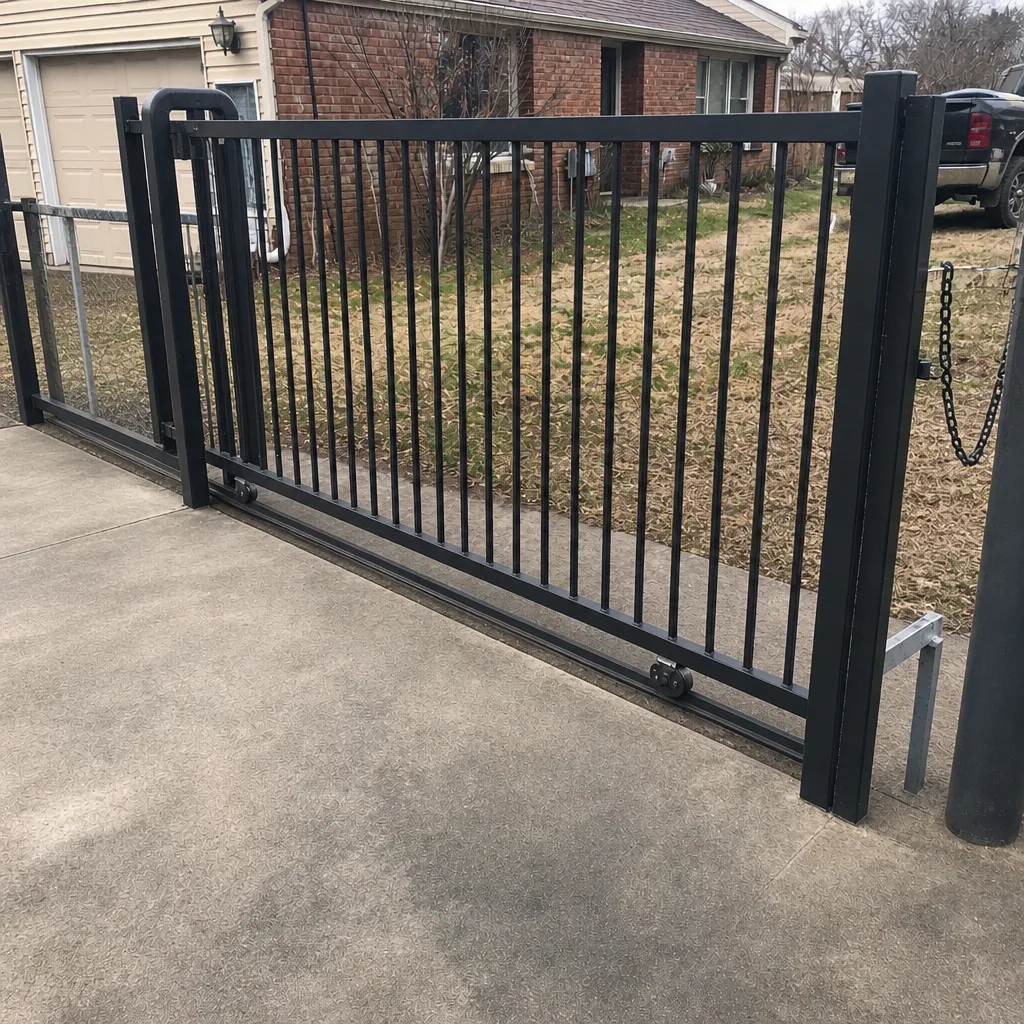
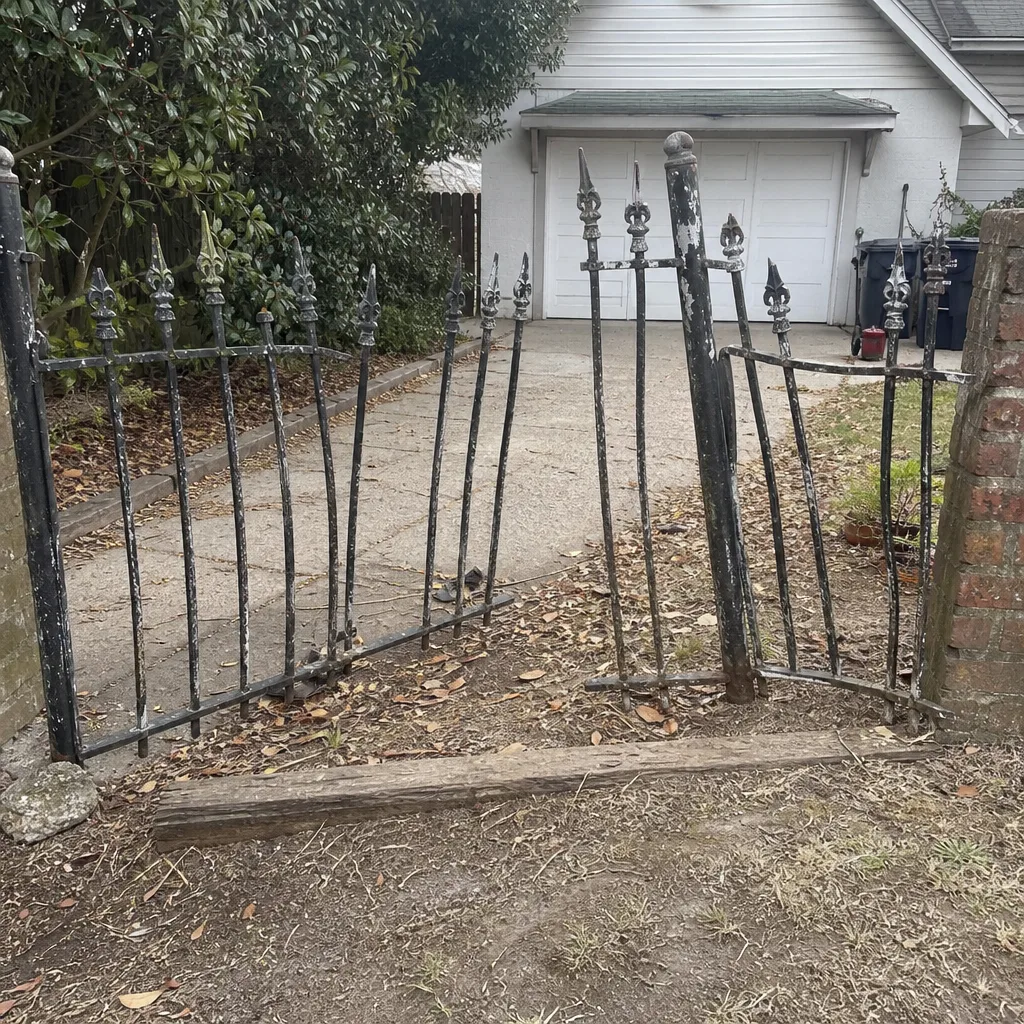
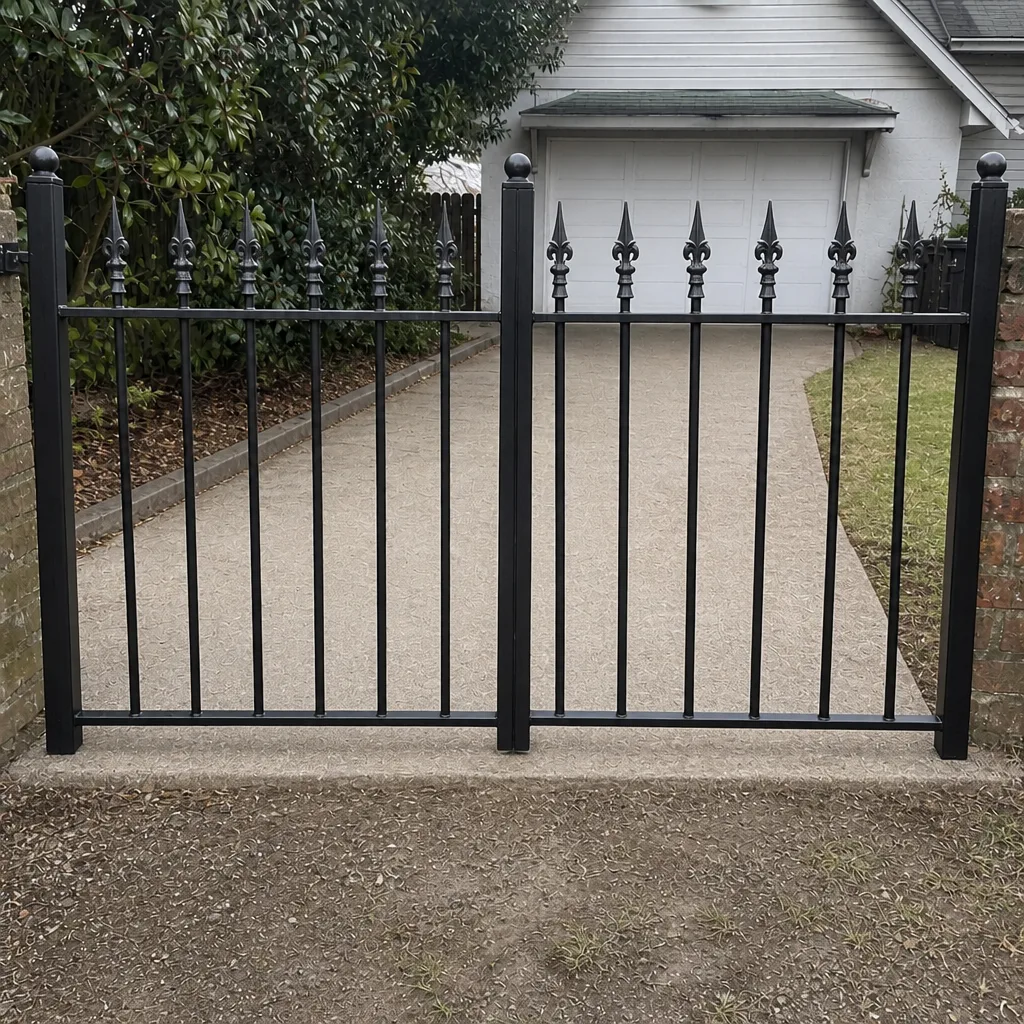
See the difference
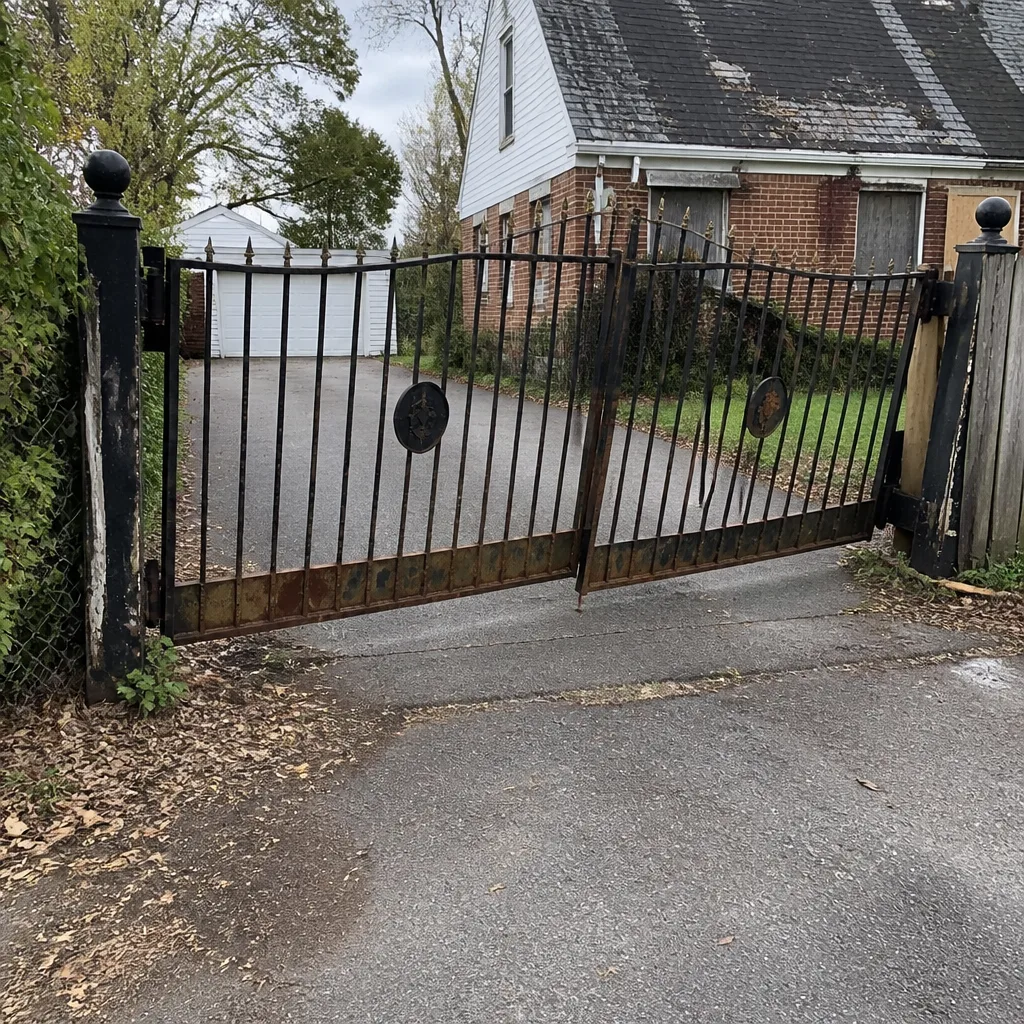 Before
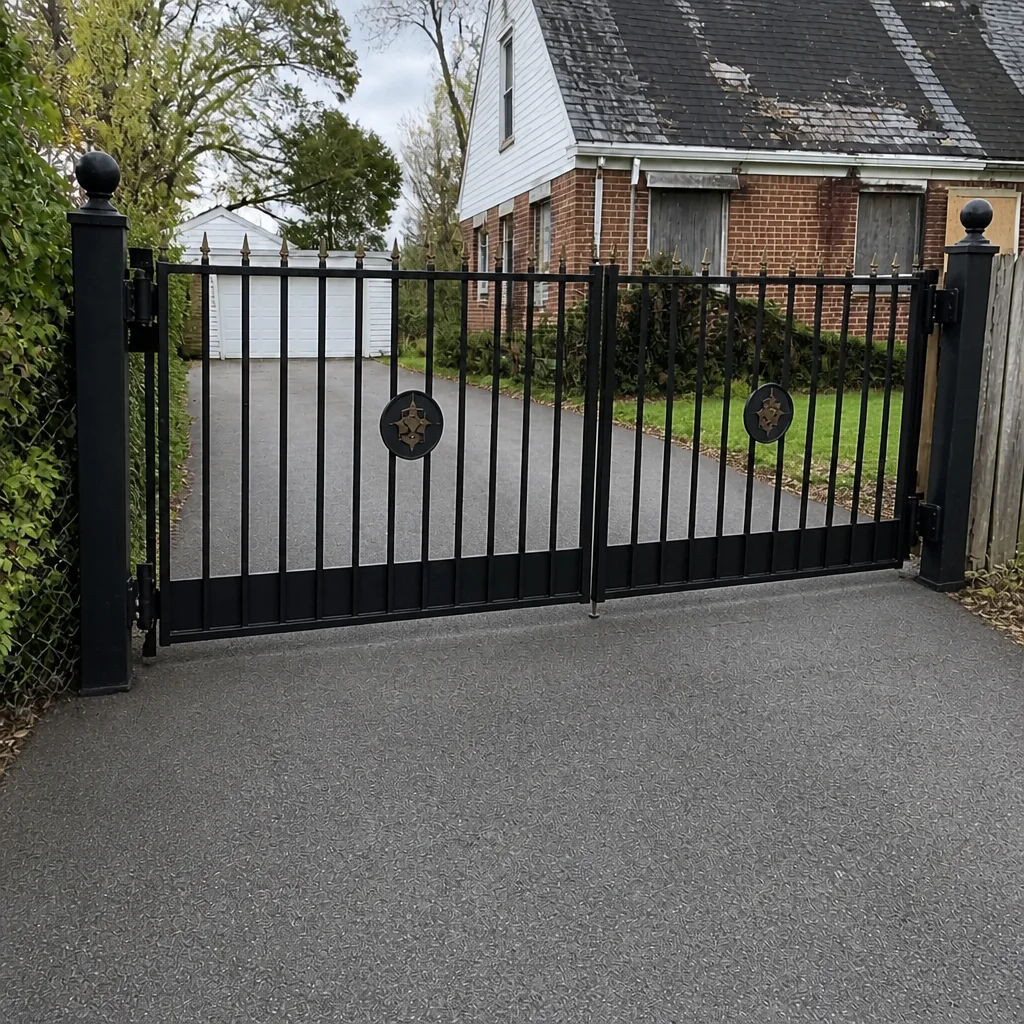 After
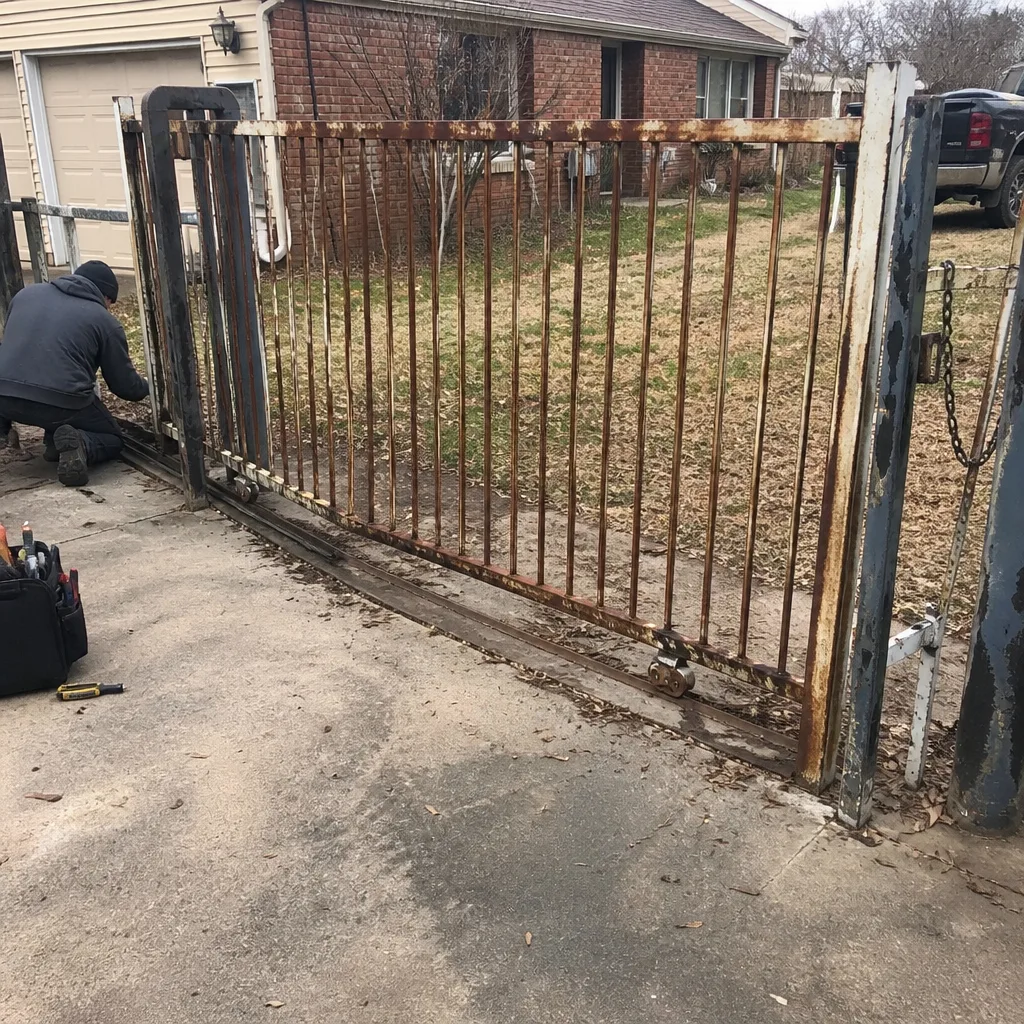 Before
 After
 Before
 After
When to Call a Professional
A gate is heavy machinery with an operator behind it, and some of the failure modes are genuinely dangerous. A gate that slams shut, reverses with no obstruction, or loses a limit and travels past its stop can damage property or injure a person. Doors that bind or come off their track, worn chains on a slide gate, and repeated photo-eye failures are warning signs of a safety risk, not just an inconvenience. Electric gate work also involves line voltage, control wiring, and safety-edge calibration that is not a homeowner’s project. Call a professional when a gate reverses unexpectedly, when the operator stops responding to commands, when the gate binds on its track, or when you’re unsure of the brand. Ashton Gate Repair services LiftMaster, FAAC, BFT, Linear, Viking, Ghost Controls, DoorKing, Elite, and Mighty Mule, and we diagnose whatever system is on-site rather than recommending a brand switch. We offer free estimates in Virginia Beach. Call (844) 834-3028. We answer 24/7. Fast dispatch from 7am to 7pm, Sunday through Friday.
Frequently Asked Questions
LiftMaster, Linear, and the commercial-grade lines from FAAC, BFT, and DoorKing tend to have the most accessible parts channels for independent technicians working in the Virginia Beach and Hampton Roads area. Ghost Controls and Mighty Mule are common residential brands with a lighter parts network, so how fast a repair happens depends on who you call. Any brand a local gate specialist can service on-site is a safe choice; any brand that requires factory-only support is a scheduling risk. Call (844) 834-3028 and we’ll tell you whether we can service the brand you’re considering.
Read the warranty service language before you buy and confirm whether independent technicians can perform warranty work or whether a factory-authorized dealer is required. If the only dealer nearby is outside Hampton Roads, the coverage is limited in practice. Ask the manufacturer’s service language directly, and ask a local gate technician whether they honor the brand’s warranty. This one step saves a lot of frustration. Call (844) 834-3028 for a straight answer on the brand you’re considering.
Aluminum is generally the better choice for a Virginia Beach gate because it won’t rust and needs less corrosion maintenance in our humid climate. Steel is stronger and can be a good choice for large gates, but it must have a sound finish and be inspected for rust annually. Coated or stainless fasteners and a sealed operator enclosure make more difference than the frame material alone. If you have a steel gate and you’re concerned about its condition, call (844) 834-3028 to schedule an on-site look.
Duty cycle is how many operating cycles an operator can handle per hour or per day before it overheats and wears. It matters on any gate, including a residential driveway gate, because a light-duty operator will fail early if the gate opens constantly for deliveries and family traffic. Match the operator class to your real daily cycle count. As an experienced multi-brand gate specialist, we can help match a brand to your gate’s actual use. Call (844) 834-3028 for a free estimate.
No, not without a diagnosis first. An unfamiliar brand isn’t automatically a bad brand. Many “mystery” gate failures are a specific repairable problem: a limit switch out of adjustment, a failed photo eye, a control board, or a loose chain. A gate specialist can identify the actual fault before recommending replacement. If the brand is serviceable locally, repair is usually the right call. Call (844) 834-3028 and we’ll diagnose the gate you have.
Yes. We work on residential-grade operators from Ghost Controls, Mighty Mule, Linear, and residential LiftMaster and Elite lines, and we service commercial-grade operators from FAAC, BFT, and DoorKing for managed-access properties. Residential entry-level and commercial high-security hardware require different parts, safety accessories, and diagnostic approaches, so the right specialist has to know both. Call (844) 834-3028 for a free estimate on your residential or commercial gate.
The Bottom Line
The right gate brand for a Virginia Beach property is the one a local technician can service on-site, with parts that are reachable in Hampton Roads and a warranty that an independent technician can honor. National popularity and a lower purchase price are both secondary to that reality. Weigh parts availability, enclosure and materials durability in our humid climate, warranty service structure, and duty cycle before brand name. If you’re choosing a new operator or deciding whether to repair the one you have, start with the service question, not the marketing. The brand that stays fixable is the brand that lasts.
Ready to move forward? Whether you’re picking a brand for a new gate or trying to fix the one you have, Ashton Gate Repair works on the gate you have, not the one we prefer to sell. We service LiftMaster, FAAC, BFT, Linear, Viking, Ghost Controls, DoorKing, Elite, and Mighty Mule, and we diagnose on-site so you know what’s actually wrong before you spend. Our technicians have up to 14 years of experience across residential and commercial gate systems. If you’re weighing a new installation or operator replacement, we handle that too, with a free measure and a written estimate. We cover Virginia Beach and the surrounding area, and we’re happy to talk through your gate before you spend anything. Call (844) 834-3028 for a free estimate. We answer 24/7. Fast dispatch from 7am to 7pm, Sunday through Friday. The price you’re quoted is the price you pay, agreed before any work begins.
Written by the team at Ashton Gate Repair.