
Last updated November 16, 2026
 Wrought iron
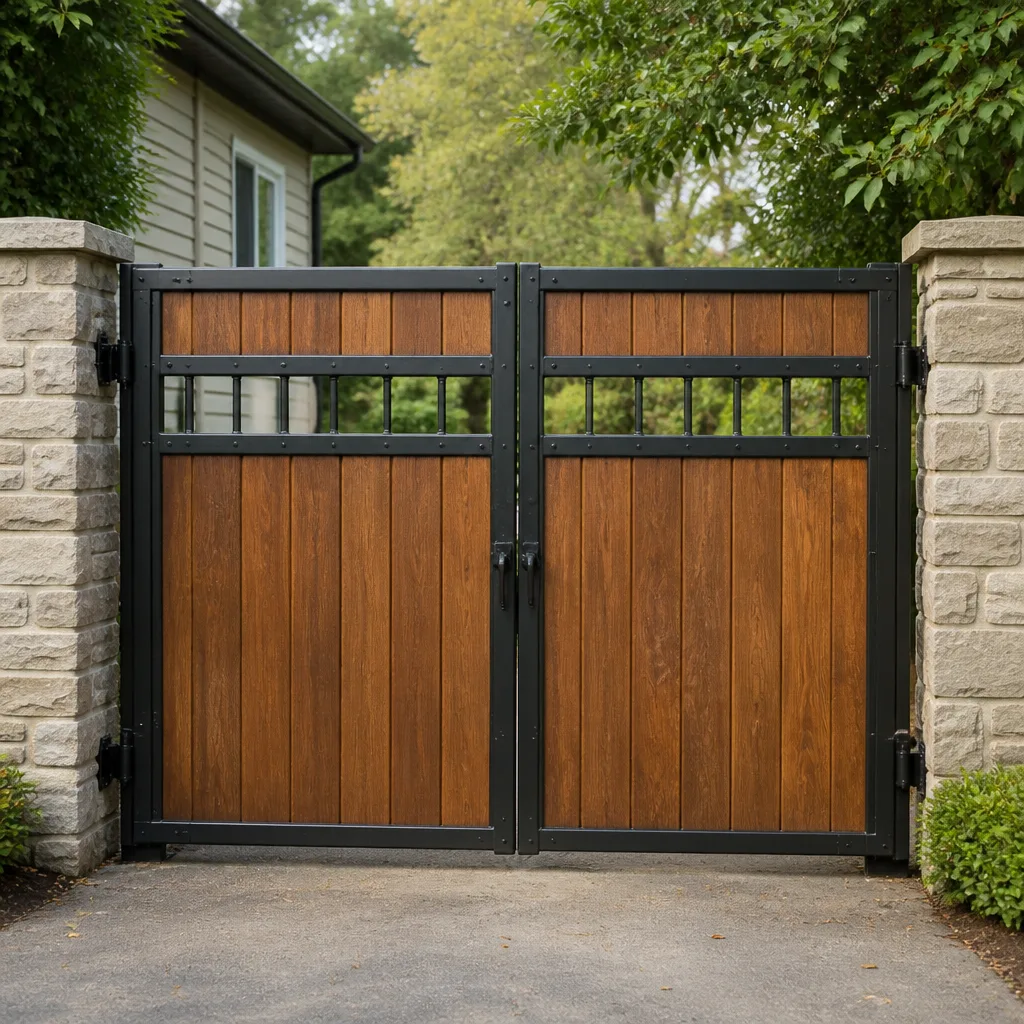 Wood & steel frame
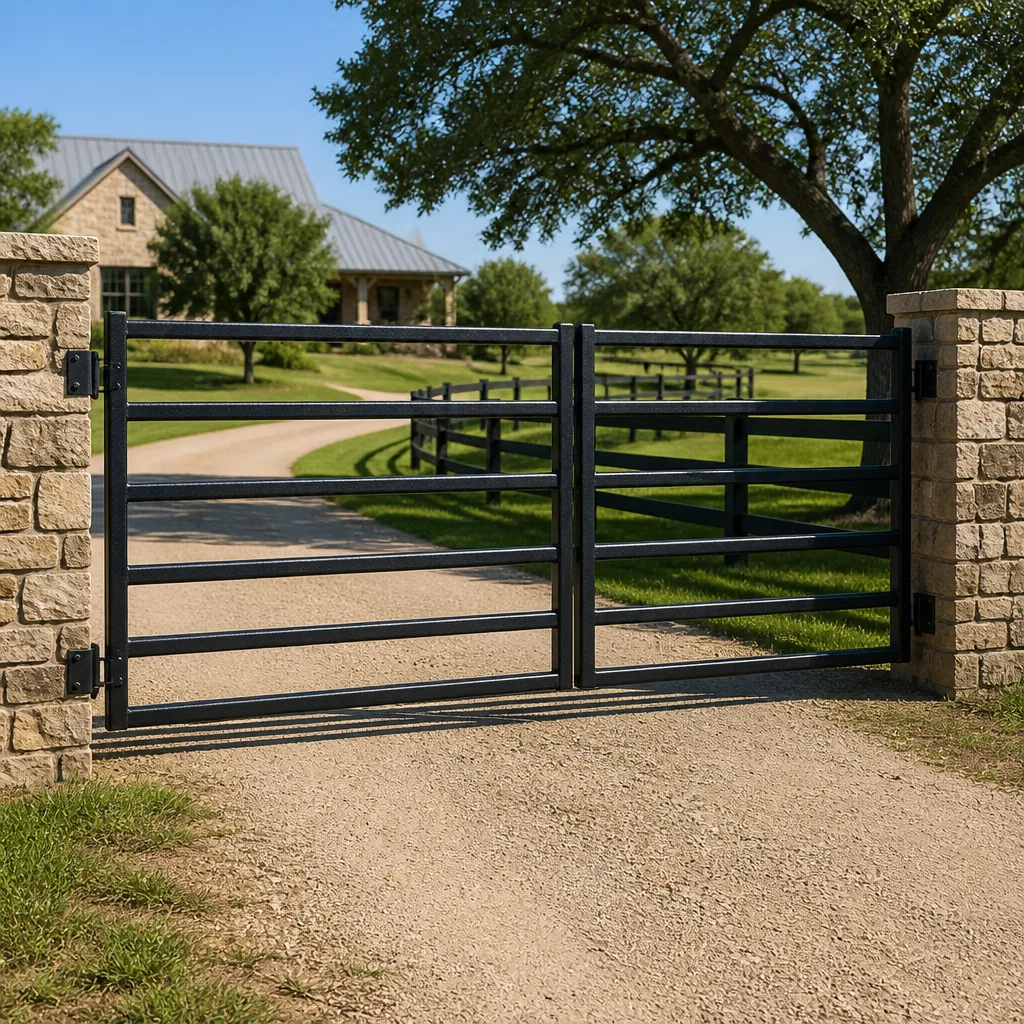 Farm & ranch
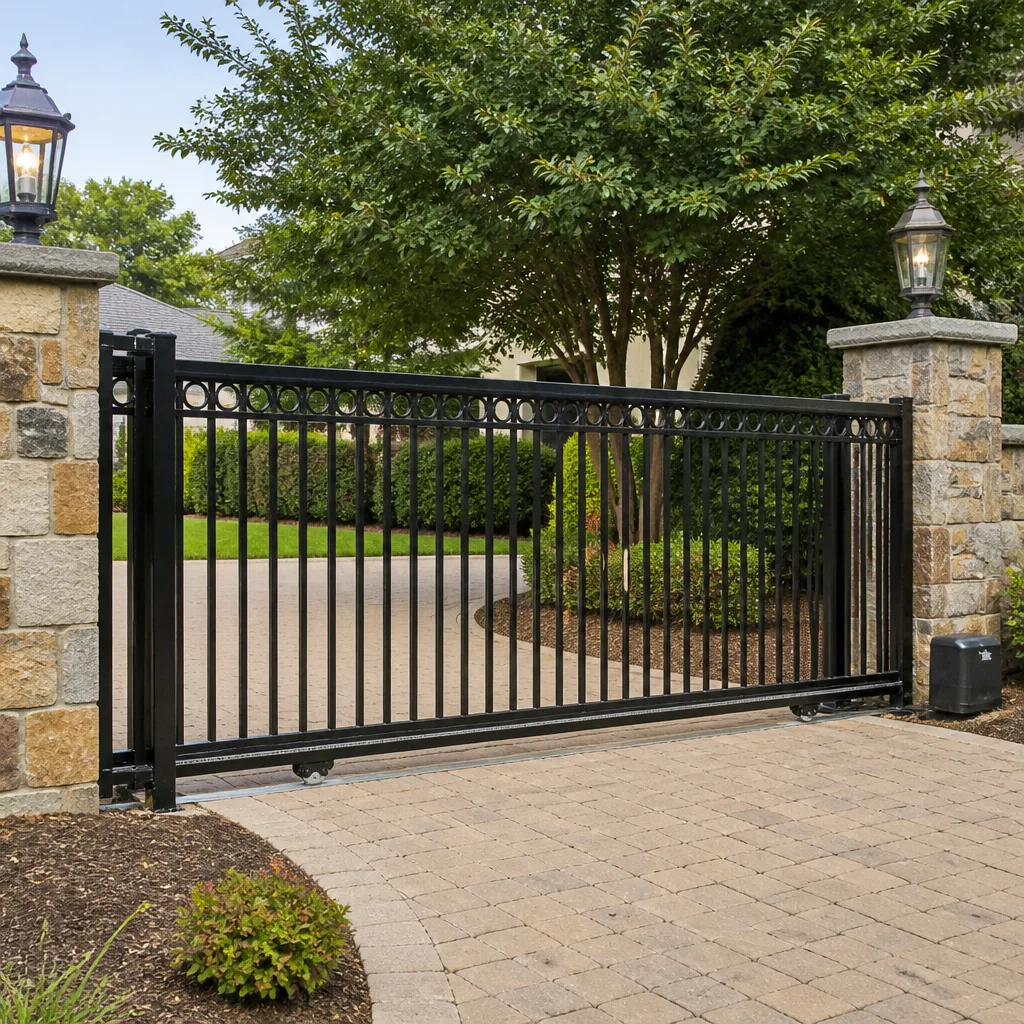 Sliding driveway gates
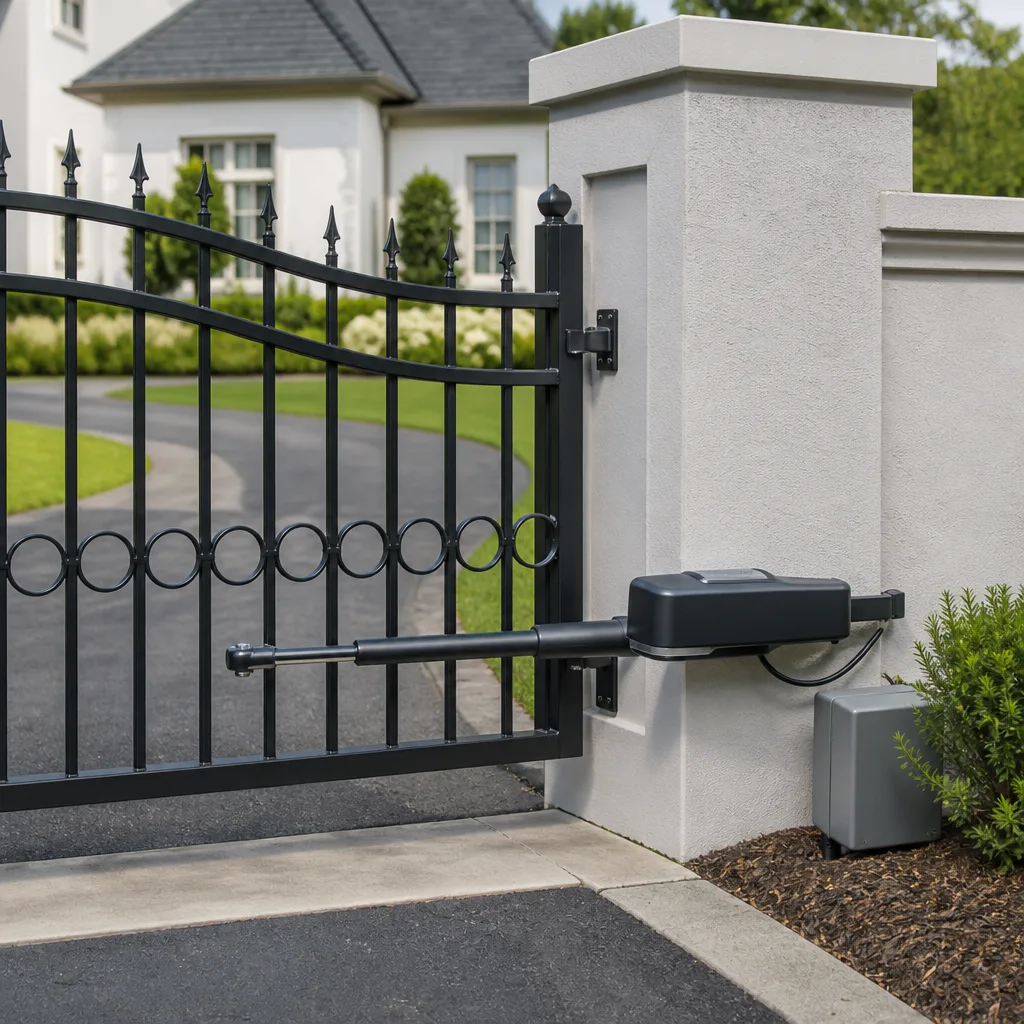 LiftMaster operators
Free on-site gate assessment - hinges, posts, and your LiftMaster or Nice gate operator checked before anything is quoted
The assessment is free and the quote is the invoice.
Get your free estimateGate Repair Troubleshooting in Virginia Beach: Common Problems and How to Fix Them
The most expensive mistake in gate repair is picking the wrong part to blame. A gate that won’t open is almost never a dead operator. More often it’s a hinge that has worn a few millimeters, a post that has settled into sand, a limit switch that has drifted, or a control board that has been quietly corroding in the humidity. Replace the motor when the real fault is a misaligned limit switch and you’ve spent money on the wrong component. This guide teaches you to read the symptoms correctly: how to separate mechanical failures from electrical ones, why Virginia Beach gates fail in predictable patterns, and what a safe reset actually looks like.
Quick Answer
Most gate problems in Virginia Beach come down to three root causes: mechanical wear at the hinges, posts, and tracks; low-voltage electrical drift at the control board, sensors, and power supply; and structural sag from soil settlement under the posts. Diagnose which one you’re facing by watching and listening to the gate before touching anything – mechanical faults usually announce themselves physically, while electrical faults are intermittent and often silent. If the gate moves at all before failing, it’s typically not the motor.
Styles & brands we work with
- Wrought iron
- Wood & steel frame
- Farm & ranch
- Sliding driveway gates
- LiftMaster operators
Table of Contents
- Mechanical vs. electrical: how to tell them apart
- Why Virginia Beach humidity kills control boards
- Sandy soil settlement and the sag that mimics a motor problem
- Brand-specific quirks: LiftMaster, FAAC, BFT, and Linear
- The safe reset sequence that works across most brands
- Reading your gate: visual and audio cues that narrow the fault
- Power, wiring, and the parts you should never touch
Mechanical vs. Electrical Failures: How to Tell Them Apart
The first branch in any diagnostic tree is mechanical versus electrical. Get this wrong and everything downstream is wasted effort. The clearest signal is motion. A gate that lurches partway and then stops is almost always fighting a mechanical problem – a bent track, a worn hinge, a dragging wheel, or a settled post. A gate that does nothing at all, or does something unpredictable and inconsistent, is more likely electrical.
Here’s how to sort them using cues you can gather on your own:
- Mechanical signs: grinding, scraping, or popping sounds; the gate binds at the same point every cycle; you can see the gate sag or rub; the gate physically resists being moved by hand.
- Electrical signs: the operator clicks but the gate doesn’t move; the gate opens sometimes and not others; the keypad or remote works intermittently; the safety sensors or loop detector trigger without a cause; the arm moves freely by hand but the operator won’t drive it.
- Mixed signs (both): a mechanical fault increasing load on the operator until the board trips its overload protection. This is the most common combination in Virginia Beach and the one most often misdiagnosed as a dead motor.
In our experience, roughly half the calls we categorize as “operator failure” turn out to be mechanical binding that the board was correctly protecting against. Before assuming electrical, disconnect the operator arm (where the model allows) and move the gate by hand. If it drags, the fault is in the gate, not the box.
Why Virginia Beach Humidity Causes Control Boards to Fail in a Predictable Pattern
Control boards fail gradually, not suddenly. The pattern we see repeatedly in Virginia Beach is intermittent operation first – one cycle works, the next doesn’t, then a week of healthy behavior – and then a hard stop. That’s not a fluke. It’s moisture working into the board’s terminals and connector pins over months, changing the contact resistance and confusing the logic that reads sensor and limit states.
What makes this predictable is the daily dew cycle. Virginia Beach gets heavy overnight humidity that condenses on cool metal inside the operator housing, especially when the housing is in shade or under dense landscaping. The board never floods; it just stays slightly damp and slightly wrong. The symptoms that tell you it’s the board and not the motor:
- The gate runs a normal cycle after a long rest but fails on the second or third cycle in a row.
- The fail is more likely in early morning than late afternoon.
- Remotes and keypad input register inconsistently – sometimes double-triggering, sometimes not at all.
- The operator will drive the gate with the manual override but not with the remote.
When a board shows this pattern, the fix isn’t always a new board. Conformal coating, terminal cleaning, and correct sealing of the enclosure often restore reliable operation. But once the corrosion has eaten through a trace, the board needs replacement. The key decision point is whether the failure is in the connectors or the copper – a trained technician can tell in a few minutes.
Sandy Soil Settlement: The Sag That Looks Like a Motor Problem
Virginia Beach sits on sandy, fast-draining soil that shifts more than most homeowners expect. Posts set to proper footing depth still move over time as sand under and around the base settles and water channels through the hole. The result is a gate that sags at the free end – and a sagging gate creates drag on the hinges, the wheels, and the operator arm.
What makes this tricky is the symptom it produces: the operator strains on the first few feet of travel and then runs smoothly. Homeowners read this as “the motor is weak” and start pricing replacements. Before you do, check these three things in order:
- Is the gate level? Use a straight edge on the top rail. A drop of even half an inch across the span is enough to load the operator.
- Do the hinges move freely at the post, or do they bind at a specific angle? If binding, that’s hinge wear or post misalignment.
- Does the gate latch without effort? If it takes a shove or a lift, the hinge or post has moved.
If the answer points to post settlement, a simple operator adjustment won’t fix it. Re-leveling the post, re-shimming the hinges, or re-setting the footing to proper depth is what actually resolves the problem. We’ve seen gates in Virginia Beach where a $12 hinge replacement ended a repair that was heading toward a $1,200 operator replacement – because the technician diagnosed the sag first instead of the motor second.
Brand-Specific Quirks: LiftMaster, FAAC, BFT, and Linear
Gate brands do not share failure codes, and the beep or flash you see from one means something entirely different on another. This is where brand-limited technicians struggle and where generalist repair outfits tend to throw parts at the problem. The following are the patterns we recognize across the four brands we work on most often.
LiftMaster
A LiftMaster operator that beeps three times and refuses to cycle is usually signaling a photo-eye or safety-sensor fault, not a mechanical failure. Check the sensor alignment and the sensor lens for dirt or spider webs before anything else. Three beeps on a LiftMaster is a request for a clear sensor signal.
FAAC
A FAAC board flashing red is often reporting an encoder or limit fault, which on these units frequently traces back to a limit switch that has drifted or a worn magnet on the gate leaf. The correct first step is to verify the gate’s position reference – not to swap the board.
BFT
BFT operators that freeze with a solid error light frequently trace to a low-voltage power supply drift, especially where the transformer has been exposed to long-term humidity. Measure input voltage under load before assuming the board.
Linear
Linear swing and slide operators often produce “dead” symptoms from a stuck limit switch or a failed obstruction sensor. Test the sensor disconnect first; a startling number of Linear calls resolve to a sensor that was triggering continuously.
These four are a sample. Ashton Gate Repair works on the gate you have, across LiftMaster, FAAC, BFT, Linear, Viking, Ghost Controls, DoorKing, Elite, and Mighty Mule. If your brand isn’t in that list, tell us what’s on the plate; most operators we come across fall into a small set of shared architectures.
The Safe Reset Sequence That Works Across Most Brands
A reset is a diagnostic action, not a cure. Performed correctly, it clears a false fault and tells you whether the problem is real. Performed incorrectly – by holding buttons in the wrong order, cycling power while the gate is in motion, or pressing reset repeatedly without letting the board fully reboot – it can corrupt the control board’s memory of limits, delays, and paired devices.
These are the safe steps. The specifics vary by brand, so check the operator’s manual first, but the sequence is broadly the same:
- Stop the gate mid-cycle with the operator’s own stop control. Do not pull the manual release while the gate is moving.
- Turn off power at the breaker, not the operator switch, and wait at least 60 seconds. Boards hold residual voltage longer than people expect.
- Inspect the board visually before restoring power. Look for corrosion, swelling at the capacitors, or a terminal that has worked loose.
- Restore power and wait for the board to complete its startup self-test – usually a short LED sequence. Do not press anything during this window.
- Run one full cycle from the manual control (not the remote) and watch the gate through the entire travel. Note the exact point where it fails.
- If it runs clean, re-pair remotes and keypad one at a time, testing after each.
Never reset a board that is showing signs of water intrusion or burn marks. Power up a wet or damaged board and you risk more than a warranty claim – you risk the board itself, and in the worst case, an electrical fault. That’s a job for a trained technician, and it’s a short call to bring one out. When a gate needs that kind of attention, we handle electric gate repair as a core part of what we do, with Ashton Gate Repair technicians diagnosing on-site so you’re not chasing symptoms across multiple visits.
Reading Your Gate: The Visual and Audio Cues That Narrow the Fault
Before you touch anything, spend five minutes watching and listening. The gate tells you where it hurts if you know what to look for. This is the step most homeowners skip, and it’s the step that saves the most money.
- Grinding at a specific point in travel: a wheel, roller, or track segment. Not the motor.
- Clicking at a specific point in travel: a limit switch losing contact, or a sensor cutting in and out.
- Whining or humming under load: operator working too hard – check mechanical drag first.
- Rattle when the gate moves: loose hardware, worn hinge pin, or a wheel bearing.
- Silent operation with no movement: power supply or board – assume electrical.
- Gate moves freely by hand but not by remote: input side – remote pairing, keypad, sensor, or loop detector.
- Gate binds by hand: mechanical – hinges, wheels, track, or post.
In Virginia Beach, add one more cue to the list: the sound of water in the housing. After heavy rain or in the early morning, listen at the operator cover for a slosh or drip when the gate runs. If you hear it, don’t power the gate again – call a technician and describe exactly what you heard. That single detail can turn a two-visit diagnosis into a single-visit repair. It’s the kind of observation that makes gate repair in Virginia Beach faster and more accurate.
Power, Wiring, and the Parts You Should Never Touch
Gate operators run on line voltage at the supply and low voltage at the controls, and the line-voltage side is genuinely dangerous. If the cover is off an operator, the supply is live, or you see burned insulation or a scorched terminal, stop. Do not probe, do not reset, and do not cycle power to “see if it comes back” – a damaged board or a bad connection can arc. This is the point where a trained technician belongs on the property.
Here’s what’s safe to check yourself, and what isn’t:
- Safe: visual inspection of the gate itself (hinges, track, wheels, post, latch), remote battery replacement, checking that the photo-eye lens is clean, listening for sounds, confirming the breaker hasn’t tripped.
- Not safe: opening the operator housing to probe the board, bypassing the safety sensors, testing the loop detector with a metal object while the gate can move, or adjusting the power supply.
One more caution for commercial properties: safety edges, loop detectors, and access-control interfaces sit on the same low-voltage bus as the operator’s logic. A fault on any one of them can present as a “dead” operator. In our experience, that’s exactly why electric gate expertise belongs in the same conversation as gate repair. Whether you’re managing a commercial property in Virginia Beach or a residential driveway, the safe boundary is the same: everything outside the housing, you can look at. Everything inside, call us.
Common Mistakes to Avoid
- Replacing the operator before testing the gate by hand. Disconnect the operator arm and move the gate. If it drags, the motor was never the problem. Most operator “failures” in Virginia Beach are mechanical binding that the operator was correctly protecting against.
- Pressing reset repeatedly instead of once. Cycling a board through repeated resets can wipe paired remotes and clear learned limits, forcing a full re-setup. Reset once, observe, then stop.
- Bypassing safety sensors to “test” the gate. Jumping or disabling a photo-eye is not a diagnostic; it removes the system’s protection. If a sensor is the suspect, test it with the correct alignment check, not by rewiring.
- Assuming every beep means the same thing. Three beeps on a LiftMaster, a red flash on a FAAC, and a solid error on a BFT are three different signals. Reading the code correctly is what makes the first visit productive.
- Ignoring a small sag until the operator fails. Virginia Beach’s sandy soil lets posts settle quietly. A gate that drops half an inch at the free end will eventually burn out an operator through constant drag.
- Powering a wet gate. If you hear water in the housing or see condensation inside the cover, don’t run the gate. Even a brief power-up on a wet board can turn a cleanable board into a full replacement.
- Swapping brands to “fix” a repair problem. If the diagnosis was wrong, a new brand won’t help. Fix the underlying fault first.
See the difference
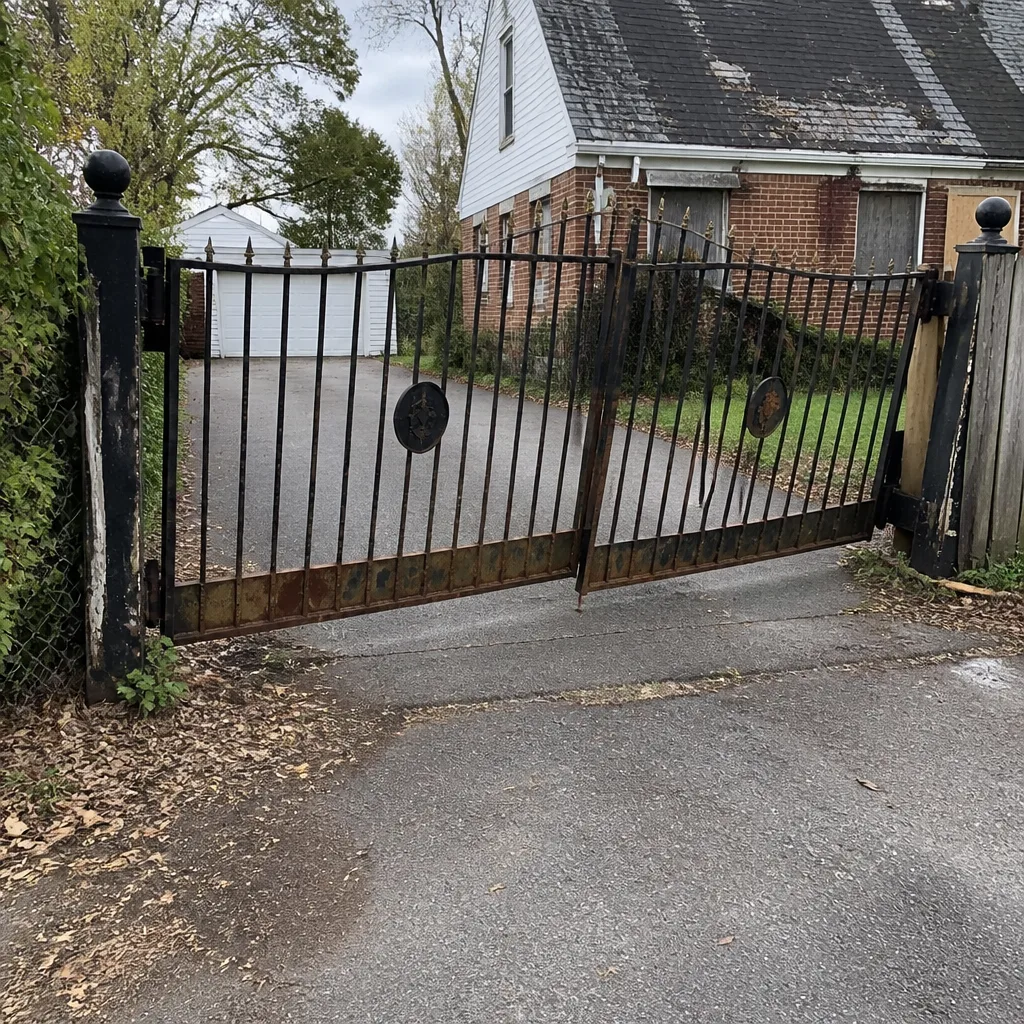 Before
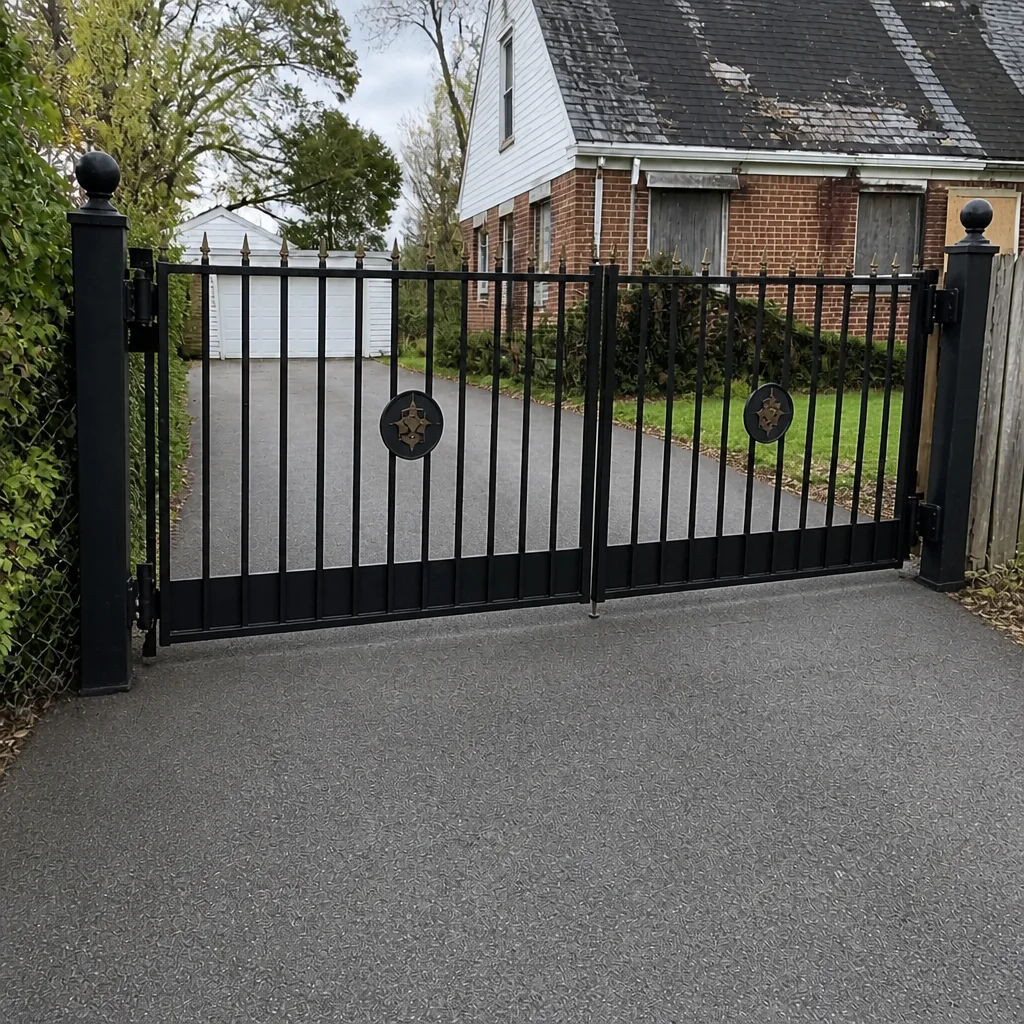 After
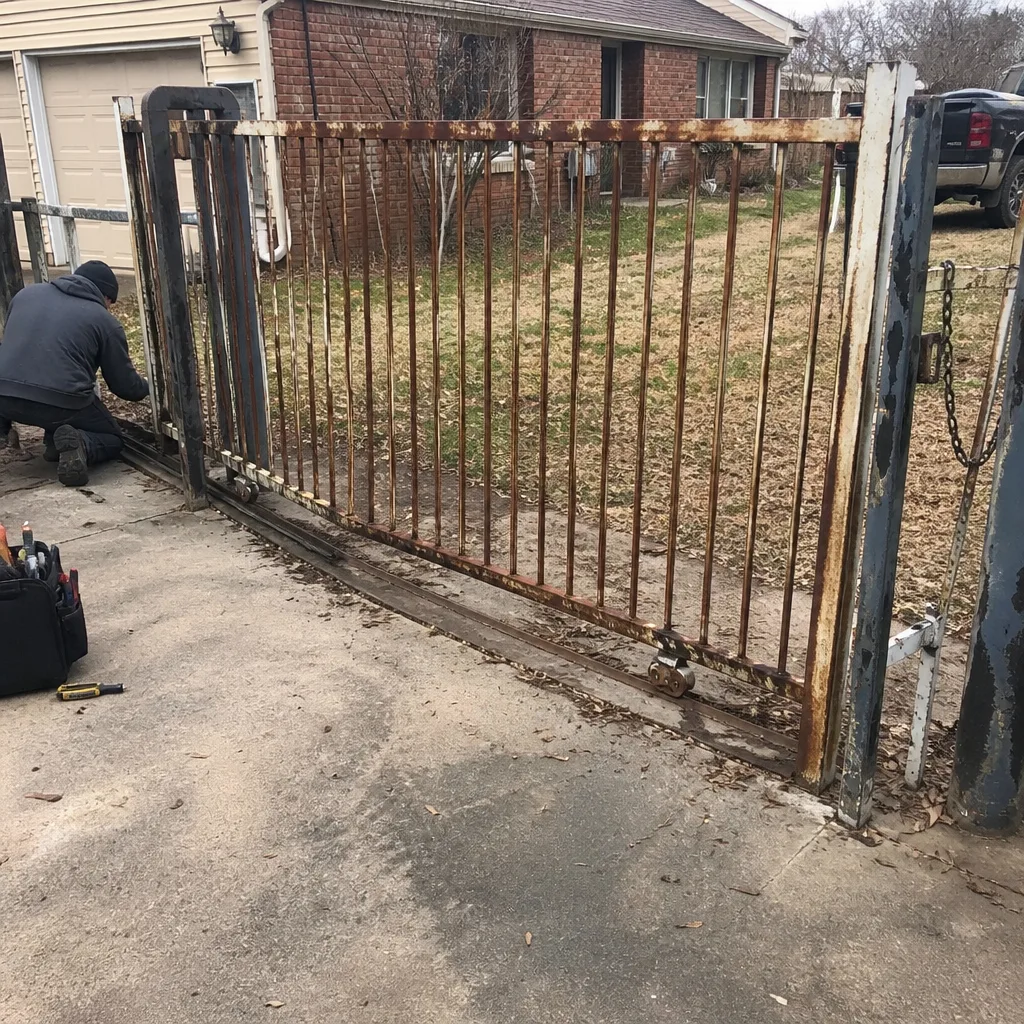 Before
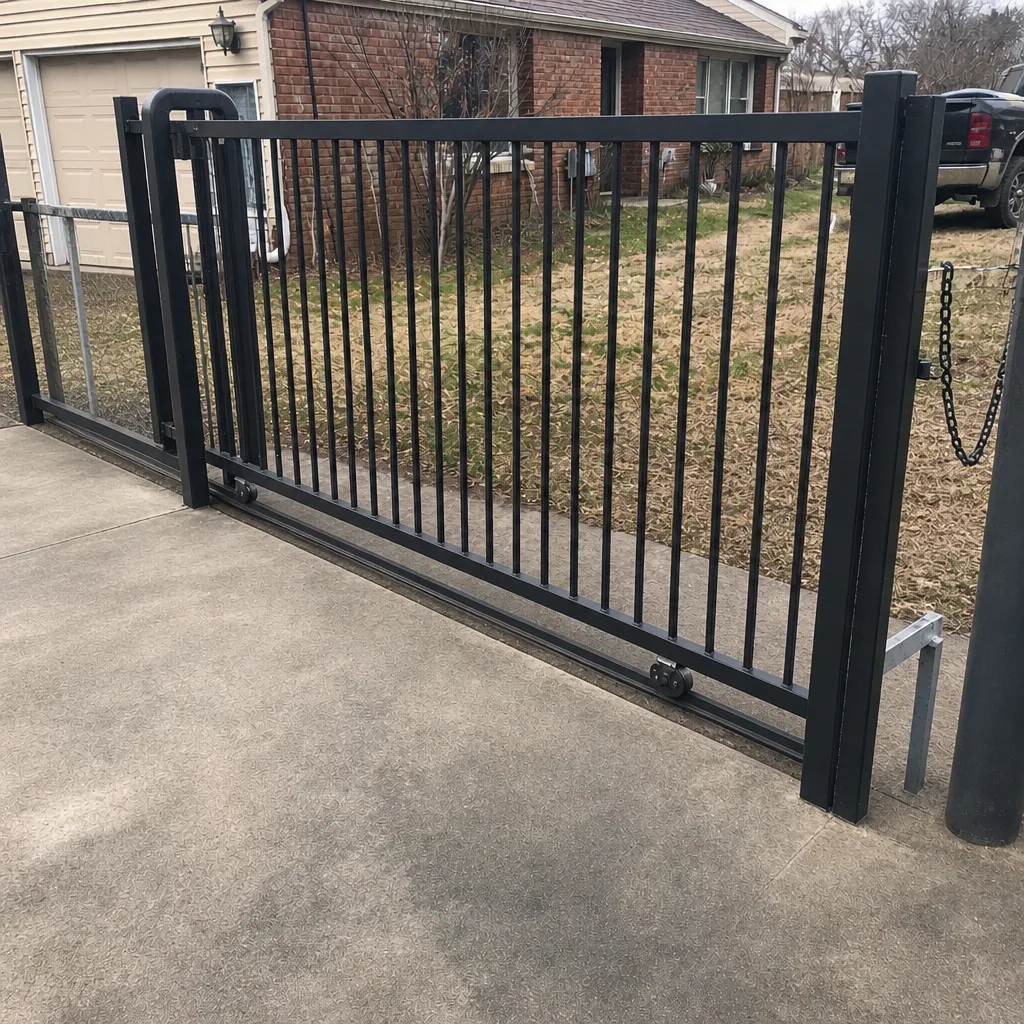 After
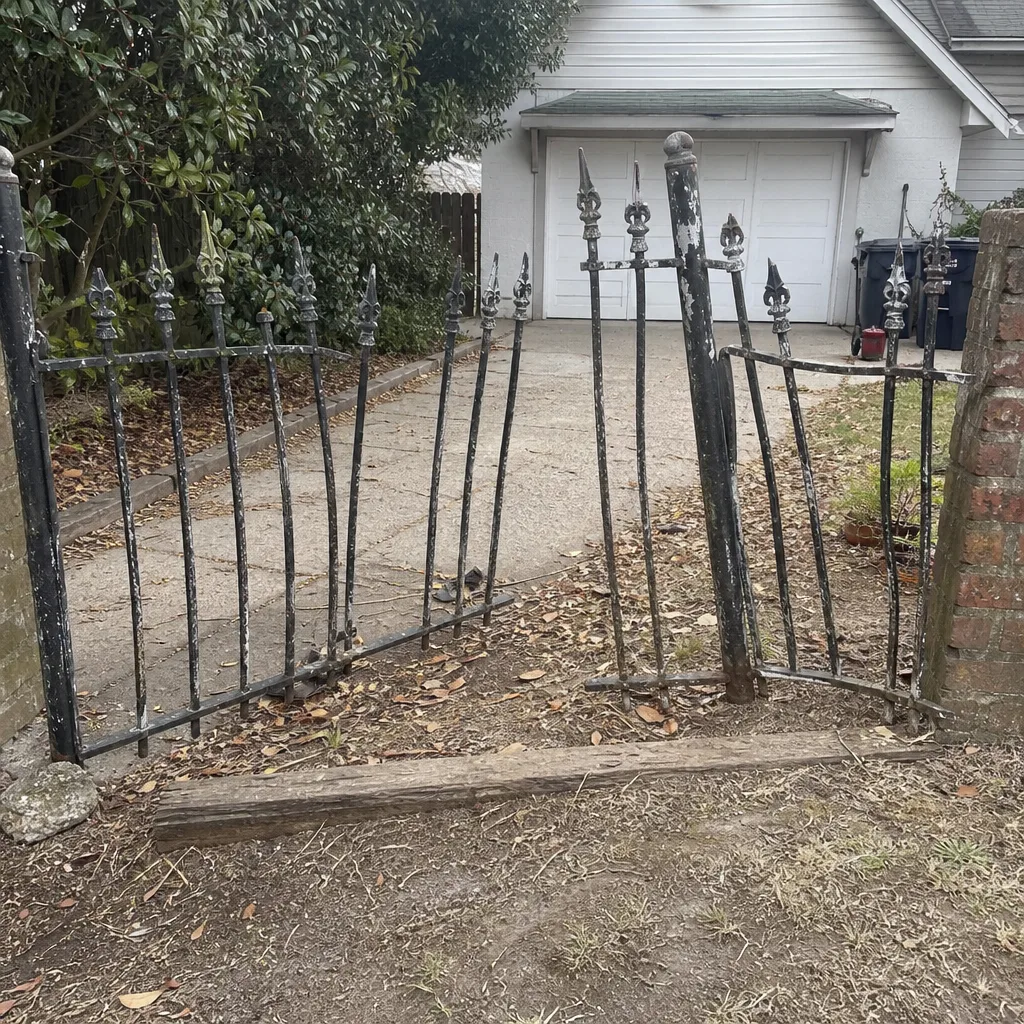 Before
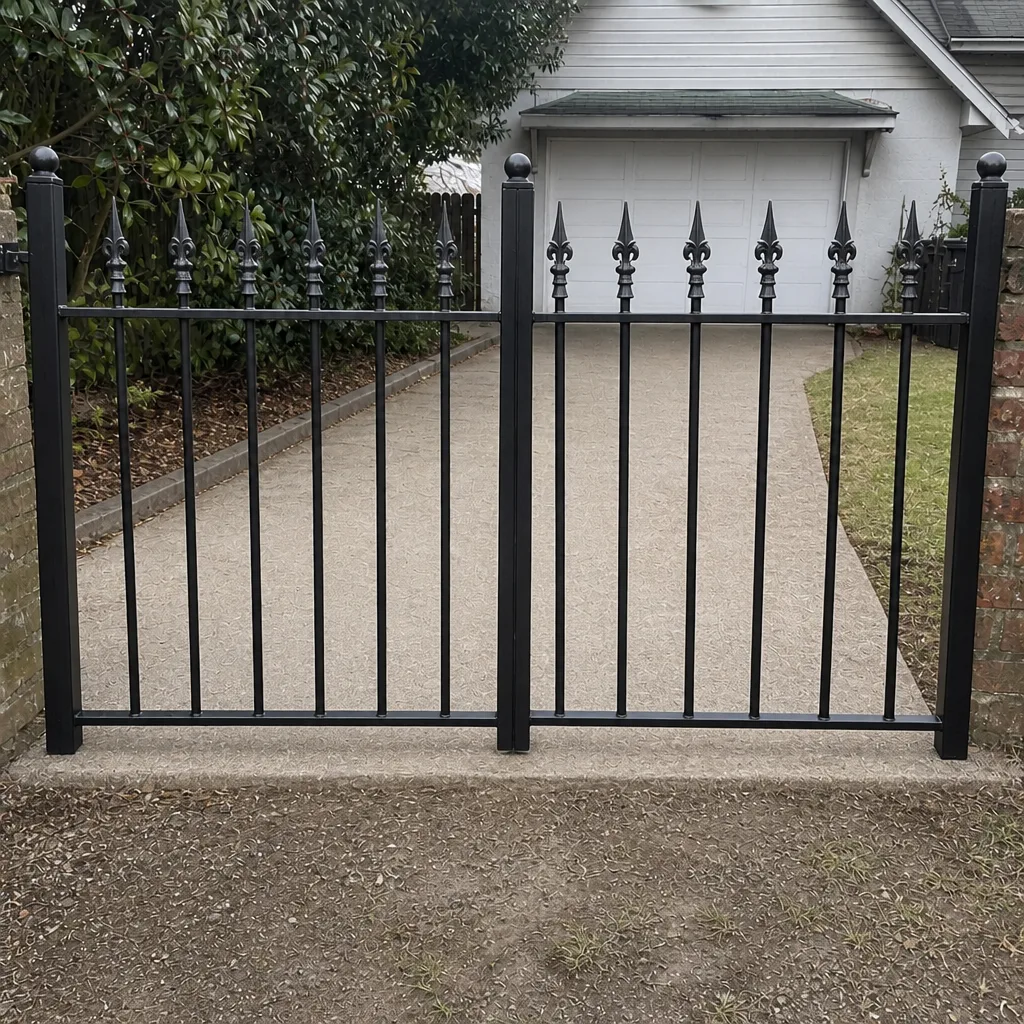 After
When to Call a Professional
Call a professional when the fault is inside the operator housing, when the gate is live with the cover off, when the failure pattern points to a control board, or when a reset doesn’t restore operation after one clean attempt. Call if the gate is sagging and you’re unsure whether the cause is the post, the hinge, or the footing – the wrong fix can cost you the operator later. Call if a safety sensor, loop detector, or keypad has failed, because those are life-safety parts, not conveniences. And call if you’re facing a brand you don’t recognize on the plate and a code you can’t read; that’s the case where a trained technician saves you the most money. As Ashton Gate Repair offers free estimates in Virginia Beach – call (844) 834-3028. Our technicians have up to 14 years of experience, and we’d rather tell you it’s a hinge than sell you a motor.
Frequently Asked Questions
Cost depends entirely on which part has failed, which is why a correct diagnosis matters more than a price first. A hinge or wheel replacement, a limit switch adjustment, or a sensor realignment is a modest repair; a control board or operator replacement is a larger one. We quote each job individually with a free estimate, and the written price is what you pay – no surprise invoice after the work. Call (844) 834-3028 for an exact quote; estimates are free.
We answer the phone 24/7 and dispatch on a same-day basis when the schedule allows, Sunday through Friday, 7am to 7pm. Gate failures don’t wait for convenient timing, and a stuck gate on a Virginia Beach property can leave a driveway or a commercial entrance out of service. Call (844) 834-3028 and tell us what the gate is doing – the details you give us help us bring the right parts.
On most LiftMaster operators, three beeps means the safety sensors aren’t giving a clear signal. Check the sensor lens for dirt or obstruction and confirm the two photo-eyes are aligned with each other before assuming a larger failure. If the lens is clean and the sensors are aimed correctly and the beeps continue, that’s the point to call a technician – the fault is usually in the wiring or the board input, not in the sensor itself. Call (844) 834-3028 for a same-day diagnostic.
Repair is usually the right call when the fault is a control board, limit switch, sensor, or wiring, and the gate and operator are otherwise sound. Replacement makes more sense when the operator housing has corroded through, the board shows burn damage, or the unit has reached the end of its serviceable life. The two questions to answer first are: does the gate move freely by hand, and does the board have visible damage? If yes to the first and no to the second, repair is the better bet – call (844) 834-3028 for a technician’s read on it.
That pattern is almost always electrical and usually humidity-related. Overnight condensation builds inside the operator housing and works into the board’s terminals, and once the sun dries things out the gate runs again. It’s common in Virginia Beach because the daily humidity swing is large. Don’t wait for it to fail permanently – this is the stage where a clean, reseal, or coating saves a board. Call (844) 834-3028 while the gate is still intermittent; it’s the cheapest moment to fix it.
Yes, with caution. A power-cycle reset (breaker off, 60 seconds, restore power, let the board self-test, then run one manual cycle) is safe and useful for clearing a false fault on most brands. It is not safe when the board is wet, visibly burnt, or when the cover is off a live operator. Never press reset repeatedly or re-pair remotes before testing the gate manually. If one clean reset doesn’t fix it, the next step is a technician, not another reset. Call (844) 834-3028 in Virginia Beach for a same-day look.
The Bottom Line
The gate repair question that saves the most money is not “what’s broken” but “which system is broken.” Mechanical faults announce themselves through sound and resistance; electrical faults show up as intermittent, silent, and humidity-sensitive. Virginia Beach’s sandy soil, coastal humidity, and the brand-specific behavior of LiftMaster, FAAC, BFT, and Linear operators are the three things that decide whether you’re looking at a small part or a larger repair. Read the symptoms, test the gate by hand, reset once, and call a specialist when the fault goes inside the housing. If you’re in Virginia Beach and the gate isn’t behaving, give us a call – we’ll tell you what it actually needs.
If your gate needs a real diagnosis, contact us for a free estimate. Call (844) 834-3028 for a free estimate. We answer 24/7, fast dispatch from 7am to 7pm, Sunday through Friday. You can learn more about Virginia Beach service and how we work on the gate you already have.
Written by the team at Ashton Gate Repair.